World
U.S. and Iran sign ceasefire deal, open talks on nuclear program
The U.S. and Iran moved to lock in a ceasefire agreement ahead of the expected schedule, signaling how much pressure both sides felt to stop the slide toward a wider regional crisis. The memorandum was signed electronically after nearly three months of mediation by Pakistan, Qatar, Egypt and Turkey, and it opens a 60-day window for talks over Iran’s nuclear program.
The rush matters because the deal is not just about pausing military escalation. The reported text says both countries committed to an immediate and permanent end to military operations, a mutual pledge not to threaten or use force, and a negotiation period of up to 60 days that can be extended only by mutual consent. Washington also committed to begin removing its naval blockade immediately and to end it fully within 30 days, while Iran agreed to help ensure safe passage for commercial shipping through the Persian Gulf and the Sea of Oman.
That sequence shows why the administration pushed to seal the deal early. A senior administration official outlined a 14-point text on June 17, and the agreement was described as something the United States would formally sign later in the week. But the reported text already carried immediate consequences: U.S. waivers for Iranian oil sales would follow signing, and Iran would gain access to frozen funds once the deal was implemented. For both governments, getting those economic and security clauses moving quickly appears to have outweighed waiting for a more ceremonial timetable.
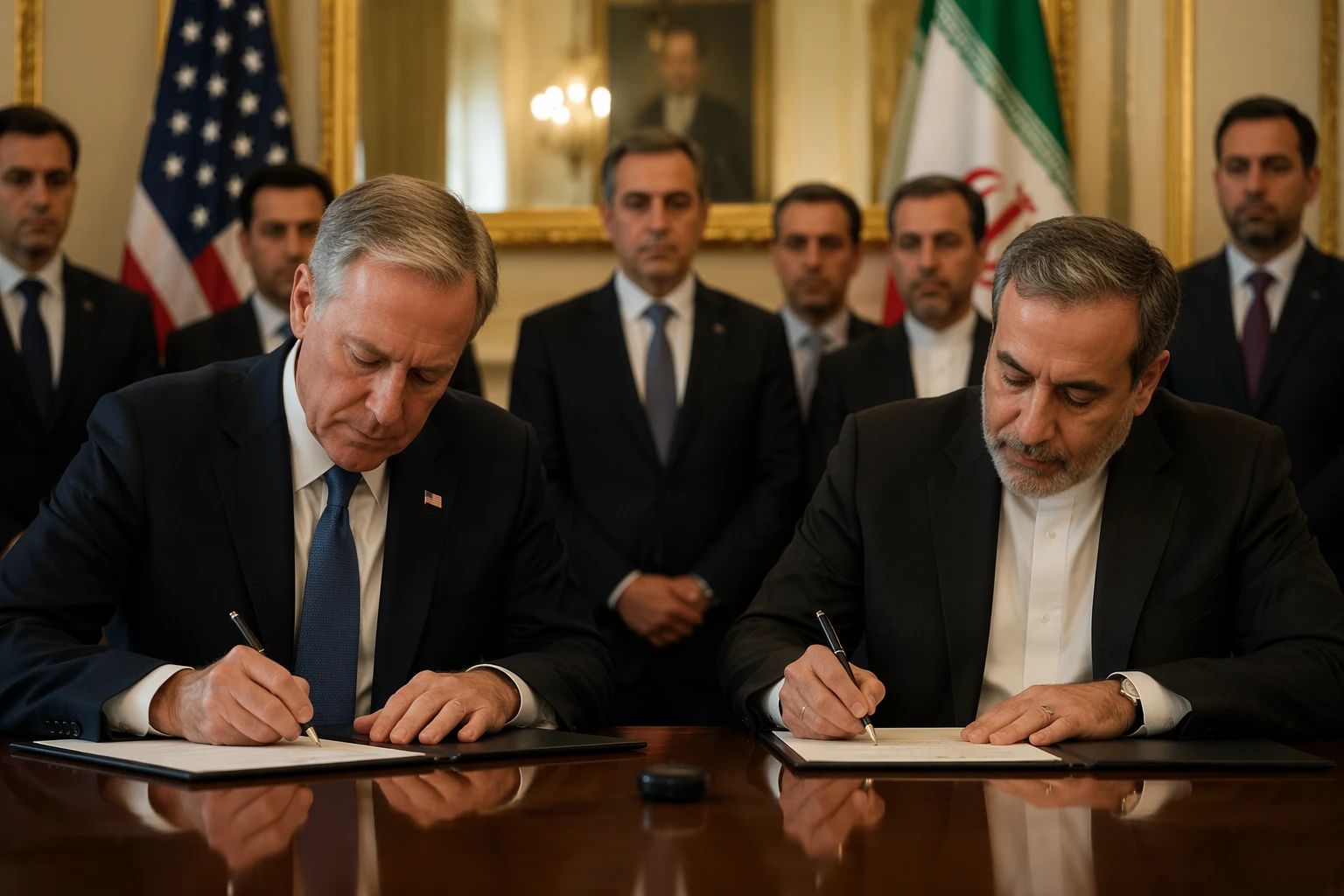
Publicly, the White House framed the memorandum as a path to lasting calm. In practice, the text looks narrower and more provisional. CNN’s analysis said the draft placed major commitments on Washington while leaving key Iranian nuclear issues unresolved, a sign that the hardest bargaining has been deferred rather than settled. Iranian Foreign Ministry spokesperson Esmaeil Baghaei said the text of the memorandum had officially been signed by Iran and the United States separately, underscoring how much of the process was built for speed rather than symbolism.
Donald Trump also signaled flexibility, saying the 60-day timeline was not a hard deadline. That leaves the agreement with room to breathe, but also room to slip. If negotiations stall, the ceasefire could hold only as long as the political momentum does, and the unresolved nuclear file will remain the central risk. For energy markets, the immediate significance is clear: reopening the Strait of Hormuz would ease pressure on oil flows. The deeper test is whether a fast-tracked ceasefire can become a durable nuclear deal before the temporary truce runs out.
Sources
- [1]news.google.com
- [2]axios.com
- [3]al-monitor.com
- [4]cnn.com
- [5]yahoonews.com
- [6]reuters.com
- [7]foreignpolicy.com