Technology
U.S. awards SandboxAQ $500 million for chip materials research
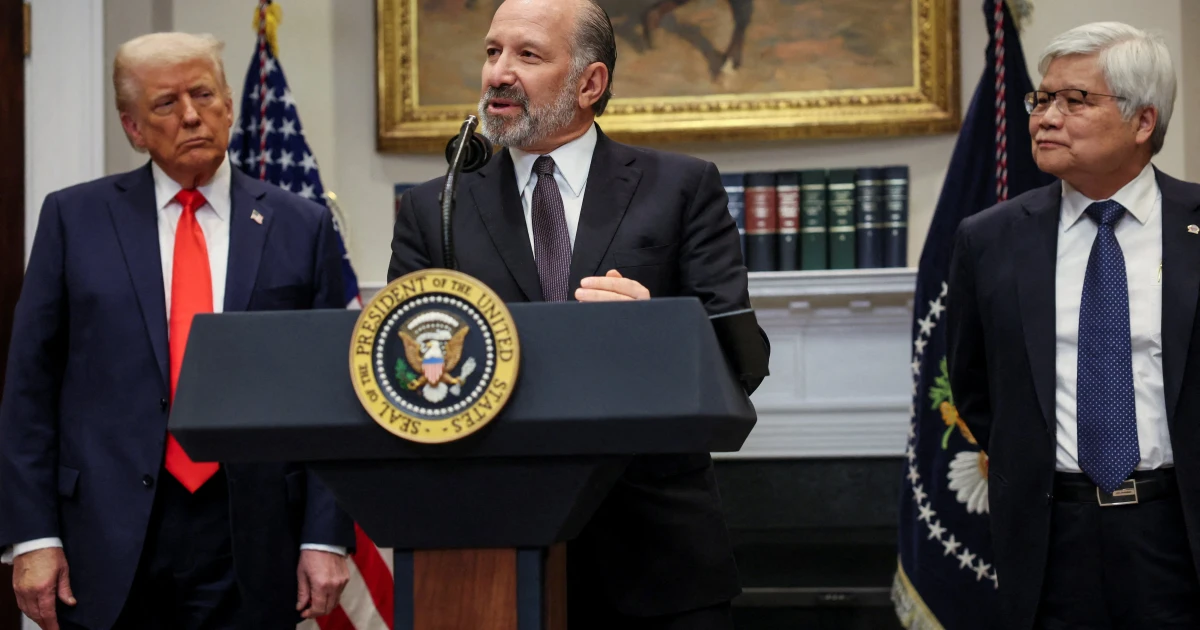
The U.S. government has put $500 million behind SandboxAQ in a direct test of whether artificial intelligence can speed the hunt for domestic chip materials that now depend on imported or environmentally problematic inputs. The Commerce Department’s CHIPS Research & Development Office said the award is meant to accelerate AI-driven materials discovery and strengthen national and economic security by reducing dependence on foreign-controlled critical materials.
The grant pushes into four areas central to semiconductor manufacturing: PFAS-free process chemicals for heat-transfer, lubricant, insulating-coating and surface-treatment uses; advanced catalysts; rare earth-free magnets; and battery systems for backup power at semiconductor facilities. SandboxAQ, which is backed by Nvidia and was valued at $5.75 billion in April 2025 after raising more than $1 billion, says its platform combines first-principles physics and chemistry simulation, AI-driven optimization, high-throughput screening of millions of candidates and targeted experimental validation. Commerce said it will receive a minority, non-voting equity stake in the company as part of the deal.
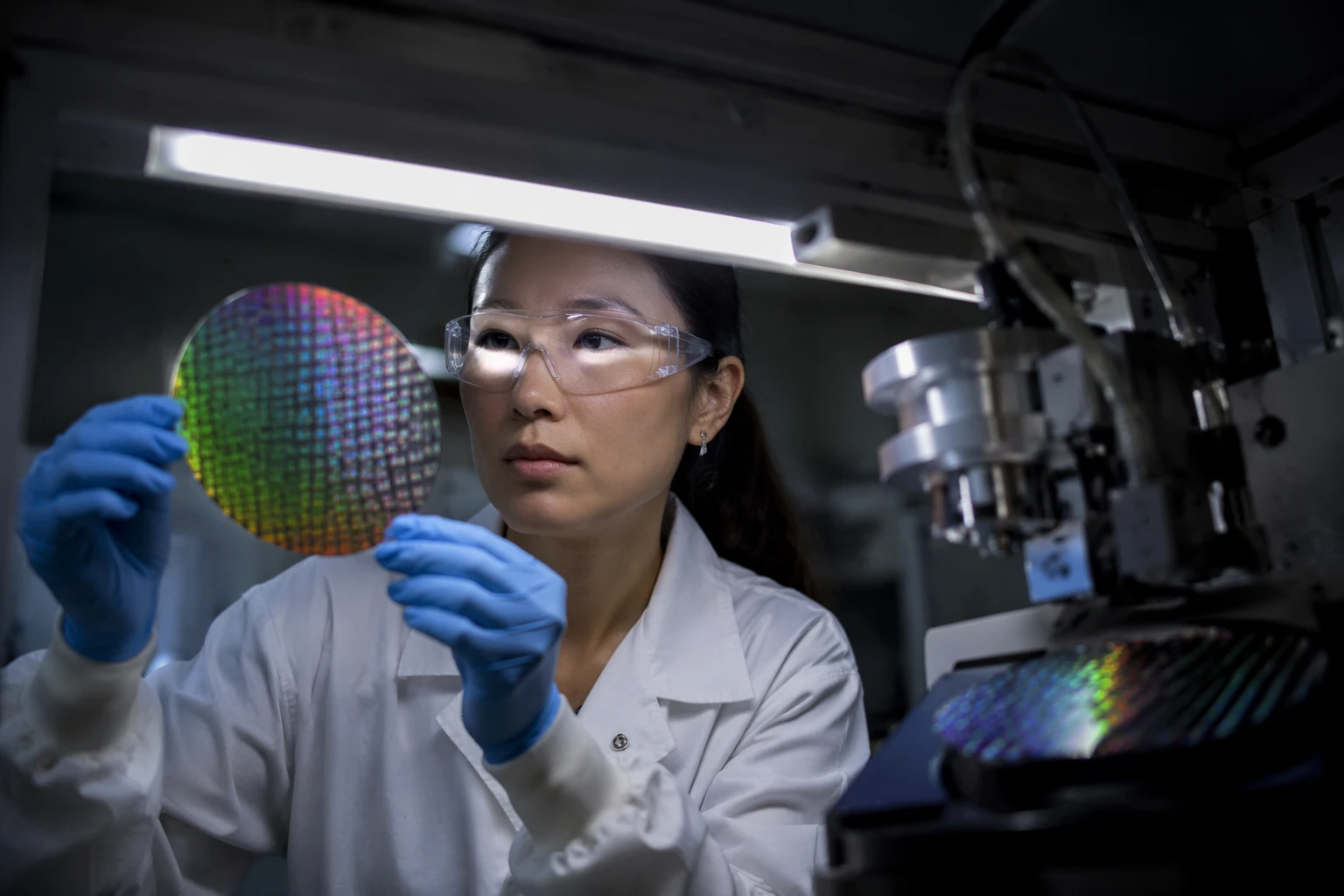
The award also shows how far the federal chip push has widened beyond fabs and lithography tools. NIST says the CHIPS R&D Office administers $11 billion under the CHIPS and Science Act, separate from the CHIPS Program Office’s $39 billion in manufacturing incentives. NIST says that research side is designed to help invent, prototype and deploy future semiconductor technologies in the United States, speed ideas to market and build the workforce to support the sector. Its portfolio includes the National Semiconductor Technology Center, advanced packaging, the SMART USA institute and metrology work aimed at new materials and production methods.
The funding arrives as Washington is trying to use CHIPS money as a broader industrial-policy tool. On January 14, 2026, the White House said Donald Trump had invoked Section 232 and imposed a 25% tariff on certain advanced computing chips, including Nvidia’s H200 and AMD’s MI325X. On May 21, 2026, Commerce announced $2.013 billion in proposed CHIPS R&D incentives for quantum companies, including $375 million for GlobalFoundries and $1 billion for IBM. Earlier this month, Commerce finalized a separate agreement with USA Rare Earth for up to $277 million in federal incentives and a loan of up to $1.3 billion.
The central question is whether a $500 million research bet can materially reduce U.S. reliance on PFAS and rare-earth-linked inputs, or whether it remains a long-horizon wager dressed up as near-term manufacturing policy. If SandboxAQ can turn AI-assisted discovery into scalable materials for American factories, the payoff could reach well beyond semiconductors. If not, the award will still mark another expensive signal that Washington is willing to fund the upstream science of chipmaking in the name of supply-chain security.
Sources
- [1]usnews.com
- [2]nist.gov
- [3]sandboxaq.com
- [4]whitehouse.gov
- [5]semiconductors.org