Politics
U.S. banks face scrutiny over alleged politically motivated account closures
Banks from JPMorgan Chase to Bank of America are facing a widening federal review over whether customer accounts were closed for political or religious reasons, or because of lawful businesses that fell out of favor inside the industry. The inquiry has moved from supervisory scrutiny to possible enforcement, raising the stakes for lenders that say they were simply applying risk rules.
The Office of the Comptroller of the Currency said in preliminary findings on Dec. 10, 2025, that it had identified inappropriate distinctions among customers by nine large banks: JPMorgan Chase Bank, Bank of America, Citibank, Wells Fargo Bank, U.S. Bank, Capital One, PNC Bank, TD Bank and BMO Bank. The agency said it was examining policies used from 2020 to 2023 and reviewing nearly 100,000 complaints and other material for signs of debanking, a term now at the center of a national fight over civil liberties and compliance.
Regulators said at least one bank restricted access to sectors including oil and gas exploration, coal mining, firearms, private prisons, tobacco and e-cigarette manufacturers, adult entertainment and digital assets. In the OCC’s view, some institutions imposed escalated reviews and approvals that went beyond ordinary anti-fraud controls. The agency has also said it was looking for instances in which banks coordinated with federal law enforcement to surveil customers or share private financial information.

The political backdrop sharpened after Donald J. Trump signed Executive Order 14331, “Guaranteeing Fair Banking for All Americans,” on Aug. 7, 2025. The White House said the order was meant to stop law-abiding individuals and businesses from being denied services because of political or religious beliefs or lawful business activity, and it pointed to post-Jan. 6 scrutiny of transactions linked to “Trump” and “MAGA.” The order also invoked Operation Choke Point, the 2013 Justice Department initiative that critics said had encouraged banks to cut off lawful but disfavored merchants.
The current fight is no longer limited to regulatory review. On June 10, 2026, the U.S. Attorney’s Office in Washington, D.C., led by Jeanine Pirro, issued subpoenas to major banks including JPMorgan Chase and Bank of America, and sought information from Wells Fargo, about whether accounts were closed for political reasons. Some of those subpoenas dated back to last year and asked for lists of allegedly debanked individuals and explanations for the closures.
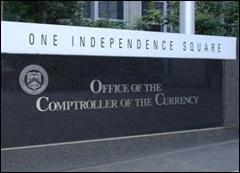
On June 2, 2026, the Federal Deposit Insurance Corporation, the OCC and the Federal Reserve said they were removing references to reputational risk from internal guidance documents, a shift that could make it harder for banks and regulators to justify broad screens based on public controversy. OCC Comptroller Jonathan V. Gould said the agency would “hold banks accountable and end efforts that would weaponize finance.”
For banks, the issue is now as much about documentation as discretion. For customers, including politically exposed groups and lawful businesses tied to disputed industries, the central question is whether account closures reflect objective risk management or a system that has blurred into viewpoint discrimination.
Sources
- [1]finance.yahoo.com
- [2]occ.gov
- [3]occ.treas.gov
- [4]whitehouse.gov
- [5]money.usnews.com
- [6]fdicoig.gov