World
US, Britain back ruling rejecting China's South China Sea claims

Fourteen governments used the 10th anniversary of the South China Sea arbitration to keep a legal ruling at the center of a wider diplomatic campaign against China’s maritime claims. The United States, Britain and 12 other Western and Asian countries said the 2016 award was “final, legally binding, and definitive” between China and the Philippines, and condemned the use of coast guard, military and maritime militia forces to harass lawful operations at sea and in the air.
The joint statement, released by Australia, Canada, Estonia, Germany, Italy, Japan, Latvia, Lithuania, New Zealand, the Philippines, Romania, Slovenia, the United Kingdom and the United States, was framed as more than a commemoration of the July 12, 2016 ruling. It was a coordinated reaffirmation that the tribunal in The Hague found no legal basis for China’s expansive claims based on so-called historic rights in waters outside the maritime zones recognized under the U.N. Convention on the Law of the Sea.
That ruling came after Manila filed arbitration under Annex VII of UNCLOS following the 2012 Scarborough Shoal standoff with Beijing. The tribunal sided largely with the Philippines, rejected China’s nine-dash line theory, and held that Scarborough Shoal is a rock entitled only to a 12-nautical-mile territorial sea. It also found that China’s reclamation and related activities had damaged the marine environment.
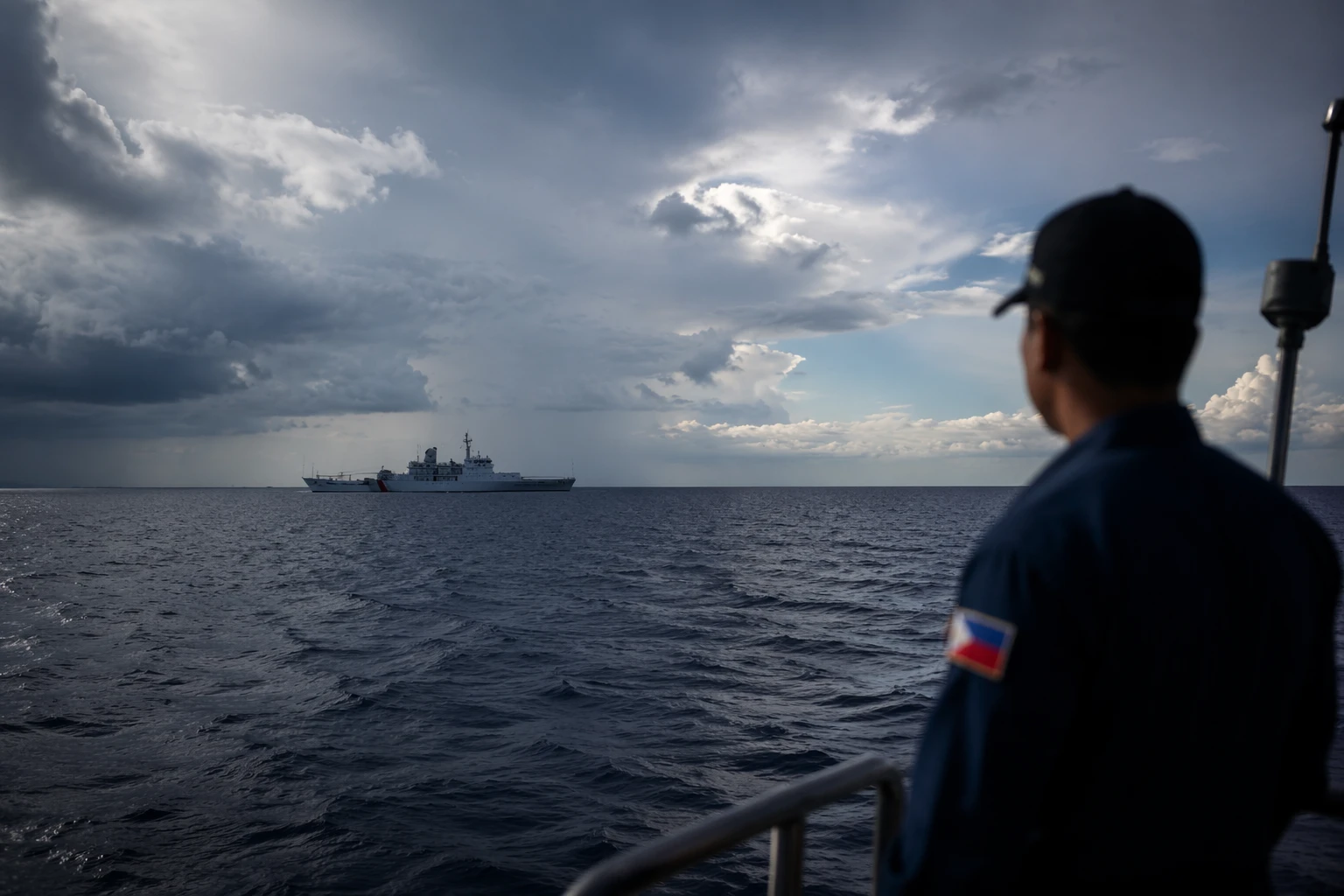
The new statement does not change who can physically control disputed waters or end the confrontation around Scarborough Shoal. China did not participate in the arbitration and still rejects the decision, while Chinese coast guard, navy and maritime militia pressure on Philippine operations continues to shape daily risks in the area. But the diplomatic effect is clear: the coalition is trying to make sure Beijing cannot treat the ruling as a faded legal footnote, and smaller regional states can point to a broad international bloc that still backs the tribunal’s conclusions.
That matters because the South China Sea is not only a sovereignty dispute. Major shipping lanes run through the waterway, which is also central to fishing rights, freedom of navigation and military access across Asia. The Philippines has said its fishermen remain afraid to venture to Scarborough Shoal because of harassment by Chinese vessels, a reminder that the legal dispute carries direct livelihood costs.
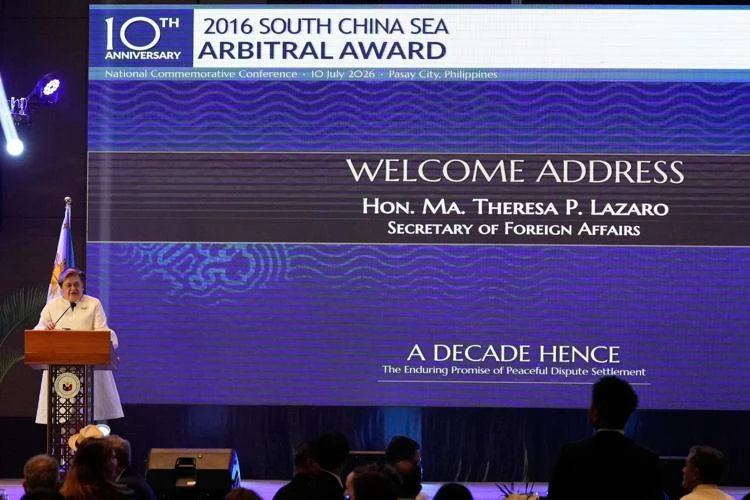
The European Union separately said it was deeply concerned by the steady increase of tensions and dangerous incidents in the South China Sea and opposed unilateral actions that undermine regional stability and the international order. Taken together, the statements showed that the 2016 award remains a live instrument of pressure, even if it has not forced China to abandon the claims it has advanced for years.
Sources
- [1]usnews.com
- [2]state.gov
- [3]canada.ca
- [4]consilium.europa.eu
- [5]rappler.com
- [6]amti.csis.org
- [7]msn.com
- [8]cnbc.com
- [9]pna.gov.ph