US News
U.S. Deploys Over 150 Aircraft Amid Middle East Tensions
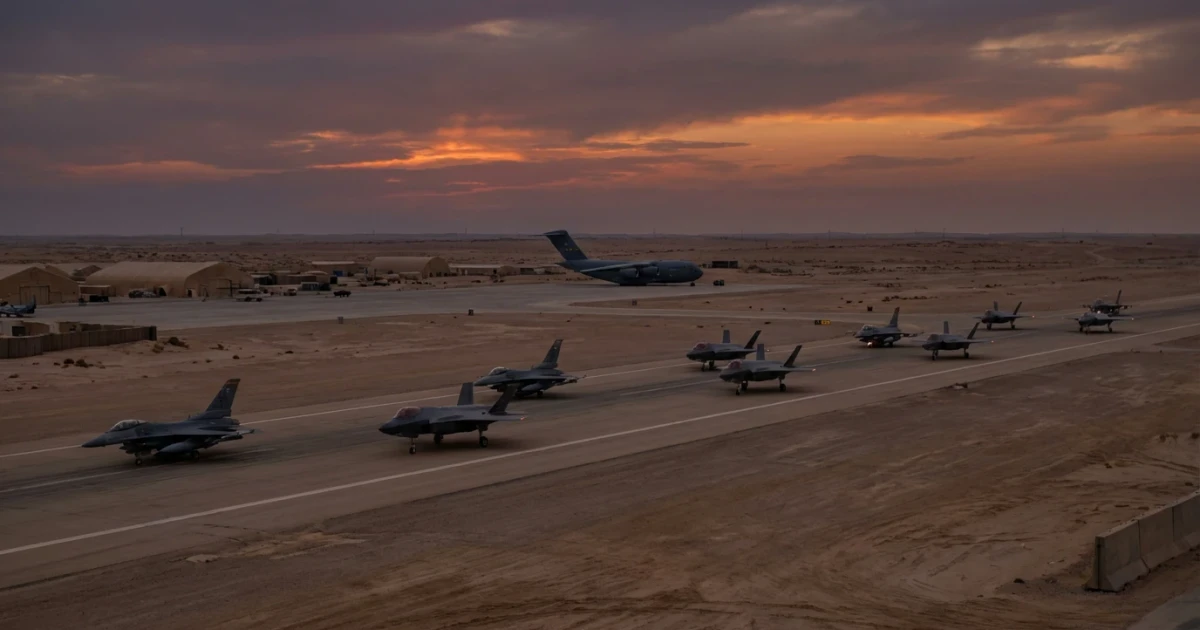
The United States has deployed over 150 military aircraft to Europe and the Middle East as President Donald Trump considers his response to escalating tensions with Iran, according to reporting from The Washington Post. This large-scale movement of air assets marks one of the most significant surges in U.S. military presence in these regions in recent years, underscoring the gravity of the current standoff.
Aircraft Deployment Signals Escalation
The deployment, which includes a mix of fighter jets, bombers, refueling tankers, and surveillance planes, is designed to reinforce U.S. capabilities both in Europe and the volatile Middle East. The Washington Post reported that the movement of these aircraft comes as President Trump weighs a range of responses to Iranian actions, with options reportedly spanning from diplomatic negotiations to direct military action against the Iranian regime.
- The U.S. Air Forces in Europe & Air Forces Africa fact sheet details the types of aircraft typically stationed in the region, including F-16s, F-15s, and strategic bombers.
- According to Statista data, the United States maintains the world’s largest military aircraft inventory, enabling rapid and sizable deployments.
- Recent official announcements from U.S. Central Command have highlighted the use of B-1B bombers in deterrence missions across the region.
Trump Considers Response Options
As tensions with Iran have intensified, President Trump is reportedly evaluating three main courses of action: pursuing diplomatic engagement, implementing targeted military strikes, or considering broader efforts to pressure or destabilize the Iranian government. The Washington Post notes that each option carries significant risks and potential repercussions for regional stability.
Military experts point out that the deployment of such a large air contingent serves as both a deterrent and a means of providing the president with a range of operational options. The show of force is likely intended to reassure allies, signal U.S. resolve, and potentially dissuade adversary actions while diplomatic discussions continue in parallel.
Strategic Importance of U.S. Air Power
The U.S. maintains an extensive network of air bases and infrastructure across both Europe and the Middle East. According to the Government Accountability Office, this overseas presence enables rapid mobilization and flexible response to emerging crises. The current deployment draws from these assets, leveraging established logistical and operational networks.
In the Middle East specifically, the Council on Foreign Relations notes that U.S. air power plays a critical role in both deterrence and active operations, supporting ground forces, monitoring regional airspace, and projecting military strength.
Potential Implications for Regional Security
This significant movement of U.S. aircraft is viewed by analysts as a clear signal to Iran and other regional actors. The Congressional Research Service explains in its recent analysis that such deployments are not only about immediate deterrence but also about shaping adversary calculations and maintaining freedom of action for U.S. decision-makers.
However, the escalation also raises concerns about the potential for miscalculation or unintended confrontation. While the presence of U.S. aircraft may dissuade some hostile actions, it also increases the risk of incidents in crowded and contested airspace. The coming days are likely to be critical as President Trump and his advisers decide on the next steps, balancing the need for deterrence with the desire to avoid open conflict.
Looking Ahead
As the situation develops, the world is watching closely to see which path the U.S. administration pursues. Military deployments of this scale are rare and carry significant strategic weight, making the ongoing deliberations in Washington all the more consequential for regional and global security.