Business
U.S. domestic air fares rise to $428 as jet fuel costs surge
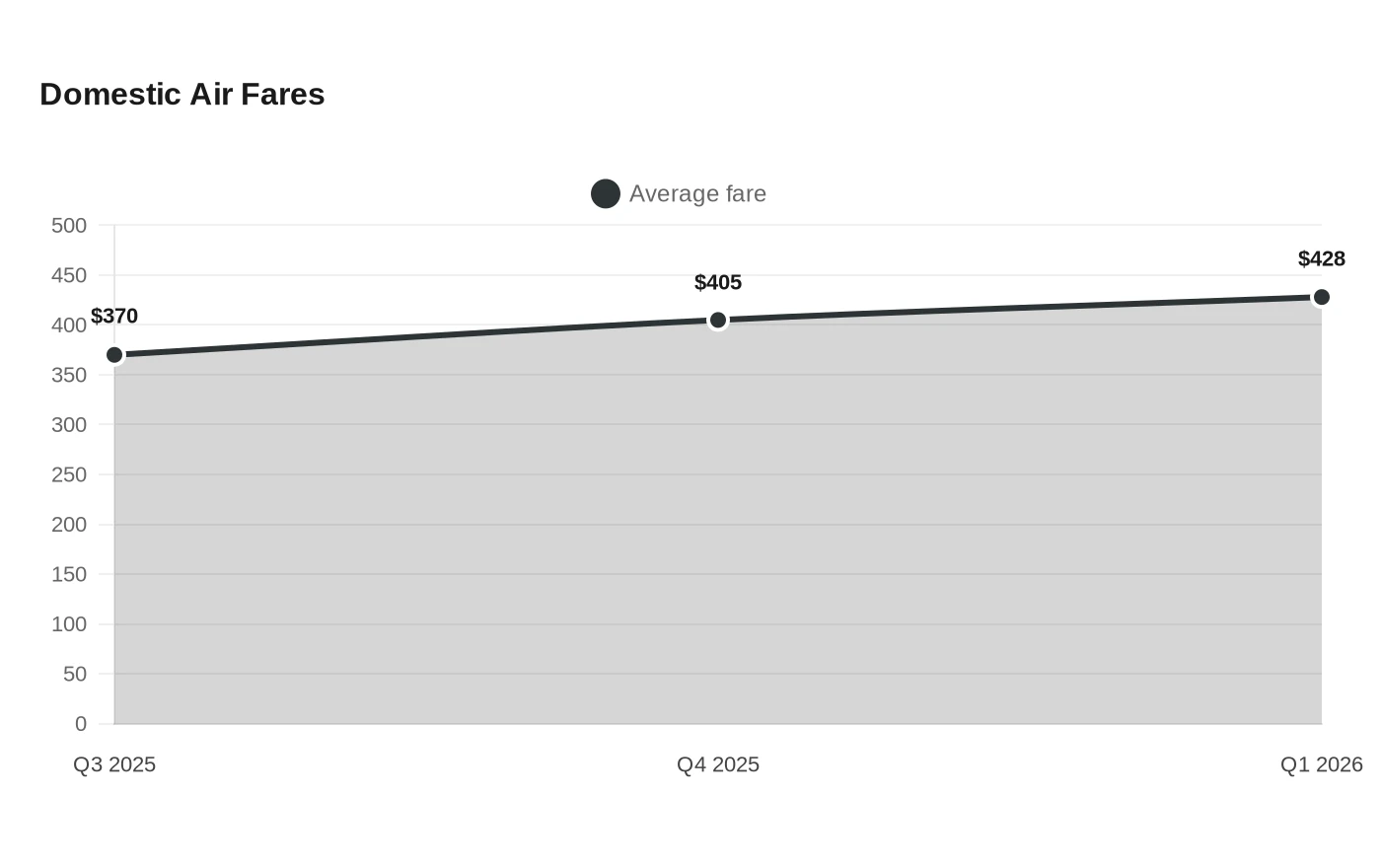
U.S. domestic air fares climbed to an inflation-adjusted average of $428 in the first quarter of 2026, up 4.7% from $409 in the fourth quarter of 2025, but the increase is not landing evenly across the map. The destination matters: some routes are absorbing more of the pressure from higher fuel costs, while others are holding up better because of demand, competition and airline network strength.
The Bureau of Transportation Statistics bases its fare series on a 10% sample of all airline tickets sold by U.S. carriers. Its figures are inflation-adjusted and include taxes and fees charged at purchase, but not optional services such as baggage fees or other ancillary charges. That makes the $428 reading a cleaner measure of the ticket price travelers actually face at checkout, not the full cost of flying.
The new quarter’s rise follows a volatile finish to 2025. BTS said the average domestic fare reached $405 in the fourth quarter of last year, up 9.2% from the third quarter’s $370, even as the agency also reported that the average domestic fare fell year over year on an annual basis in 2025. BTS maintains annual domestic fare data going back to 1995, giving a long run of history for comparing today’s prices with earlier fuel shocks and fare cycles.
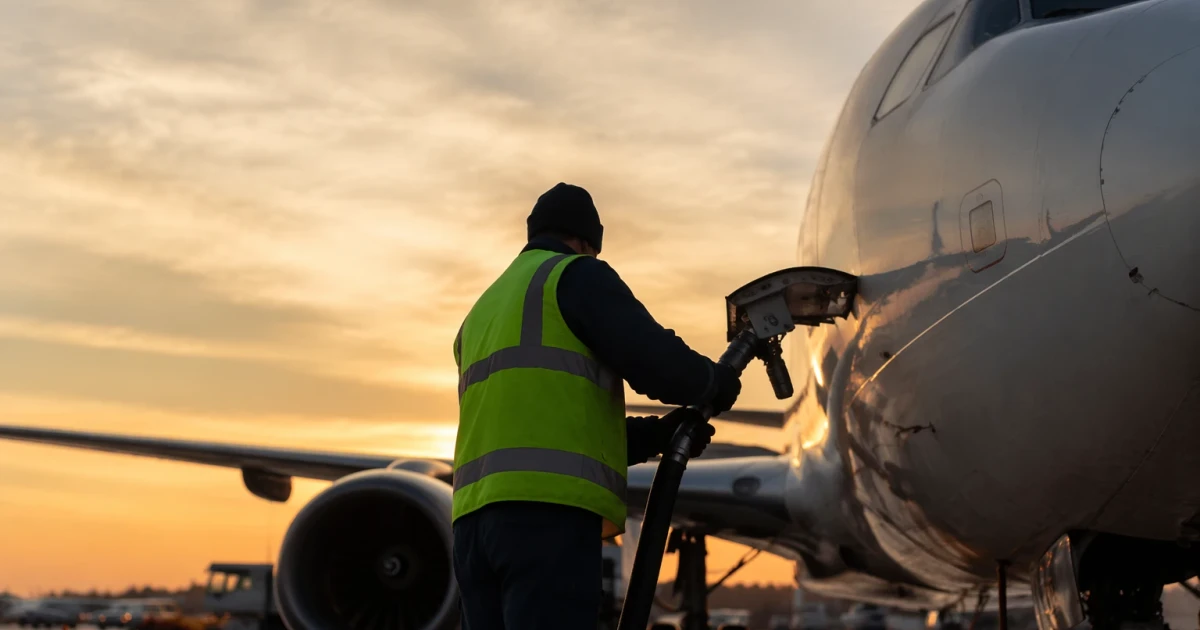
Jet fuel is the biggest reason airlines are under renewed cost pressure. The International Air Transport Association said the global average jet fuel price was around $96 a barrel in November 2025, then roughly doubled to $188 in April 2026 before averaging $158 in May. IATA forecasts an average jet fuel price of $152 a barrel in 2026, nearly 70% higher than in 2025.
IATA has said the 2026 oil-price increase exceeded the jumps seen in the 1973 and 1979 supply shocks, and that jet fuel availability has been affected by refinery outages, constrained throughput and regional price dislocations. Those forces do not translate into higher air fares in a straight line. Airlines set prices route by route, and the routes with the strongest business demand or the least competition can absorb increases more easily than leisure-heavy markets.
IATA still expects the industry to remain profitable in aggregate in 2026, but that does not mean travelers will see a uniform price trend. The latest fare data point to a market where headline averages are rising, while the real impact depends on where a passenger is flying.
Sources
- [1]nytimes.com
- [2]bts.gov
- [3]iata.org