Science
US drives a third of global carbon emissions rise in 2025

The United States accounted for about a third of the rise in global carbon emissions in 2025, a sharp reversal after roughly a decade of falling emissions in North America. Energy demand kept climbing, and gas prices pushed some power producers back toward coal.
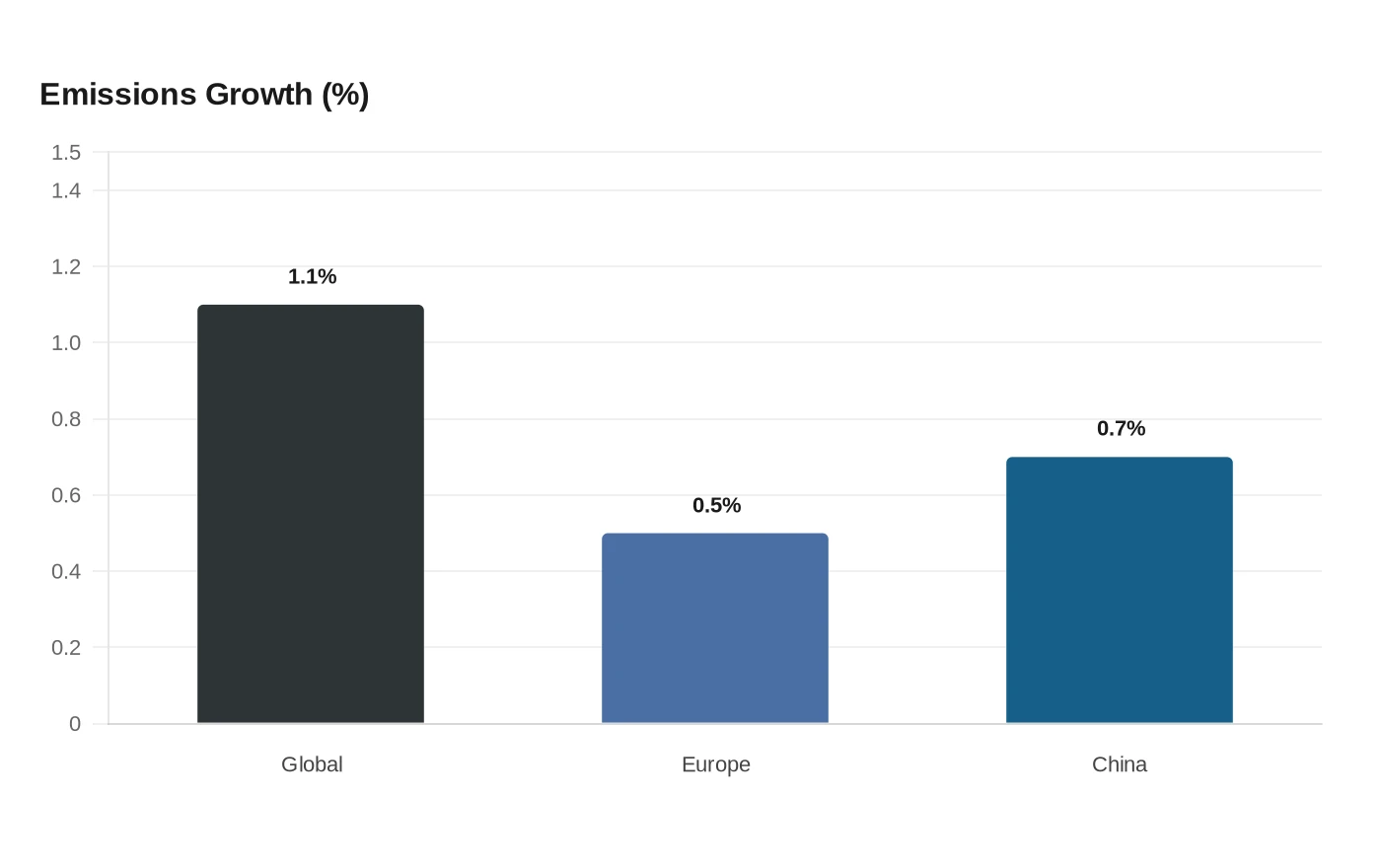
Globally, energy-sector carbon emissions rose 1.1% last year to 35,806 million metric tons of carbon dioxide. Energy Institute data show U.S. coal consumption jumped 10%, making the country the largest single contributor to the increase even as Europe’s energy-related emissions rose 0.5% and China’s climbed 0.7%.

The pressure is coming from the power sector. Total energy supply rose 1.7% from 2024, but electricity demand climbed even faster, up 3% year on year. Part of that surge came from electric vehicles, data centers and artificial intelligence, all of which are adding to the load on grids that still rely heavily on gas and coal when prices move against cleaner options. Renewable power generation kept expanding, rising 9.1% worldwide, with solar up 30%, but the pace was not enough to offset the fossil-fuel rebound in major markets.
Oil use also rose, with global consumption up 1.3% to 103 million barrels per day while production increased 3.5%. Gas demand growth was concentrated in Europe, the Middle East and North America. The Statistical Review of World Energy has been produced since 1952 and has been under the Energy Institute's stewardship since 2023 after more than 70 years with bp. The 2026 edition was the review’s 75th, with a global launch webcast scheduled in London on Tuesday featuring Energy Institute chief executive Dr. Nick Wayth and president Andy Brown alongside co-authors Ember, KPMG and Kearney.
International Energy Agency data show electricity demand from data centers rose 17% in 2025, with AI-focused facilities climbing even faster, and U.S. data centers are on course to account for almost half of electricity-demand growth through 2030. International Energy Agency data put global energy-related CO2 emissions at nearly 38.4 billion tonnes in 2025, up about 0.4%, and show solar and wind reached 30% of European Union electricity generation for the first time, passing fossil fuels.
Sources
- [1]aol.com
- [2]energyinst.org
- [3]iea.org
- [4]eia.gov