Business
U.S. economy grew faster in first quarter, consumer spending slowed sharply

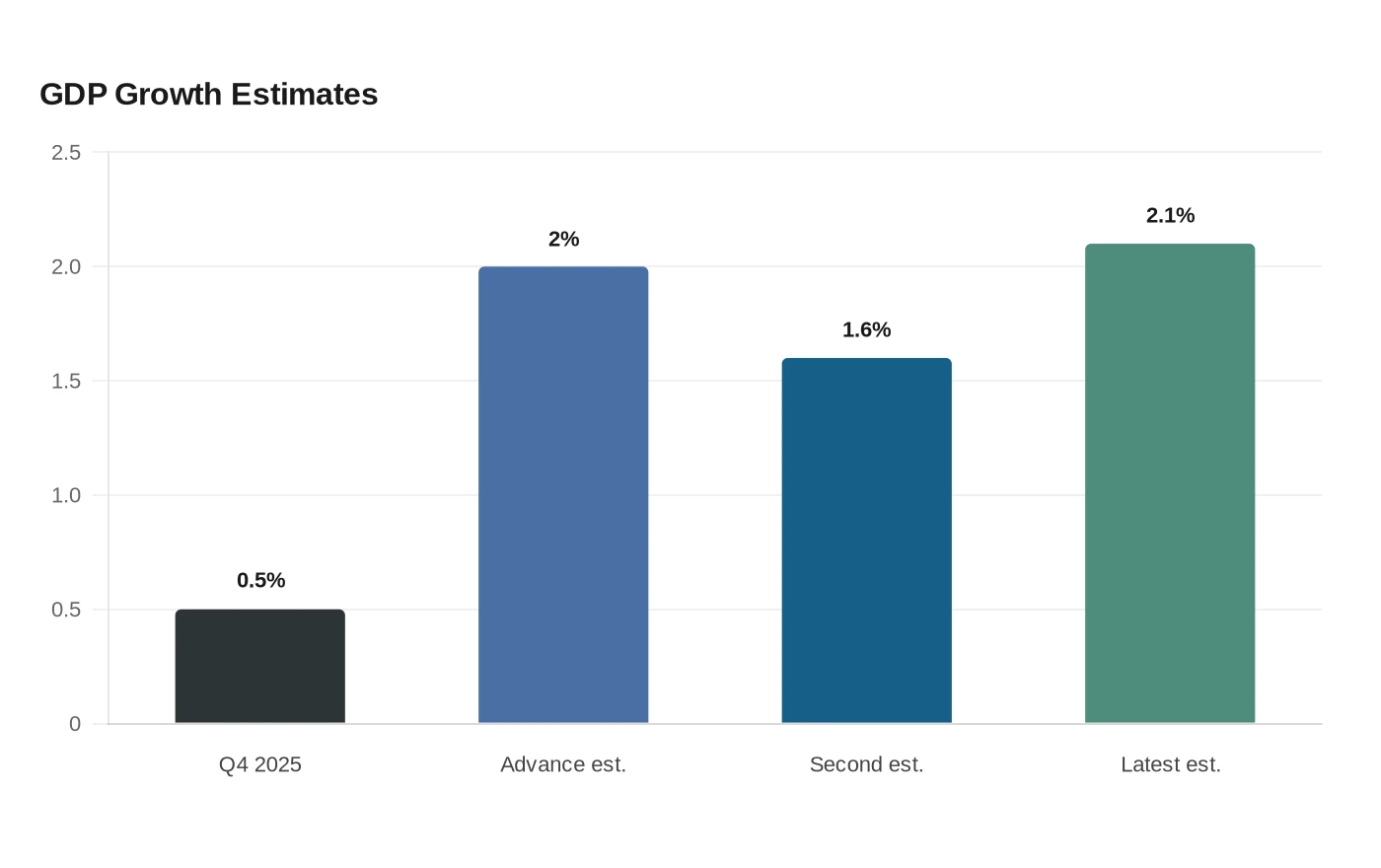
The U.S. economy grew at a 2.1% annual rate in the first quarter, faster than first estimated, but consumer spending was revised sharply lower to a 0.5% pace. The Bureau of Economic Analysis said the upgrade came mainly from a downward revision to imports, which mechanically lifted gross domestic product, while weaker household demand pulled in the opposite direction.
The revision gives Washington and Wall Street a cleaner picture of an economy that entered 2026 on firmer footing than first reported, but with consumers showing less strength than headline GDP suggested. The BEA’s second estimate had put first-quarter growth at 1.6%, while the advance estimate had shown 2.0%. In the fourth quarter of 2025, real GDP increased 0.5%, underscoring how much faster the economy started the new year than it had ended the old one.
The spending revision was concentrated in services. The BEA said the largest downward changes were in financial services, insurance and international travel. Even so, the first quarter still got support from exports, investment, consumer spending and government spending. Corporate activity remained a bright spot: Reuters reported that business spending on equipment rose at a 15.8% annualized rate, while intellectual-property investment increased 13.8%, reinforcing the role of artificial-intelligence-related capital spending as a key support for growth.
That split matters for monetary policy and markets because stronger GDP can reduce the case for near-term Federal Reserve rate cuts, while softer consumer demand can signal a more fragile economy if prices stay elevated. There were signs of some rebound early in the second quarter. Consumer spending rose 0.7% in May after a 0.4% increase in April, and Internal Revenue Service data showed the average refund for the week ending May 8 was $3,276, up from $2,939 a year earlier. But higher gasoline prices tied to the U.S.-led war with Iran continued to pressure household budgets, leaving the consumer side of the economy more vulnerable than the revised GDP number alone would suggest.
Sources
- [1]money.usnews.com
- [2]bea.gov
- [3]irs.gov