Politics
US House Votes to End Tariffs on Canadian Goods
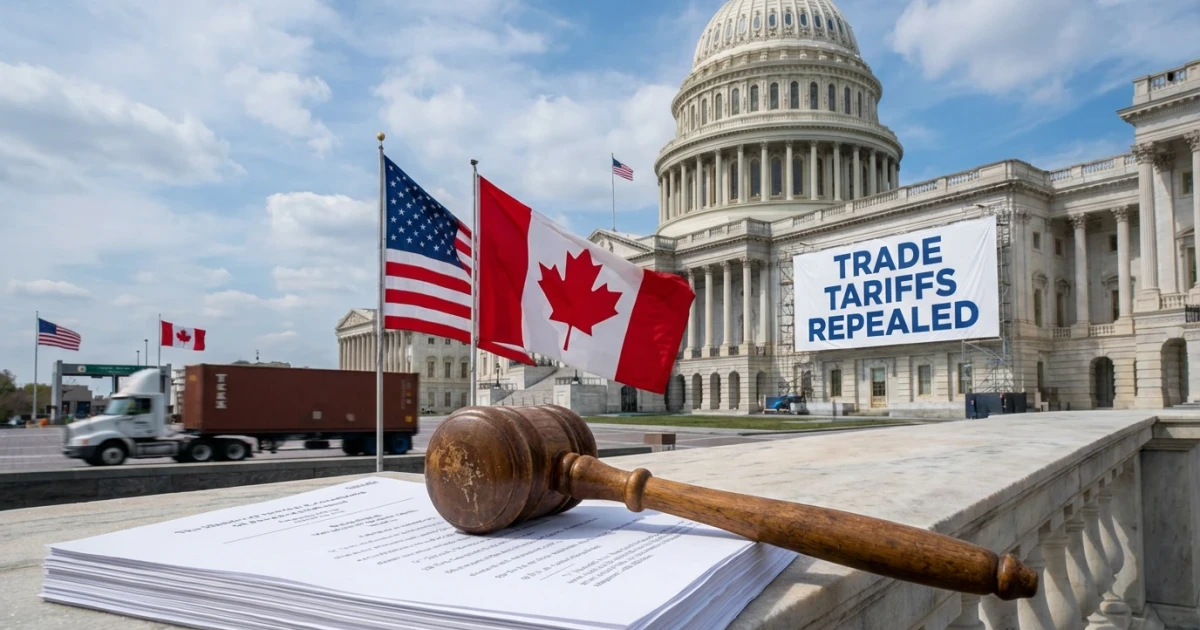
The House of Representatives voted this week to rescind key tariffs on Canadian goods, delivering a rare bipartisan rebuke to the Trump administration’s trade approach and opening the door to a potential reset in US-Canada economic relations.
House Moves Against Tariffs After Mounting Criticism
Lawmakers in the House passed H.J.Res.72, a joint resolution that would overturn the tariffs imposed on a wide range of Canadian imports by the Trump administration. The measure, which garnered support across party lines, reflects growing concerns in Congress about the impact of tariffs on American businesses, consumers, and US-Canada diplomatic ties, as reported by both The New York Times and The Guardian.
The Trump administration imposed the tariffs as part of a broader strategy to renegotiate trade terms, citing concerns about unfair practices and the need to protect US jobs. However, those moves triggered retaliatory measures from Canada and generated economic uncertainty in sectors ranging from agriculture to manufacturing.
Economic Impact and Industry Response
According to data from the United States Census Bureau, Canada is consistently among the United States’ top trading partners, with two-way trade in goods and services totaling hundreds of billions of dollars annually. The tariffs, and Canada’s retaliatory duties, disrupted established supply chains and increased costs for businesses on both sides of the border.
- US agricultural exports to Canada topped $24.5 billion in 2024, making Canada the largest market for American farm goods.
- The Canada Tariffs Fact Sheet from the Office of the United States Trade Representative details the tariffs’ scope, including levies on steel, aluminum, and a range of consumer products.
- Canadian government analysis found that the tariffs negatively affected key industries, costing hundreds of millions in lost revenue and jobs according to Global Affairs Canada.
Political Significance and Next Steps
Both The New York Times and The Guardian describe the House vote as a direct challenge to President Trump’s trade strategy. The measure must still clear the Senate and face a likely presidential veto, but the bipartisan support it received signals widespread unease with the ongoing trade tensions. Lawmakers cited the economic toll on their constituents and the importance of maintaining strong ties with Canada, a longstanding ally.
The Congressional Budget Office issued a cost estimate for the resolution, projecting that lifting the tariffs would reduce federal revenue from customs duties but could relieve pressure on US businesses and consumers facing higher input costs.
Broader Implications for US-Canada Trade
Rescinding the tariffs could pave the way for renewed cooperation on trade issues and help restore confidence among businesses reliant on cross-border commerce. The US-Canada Trade Dashboard shows that the two countries’ economies are deeply intertwined, with billions in goods and services crossing the border daily.
While the final outcome in the Senate remains uncertain, the House vote marks a significant shift in the US political landscape. It reflects a growing recognition in Congress of the costs of protracted trade disputes and the value of stable, rules-based trade with close partners.
Conclusion
The House’s decisive action signals a critical moment in US trade policy and US-Canada relations. As the Senate takes up the measure, businesses and workers on both sides of the border will be watching closely for signs of a return to normalcy—and the potential economic benefits that could follow.