Business
US-Iran Talks Collapse Raises Market Risk Concerns
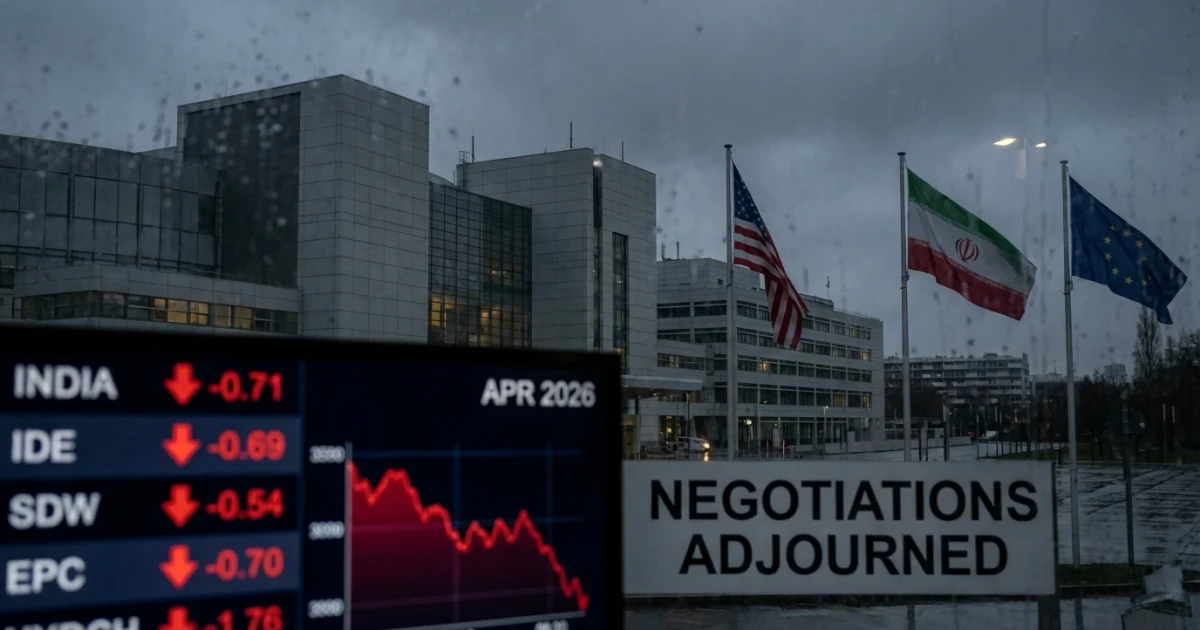
Global markets are preparing for heightened volatility after US-Iran talks failed to reach a breakthrough, casting uncertainty over geopolitical stability and investor sentiment as the new week begins.
Negotiations End Without Progress
Efforts to ease tensions between the United States and Iran ended in deadlock, according to Bloomberg. The diplomatic impasse has dashed hopes for near-term relief in a region critical to global energy supplies and financial markets. With negotiations stalling, investors are closely monitoring potential ripple effects on risk assets and regional security.
Impact on Global Risk Assets
Financial analysts anticipate that the collapse of talks could weigh heavily on risk assets such as equities and emerging market securities. Historically, periods of increased geopolitical tension, especially involving energy-producing nations, have led to spikes in market volatility. The CBOE Volatility Index (VIX), a widely used measure of market risk, is expected to react as investors seek safe havens.
- Market participants often shift capital into assets perceived as safer—such as US Treasuries or gold—when faced with geopolitical uncertainty.
- Emerging market currencies and equities are particularly sensitive to changes in risk appetite linked to Middle East tensions.
Energy Prices and Oil Market Dynamics
The lack of progress in US-Iran negotiations also holds significant implications for global energy markets. Iran remains a major oil producer, and any escalation in tensions could disrupt supply routes through the Strait of Hormuz—one of the world's most critical energy chokepoints. Oil traders are watching closely for price movements in West Texas Intermediate (WTI) crude and other benchmarks, with even modest increases in perceived supply risk leading to rapid price adjustments.
- OPEC's Monthly Oil Market Report provides ongoing data on production and supply disruptions, which remain key variables in the current environment.
- Energy sector equities and related derivatives often experience increased trading volumes during periods of tension involving Iran.
Sanctions and Economic Fallout
The failure to reach an agreement means existing US sanctions on Iran will stay in place. These measures continue to restrict Iranian oil exports and financial transactions, putting pressure on both the Iranian economy and global supply chains. The World Bank's Iran economic data highlights the ongoing challenges faced by the country under a strict international sanctions regime.
- Foreign direct investment in the region remains cautious amid regulatory and security risks.
- International banking flows, tracked by BIS International Banking Statistics, reflect ongoing hesitancy among global banks to increase exposure to Iranian assets.
Investor Outlook and Forward Guidance
With no resolution in sight, analysts recommend a cautious approach to portfolio risk. Sectors with direct exposure to the Middle East—especially energy, transportation, and emerging markets—may experience near-term turbulence. At the same time, safe-haven assets and defensive sectors could attract increased inflows as uncertainty persists.
As the week unfolds, markets will look for signals from policymakers and international organizations, monitoring both diplomatic channels and economic fundamentals for signs of de-escalation or further escalation. The IMF World Economic Outlook underscores the broader risks geopolitical shocks pose to global growth and financial stability.
Conclusion
The breakdown of US-Iran talks has injected renewed uncertainty into global markets. While the full impact will depend on future developments, investors and policymakers alike are bracing for a challenging period, underscoring the interconnectedness of geopolitics and financial markets.