US News
U.S. job openings fall, healthcare vacancies post biggest drop in 11 months

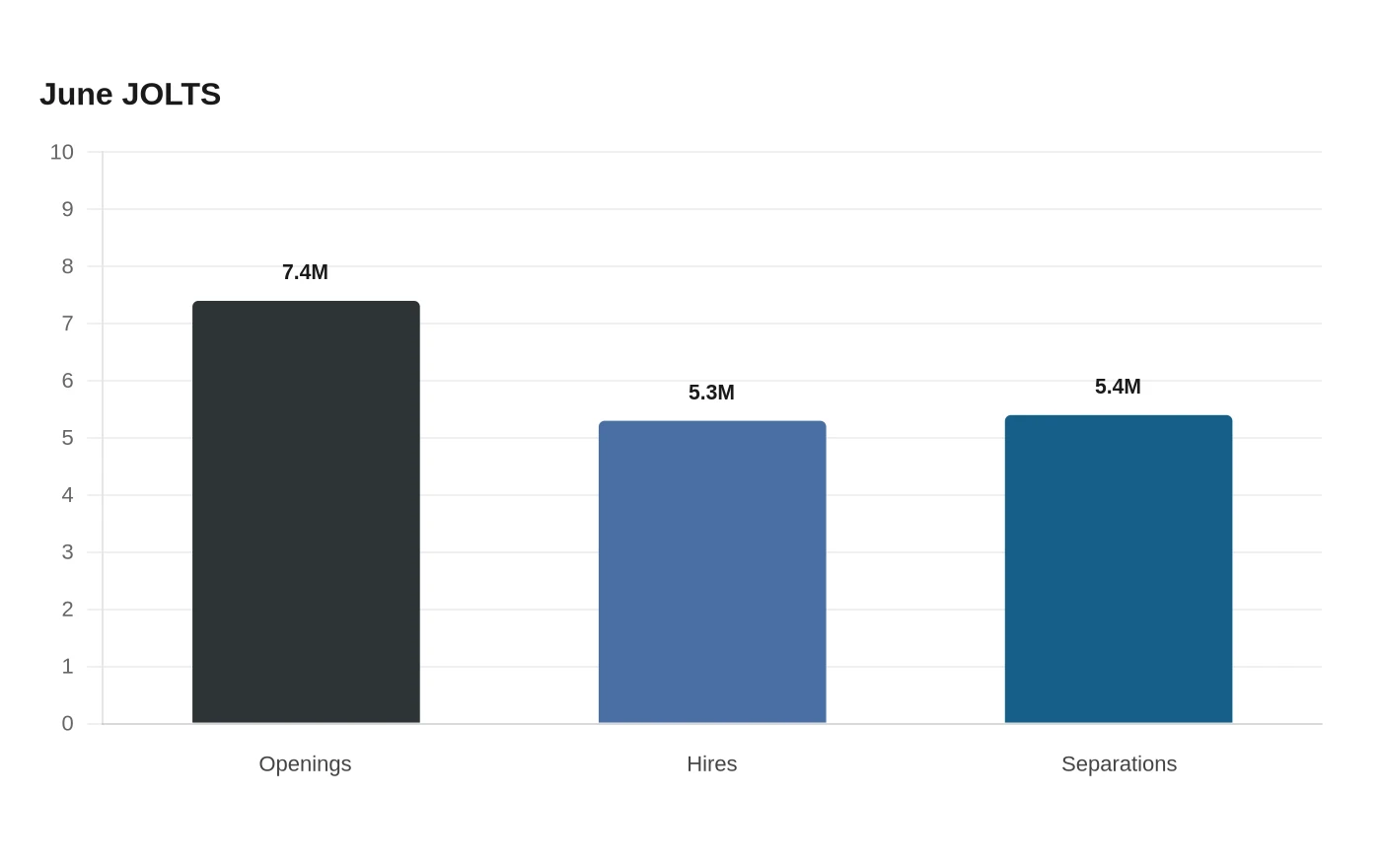
The Labor Department said U.S. job openings slipped to 7.4 million in June, and healthcare and social assistance vacancies posted their biggest drop in 11 months. Hires held at 5.3 million, while total separations were 5.4 million, a sign the labor market cooled without a sharp break.
The health care and social assistance sector still had 1.347 million openings in June, according to the Federal Reserve Bank of St. Louis’ FRED series using Bureau of Labor Statistics data. That keeps the industry among the labor market’s most closely watched pressure points, because hospitals, clinics, long-term care facilities and home health providers have spent years chasing nurses, aides and support staff. A decline in posted vacancies can mean employers are pulling back expansion plans, filling positions faster or tightening hiring after months of elevated demand.

The June reading followed a volatile spring. In May, job openings rose to 7.594 million, the highest since May 2024, even as health care and social assistance vacancies fell by 115,000. June’s drop suggests the pattern is not moving in a straight line, but it does show that one of the economy’s deepest staffing gaps is no longer widening as quickly as it was earlier in the recovery. Since December 2023, health care and social assistance has added about 1.76 million jobs, yet labor supply remains tight enough that even a smaller number of openings can still leave employers competing for scarce workers.

For the Federal Reserve, the report adds another piece to the case that the jobs market is cooling. Openings are one of the clearest gauges of future wage pressure: when fewer positions are on offer, employers have less reason to bid pay higher to attract workers. That can help ease inflation, but it can also slow hiring in an industry where waiting times, staffing ratios and overtime costs are already under scrutiny. Labor Department projections still point to 15% employment growth in health-care occupations over the next decade, far above 3.7% overall, so the question is less whether demand will persist than how fast employers can match it without stretching budgets or care delivery.
Sources
- [1]reuters.com
- [2]bls.gov
- [3]fred.stlouisfed.org
- [4]facebook.com