Business
U.S. jobless claims fall, labor market stays in slow-hire mode

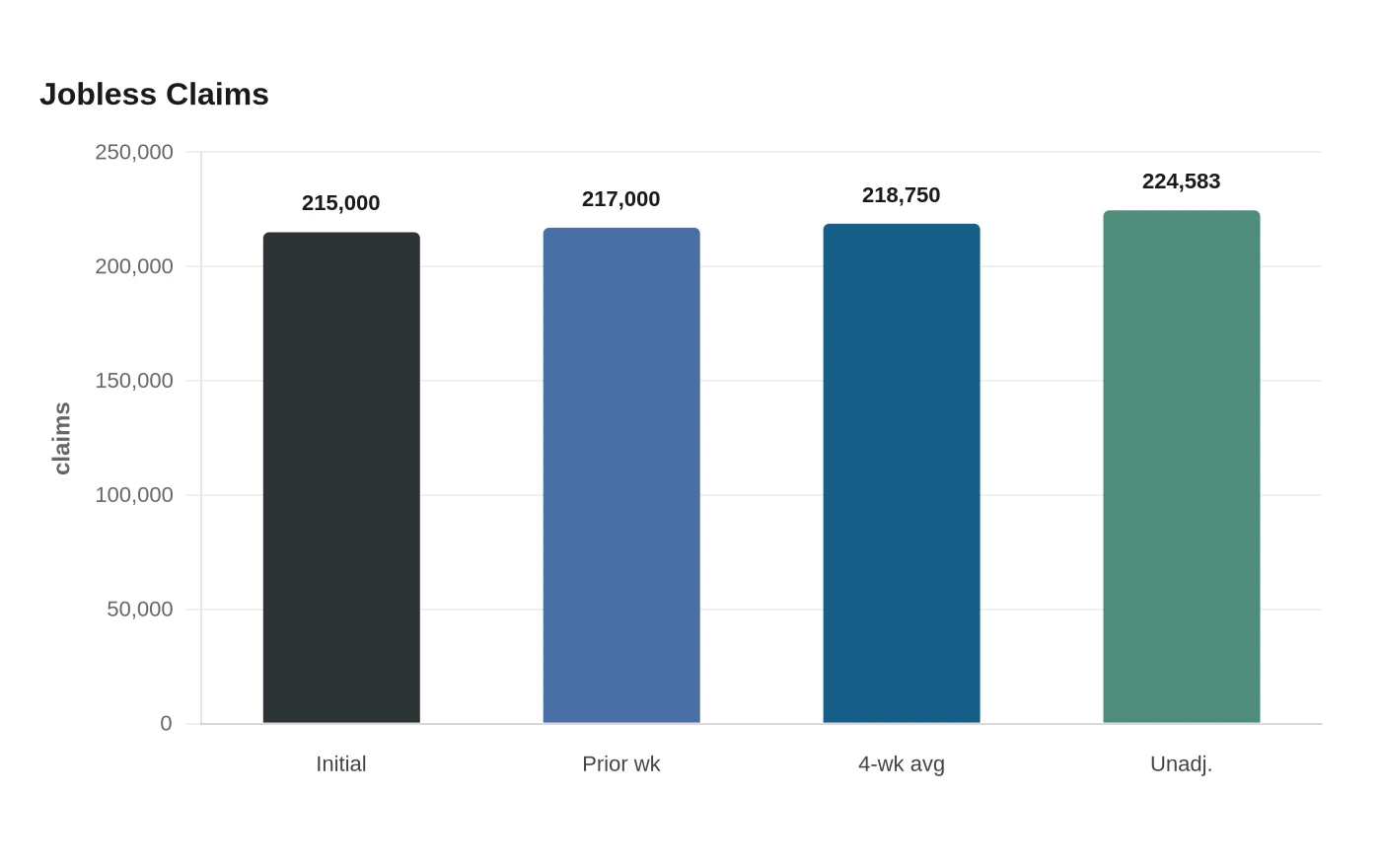
New claims for U.S. unemployment benefits fell to 215,000 in the week ended July 4, keeping layoffs subdued even as hiring remained sluggish and workers stayed stuck on the sidelines. Initial claims for state benefits dropped by 2,000 from the prior week, while the four-week moving average fell to 218,750.
The prior week’s claims reading was revised up to 217,000 from 215,000, and the latest unadjusted total rose by 9,967 to 224,583. California, Michigan and Missouri posted the largest increases. Some of that jump reflected plant shutdowns for maintenance and retooling, including the auto industry’s summer scheduling, even as General Motors and Ford Motor Company canceled summer shutdowns at many plants. Seasonal quirks around the school year also continued to distort the data, because some states allow non-teaching staff to apply for unemployment benefits during long school holidays.
The seasonally adjusted insured unemployment rate held at 1.2 percent for the week ending June 27, while continuing claims rose by 8,000 to 1,814,000. Samuel Tombs, chief U.S. economist at Pantheon Macroeconomics, said claims remain “low and stable,” adding that the recent rise likely reflected residual seasonality rather than a meaningful increase in labor-market slack.
The broader June jobs report showed total nonfarm payrolls rising by only 57,000 and the unemployment rate holding at 4.2 percent. The labor force participation rate slipped to 61.5 percent, the employment-population ratio edged down to 59.0 percent, and long-term unemployment climbed to 1.9 million, up 286,000 from a year earlier.
The Federal Reserve’s June 16-17 meeting minutes, released July 8, showed policymakers expected labor conditions to stay stable in the near term. Some participants also warned that geopolitical uncertainty or a weaker economic outlook could eventually push firms to slow hiring further or start cutting staff.
Sources
- [1]money.usnews.com
- [2]dol.gov
- [3]bls.gov
- [4]federalreserve.gov
- [5]wtaq.com