Business
U.S. jobs growth expected to slow, but labor market stays solid
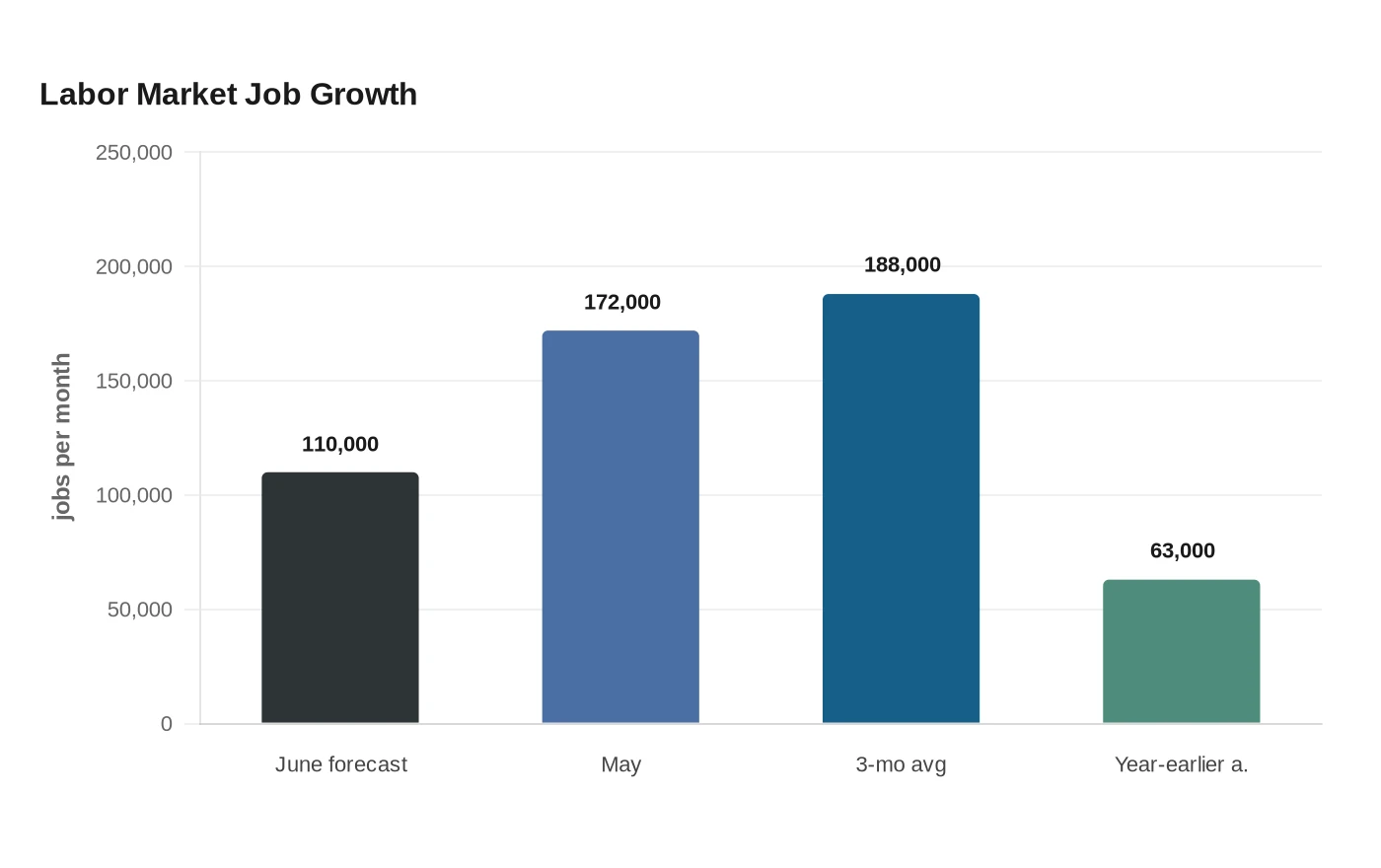
The Bureau of Labor Statistics moved the June Employment Situation release to Thursday, July 2, because Friday, July 3, was the Independence Day holiday, giving markets and policymakers a faster read on a labor market expected to cool without cracking. Economists looked for nonfarm payrolls to rise by 110,000 in June, down from 172,000 in May, while the unemployment rate was projected to hold at 4.3% for a fourth straight month.
That forecast mattered because the Federal Reserve left its benchmark federal funds target range unchanged at 3.5% to 3.75% at its June 16-17 meeting, keeping the policy debate centered on whether hiring could slow enough to help contain inflation without forcing a sharper downturn. Job growth over the previous three months had averaged 188,000 a month, far above the 63,000 average in the same period a year earlier, a pace that still pointed to resilience even as momentum eased.

A string of other labor indicators reinforced that picture. ADP said private-sector employment rose by 98,000 jobs in June, below expectations for 118,000, while planned layoffs announced by U.S.-based employers fell 53% to 45,849, the lowest since December 2025. Initial jobless claims dropped to 215,000 in a late-June weekly report, another sign that layoffs remained historically low even as hiring slowed.

Consumers were noticing the shift. The Conference Board said the share of consumers saying jobs were “hard to get” climbed to 22.5% in June, the highest since January 2021, even as its consumer confidence index rose to 91.2 from a revised 90.6 in May, helped by lower gasoline prices. Dan North, senior economist for North America at Allianz Trade Americas, said the labor market had firmed up over the past three months and looked like a “no-hire, no-fire environment.”
Some economists also argued that the labor market’s break-even pace had fallen as immigration crackdowns reduced labor-force growth, meaning fewer new jobs were needed each month to keep unemployment steady. Against that backdrop, a June payroll gain near 110,000 would have signaled a slower, but still solid, expansion rather than a recessionary turn.
Sources
- [1]money.usnews.com
- [2]msn.com
- [3]bls.gov
- [4]mediacenter.adp.com
- [5]conference-board.org
- [6]federalreserve.gov
- [7]whbl.com