Business
U.S. labor market stays steady as productivity accelerates in second quarter
U.S. nonfarm business productivity rose 1.4% in the second quarter, while weekly jobless claims edged up only modestly and planned layoffs fell in July, a combination that kept the labor market looking stable even as the economy cooled. The U.S. Bureau of Labor Statistics said output increased 1.7% and hours worked rose just 0.3%, while unit labor costs climbed at a 1.3% annual rate.
The productivity gain was stronger than economists had expected, coming in well above the 0.6% pace forecast in market estimates. That matters because faster output per hour can give employers more room to absorb higher pay without passing the full cost on to customers, a key question for inflation and corporate margins as the Federal Reserve weighs when to move on interest rates.
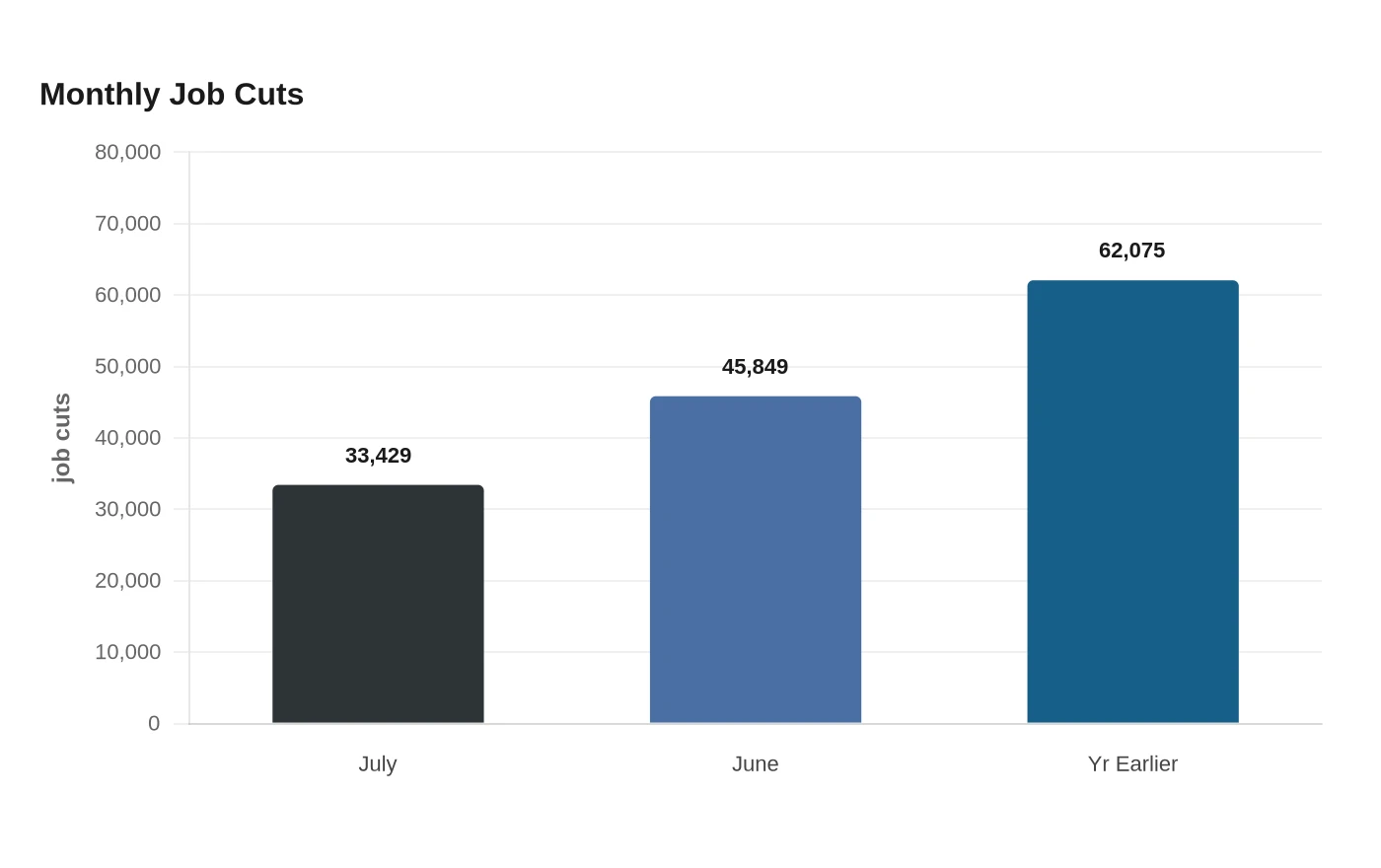
The labor backdrop was equally important. Challenger, Gray & Christmas said U.S.-based employers announced 33,429 job cuts in July, down 27% from 45,849 in June and down 46% from 62,075 a year earlier, the lowest monthly total in two years. The outplacement firm said artificial intelligence was the leading reason for job cuts for a fifth straight month and accounted for 10.97K layoffs in July, while hiring plans ticked up.
The latest figures fit a labor market that has cooled without breaking. In June, nonfarm payrolls rose by 57,000 and the unemployment rate was 4.2%, reinforcing the pattern of slower hiring but limited firing that has defined much of 2026. Weekly claims have also moved only gradually, with each recent reading showing employers are not cutting staff en masse.
For businesses, the productivity pickup could prove just as important as the payroll data. Companies investing in artificial intelligence, automation, advanced manufacturing and logistics software may be able to wring more output from the same workforce, supporting earnings even if demand is uneven. For workers, that can mean steadier job security, though it does not guarantee broad wage gains if firms use the extra efficiency to protect margins instead of bidding up pay.
For the Federal Reserve, the mix points toward patience. A labor market that is still adding jobs, a layoffs picture that is subdued and a productivity trend that is improving all make it easier to argue that inflation pressure can ease without a sharp rise in unemployment. That is the soft-landing case in its clearest form: slower growth, but not a break in the job market.
Sources
- [1]reuters.com
- [2]bls.gov
- [3]challengergray.com