Health
US measles cases surpass all of 2025 with months left in year
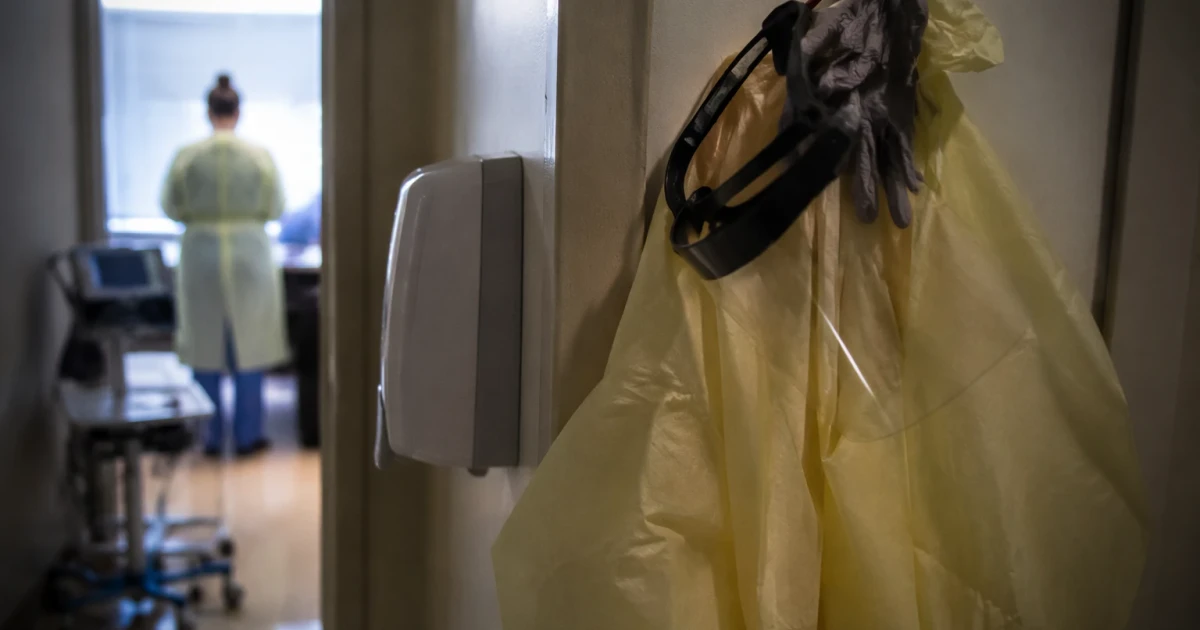
The United States has already recorded 2,318 confirmed measles cases in 2026, eclipsing all of 2025’s 2,289 with months still left in the year. The increase has been driven by outbreaks in states including South Carolina, Texas, Utah, Arizona and Virginia, where county-level vaccination rates show uneven MMR coverage.
Johns Hopkins University’s U.S. Measles Tracker showed 2,295 cases as of July 22, after CDC-based counts put the national total at 2,073 later in June and 2,030 on June 5 across 38 states and Washington, D.C. That pace marks a sharp rise in little more than six weeks, and it has kept measles above the levels seen in recent years.
Measles spreads through the air when an infected person breathes, coughs or sneezes, and the virus can linger in indoor spaces after the person leaves. The World Health Organization says the disease can cause severe illness, complications and death, and that vaccination is the best prevention. The measles-mumps-rubella vaccine remains the main defense, especially in communities where routine childhood immunization has slipped.
Public health experts have linked the recent surge to pockets of unvaccinated people, uneven access to routine care and vaccination fatigue after the pandemic. Johns Hopkins’ International Vaccine Access Center has said years of high coverage once protected even people who were unvaccinated or under-vaccinated through herd protection, but that buffer is now under strain. The tracker also maps confirmed cases alongside county-level MMR vaccination rates, underscoring how quickly the virus can move where protection is thinner.
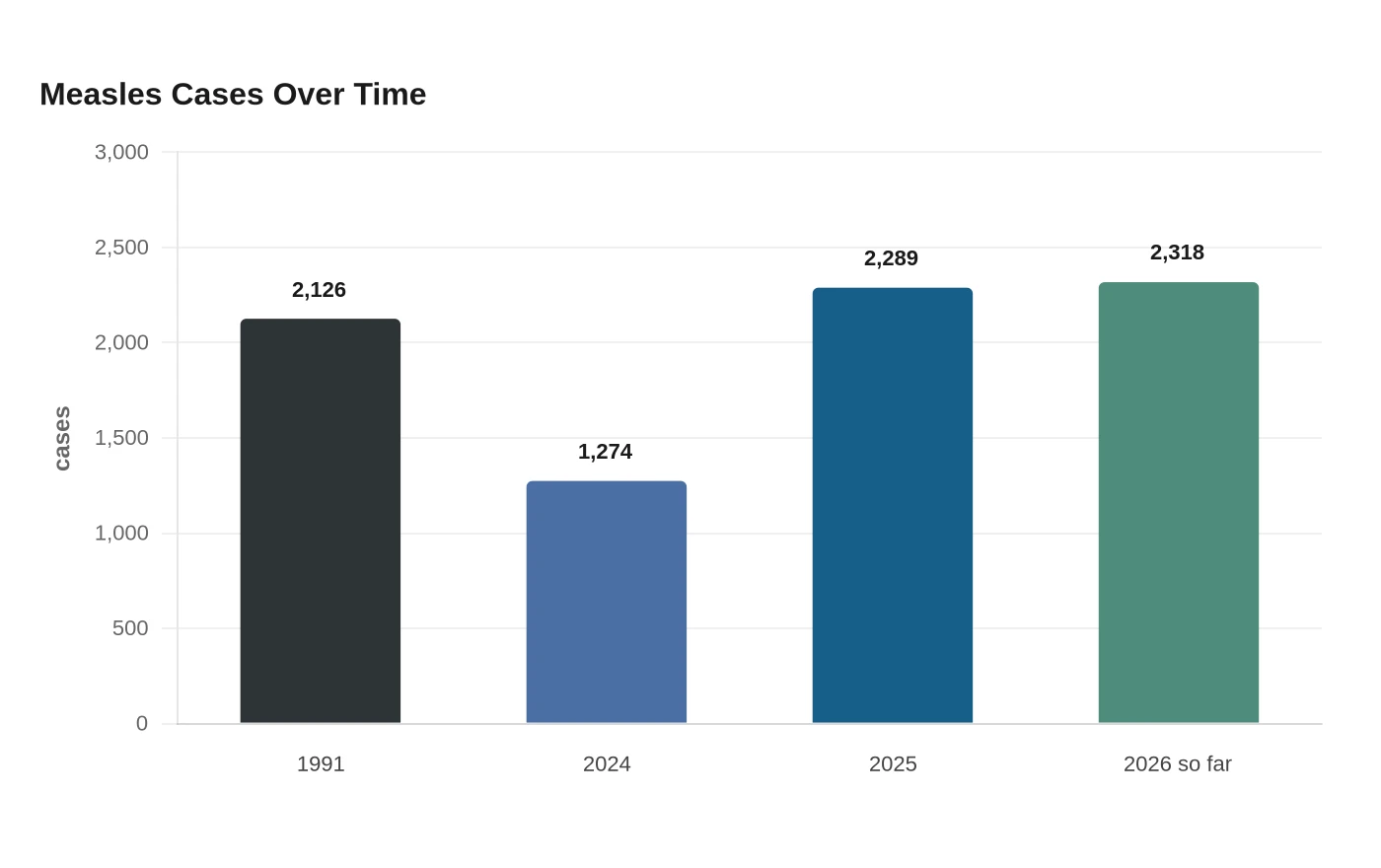
The scale of the rebound is stark against the disease’s modern history in the United States. The CDC says the country achieved measles elimination in 2000, meaning year-round endemic transmission was interrupted. Johns Hopkins reported 1,281 cases as of July 7, 2025, already above the 1,274 cases recorded in all of 2024, and 2025 ended at 2,289, the highest annual total since elimination. The 2026 count has now moved beyond the 2,126 cases the country recorded in 1991, the last time numbers reached this level.
The practical cost is already visible in schools, summer camps and travel corridors, where a single infection can trigger exposure notices, testing and exclusions for people who are not fully vaccinated. Hospitals may also need to isolate suspected cases to prevent spread. With the school year approaching, the same gaps in immunization that allowed outbreaks to spread through the summer are carrying into the fall, putting more communities at risk of a disease public health officials had spent two decades trying to keep out of sustained circulation.
Sources
- [1]apnews.com
- [2]abcnews.com
- [3]publichealth.jhu.edu
- [4]cidrap.umn.edu
- [5]kff.org
- [6]cdc.gov
- [7]who.int
- [8]usnews.com