Health
US Measles Outbreak Surges: Over 400 Cases Reported Across 14 States Amid Falling Vaccination Rates
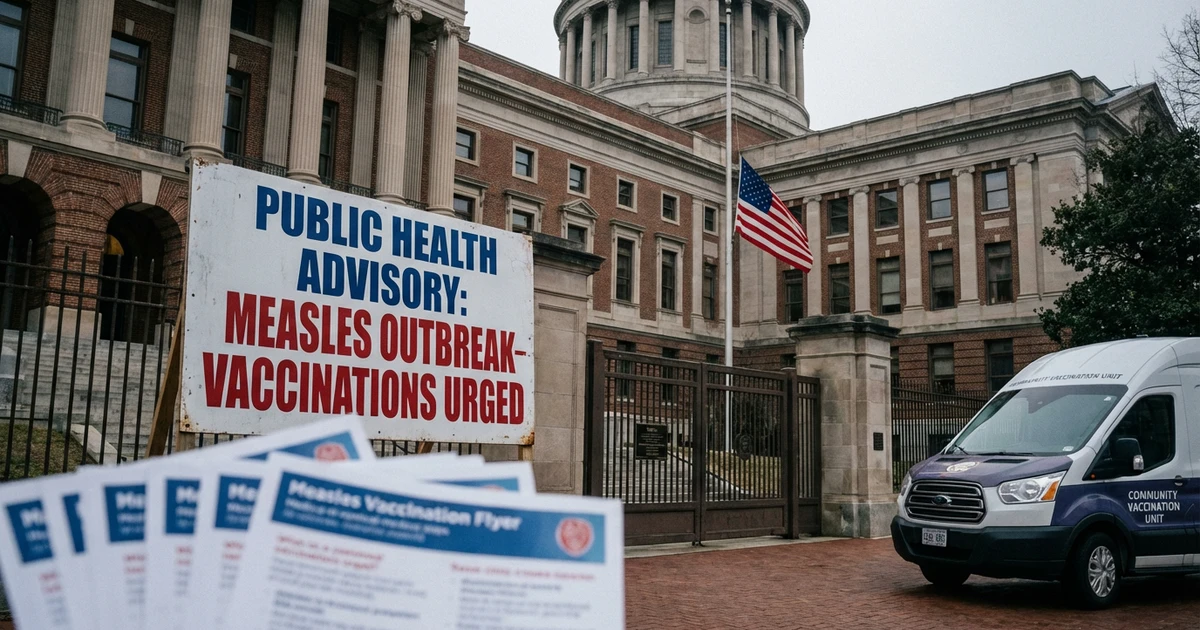
The United States is confronting a significant measles resurgence, as the Centers for Disease Control and Prevention (CDC) report more than 400 confirmed cases of measles spanning 14 states in early 2026. The outbreak’s growing reach highlights urgent public health concerns, with experts pointing to declining vaccination rates as a key driver behind the spike.
Measles Cases Climb Nationwide
According to the CDC, the US has already surpassed 400 measles cases in 2026, with new infections cropping up in communities across 14 states. The CDC’s latest update underscores how rapidly the highly contagious disease can spread, especially in areas with clusters of unvaccinated individuals.
- More than 400 cases reported nationwide as of January 2026
- Infections present in 14 states, with some states reporting large localized outbreaks
This marks a troubling reversal after years of progress toward measles elimination in the US, where annual case totals had dwindled to double digits as recently as the early 2020s.
South Carolina Outbreak Signals Severity
One of the most severe outbreaks is unfolding in South Carolina, where reported measles cases have reached 700. This local surge demonstrates how quickly measles can spread in under-vaccinated populations, overwhelming local health systems and putting vulnerable individuals at risk.
The outbreak in South Carolina has prompted state and local health authorities to intensify their response, urging residents to check their vaccination status and seek immunization if needed.
Falling Vaccination Rates Fuel Measles Resurgence
Public health officials attribute the rise in cases primarily to declining measles-mumps-rubella (MMR) vaccination rates across the US. As reported, the trend of decreasing childhood immunizations in recent years has created pockets of susceptibility, which measles exploits with its high transmissibility.
- Measles can be prevented with two doses of the MMR vaccine, which is safe and over 97% effective.
- Recent drops in vaccination coverage—due to pandemic disruptions, misinformation, and vaccine hesitancy—have lowered community protection.
- Outbreaks most commonly affect unvaccinated children and adults who lack immunity.
Why Measles Is a Public Health Threat
Measles is among the most contagious viral diseases, with each infected person capable of spreading the virus to up to 18 others in susceptible populations. Symptoms often begin with high fever, cough, runny nose, and red eyes, followed by a characteristic rash. Complications can include pneumonia, encephalitis, and in rare cases, death—especially in young children and immunocompromised individuals.
Because of measles’ high contagiousness, even small declines in vaccination coverage can lead to widespread outbreaks. The CDC warns that community immunity begins to erode when MMR coverage falls below 95%.
Public Health Response and Next Steps
In response to the surge, federal and state health officials are:
- Issuing public advisories urging vaccination for children and adults lacking documented immunity
- Enhancing surveillance and contact tracing in affected areas
- Collaborating with schools, pediatricians, and community groups to promote accurate vaccine information
Experts emphasize that boosting MMR vaccination rates is the most effective way to halt the outbreak and protect at-risk communities.
Looking Ahead: Containment and Prevention
The current measles outbreaks serve as a stark reminder of the importance of maintaining high vaccination rates. Public health leaders urge parents, schools, and healthcare providers to review immunization records and close any gaps in protection.
With continued cooperation and a renewed focus on vaccination, the US can work to contain the current outbreaks and prevent future resurgences of measles and other vaccine-preventable diseases.
Sources
- [1]ABC News