Business
US producer prices jump 1.1% in May on soaring energy costs

Higher fuel costs are starting to move through the economy, and the key question for households is how much of that surge will show up in grocery, utility and other bills over the next few months. The answer may be: enough to keep inflation sticky. The U.S. Bureau of Labor Statistics said producer prices for final demand rose 1.1% in May, the biggest monthly increase in the wholesale measure, while the 12-month gain accelerated to 6.5%, the highest since November 2022.
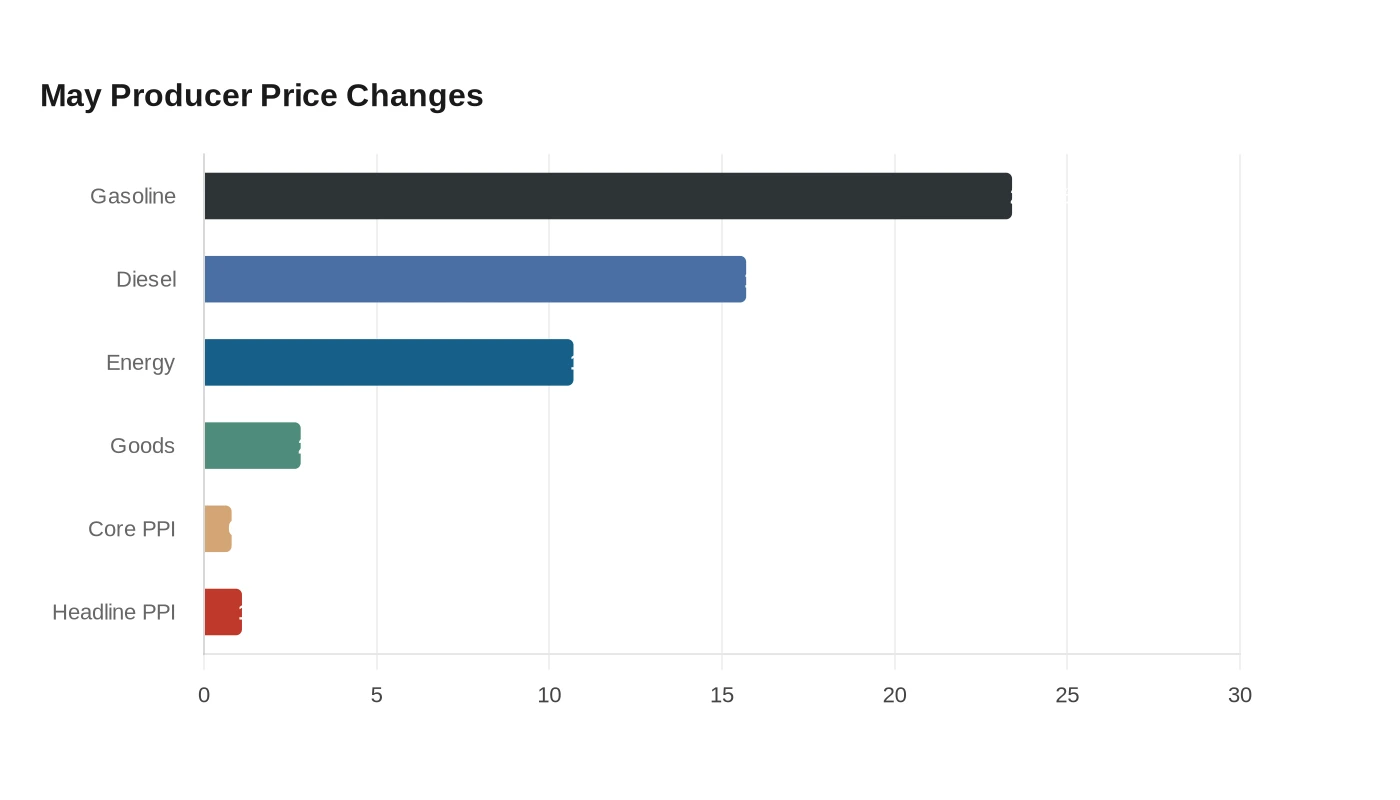
The energy channel did most of the damage. Final demand goods climbed 2.8% in May, the largest increase since the series began in December 2009, and about 80% of that jump came from a 10.7% increase in final-demand energy prices. Gasoline prices surged 23.4% for the month, while diesel fuel rose 15.7%. Those are the kinds of increases that can ripple beyond the pump, lifting shipping costs, squeezing margins and eventually feeding into prices paid by consumers.
The BLS also reported that producer prices excluding foods, energy and trade services rose 0.8% in May, the largest advance since March 2022. On a 12-month basis, that core reading rose 5.1%, the biggest annual increase since October 2022. That matters because it suggests the pressure was not confined to energy alone, even if gasoline and diesel did much of the immediate work.
Economists surveyed by Dow Jones had expected a smaller 0.7% rise in May, making the report a clear upside surprise. April had already shown producer prices rising 6.0% from a year earlier, with energy up 22.7% over that period, so May extended a pattern of building price pressure rather than easing it.
The BLS defines producer prices as the average change over time in prices received by domestic producers for their output, which makes the index an early warning signal for pipeline inflation. When those costs rise sharply at the factory and freight level, the next stage often shows up in household budgets, especially if energy prices stay elevated. Reuters said the May increase was driven by higher energy-product costs linked to the Middle East conflict, adding a geopolitical source of risk just as the Federal Reserve is trying to judge whether inflation is cooling enough to justify rate cuts. For now, the producer-price data suggest the road back to calmer inflation may run through energy markets first.
Sources
- [1]news.google.com
- [2]bls.gov
- [3]cnbc.com
- [4]msn.com