Politics
US Senate Blocks Bid to Curb Trump’s Iran War Powers
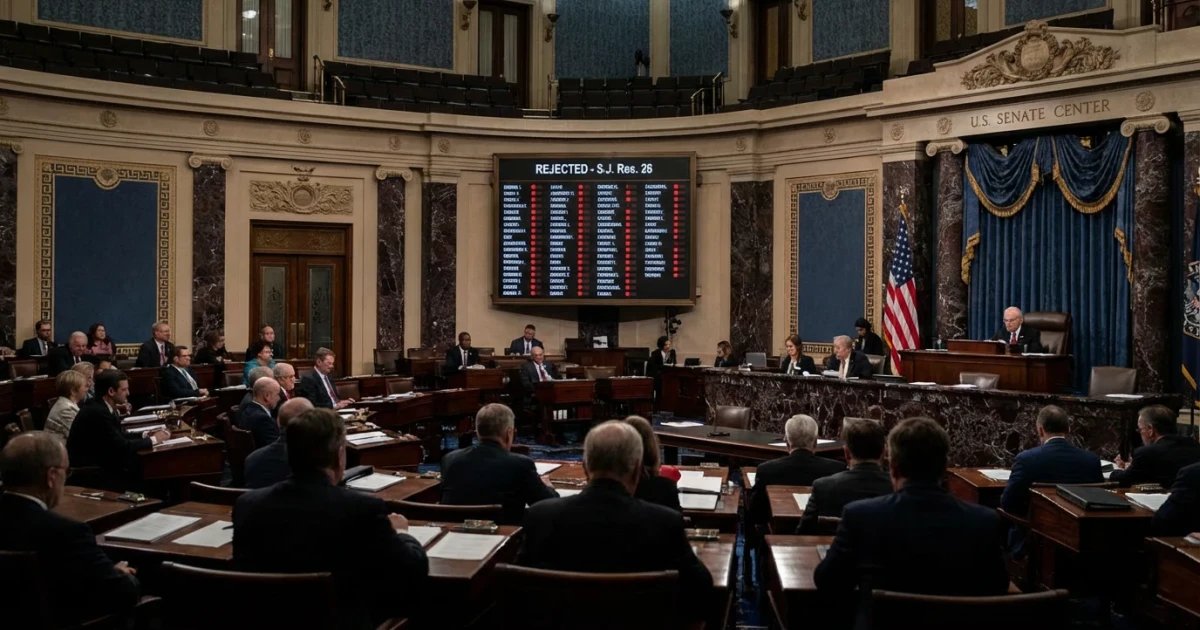
The US Senate has once again rejected a resolution seeking to limit former President Donald Trump’s authority to take military action against Iran, according to reports from multiple international outlets. The vote, held on April 15, 2026, saw Senate Republicans block the measure, marking the latest chapter in the ongoing debate over congressional oversight of presidential war powers.
Senate Republicans Oppose Resolution
Both Al Jazeera and The Times of Israel reported that the resolution failed to pass, with opposition largely along party lines. Republican senators voted down the proposal, which was designed to require explicit congressional approval before any further military engagement with Iran. This outcome mirrors previous efforts by congressional Democrats to reassert legislative control over the use of military force in the region.
- The resolution aimed to reinforce Congress’s constitutional role in authorizing acts of war.
- This follows a series of recent Senate votes on Iran war powers, reflecting continued division on the issue.
Background: War Powers and the Presidency
The US Constitution grants Congress the power to declare war, but presidents have increasingly conducted military operations without explicit legislative approval. The war powers debate intensified during Trump’s presidency, especially after the January 2020 US drone strike that killed Iranian General Qassem Soleimani. Since then, members of Congress have pushed for greater oversight to prevent future unilateral military actions.
Efforts to limit presidential authority have included the 2020 Senate vote on the Iran War Powers Resolution, which passed the Senate but was vetoed by President Trump. The most recent attempt, now defeated, underscores the ongoing struggle between the legislative and executive branches over control of US military operations.
Legislative Action and Partisan Divides
According to analysis from The Times of Israel, Republican senators have consistently argued that such resolutions could undermine the president’s ability to respond swiftly to threats from Iran. Democratic lawmakers, by contrast, emphasize the importance of upholding constitutional checks and balances, referencing the history of war powers resolutions in Congress.
- Supporters of the resolution argue that unchecked presidential authority risks entangling the US in further conflict.
- Opponents contend that the president must retain flexibility to act in the national interest, particularly in volatile regions like the Middle East.
What’s Next for Congressional Oversight?
While the Senate’s rejection of the latest war powers resolution represents a setback for advocates of congressional oversight, the issue is unlikely to disappear. Legal and policy analysts expect continued efforts to revisit the balance of war powers between Congress and the White House, as the legacy of recent conflicts—including those involving Iran—remains a source of bipartisan debate.
For readers interested in the historical context and legal framework, the Congressional Research Service provides comprehensive analysis of the War Powers Resolution and presidential compliance.
Conclusion
The Senate’s decision highlights the enduring divisions within US government over military authority and the scope of executive power. As tensions with Iran and broader questions about US engagement in the Middle East continue, the war powers debate is set to remain a central issue in American foreign policy and constitutional law.