Politics
US Senate Raises Concerns Over China’s Nuclear Arsenal
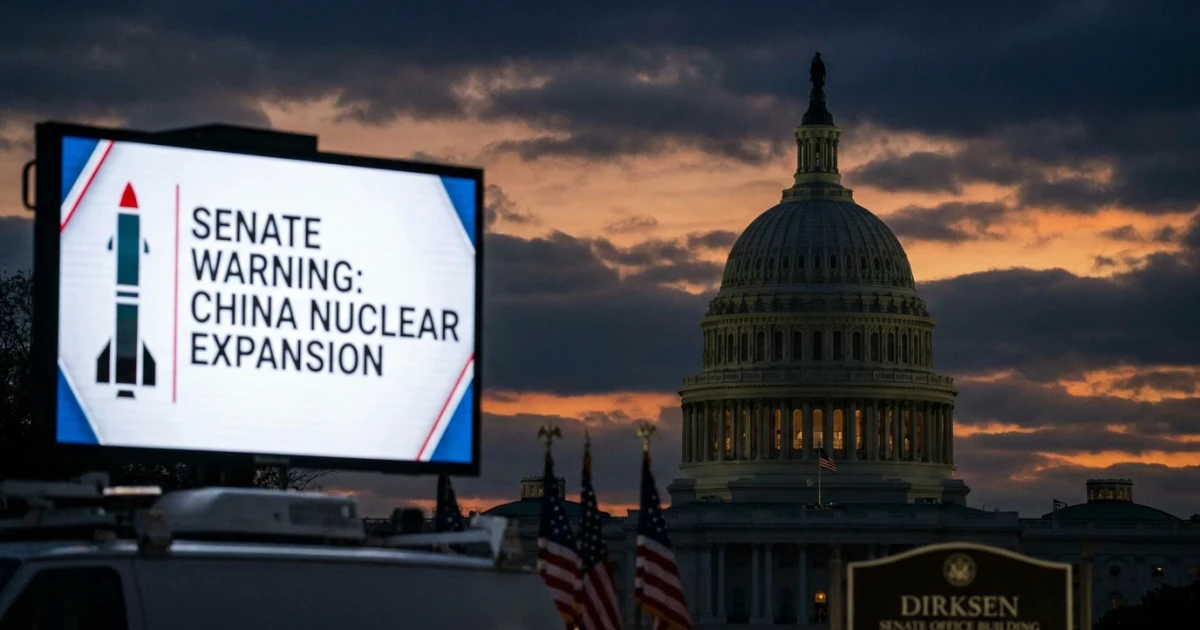
Hours ahead of a highly anticipated summit between Chinese President Xi Jinping and former US President Donald Trump, the US Senate has issued a pointed warning regarding the rapid expansion and modernization of China’s nuclear arsenal. This alert underscores growing security anxieties as both nations prepare for high-level talks expected to address a broad range of strategic issues.
Senate Highlights China’s Nuclear Advancements
The warning, which comes at a pivotal moment in US-China relations, reflects mounting bipartisan concern in Washington over China’s advancing nuclear capabilities. The Senate pointed to evidence that China is not only increasing the size of its warhead stockpile but also modernizing its delivery systems, including intercontinental ballistic missiles (ICBMs), submarine-launched ballistic missiles (SLBMs), and new strategic bombers.
- China’s nuclear warhead count is estimated to have grown, with several sources, including the Federation of American Scientists, reporting ongoing expansion projects at missile silo fields.
- According to the US Department of Defense, China could possess more than 1,000 nuclear warheads by 2030 if current trends continue.
- The Nuclear Threat Initiative notes that China’s strategic doctrine continues to emphasize a "no first use" policy, but recent developments have prompted questions about potential shifts in posture.
Summit Context: Security and Strategic Stability
The timing of the Senate’s statement adds significance to the Xi-Trump summit, which is set against a backdrop of strained relations over trade, technology, and security. Nuclear issues are expected to feature prominently in the leaders’ discussions, with US officials pushing for greater transparency from Beijing regarding its arsenal and intentions.
Recent years have seen heightened rivalry between the two countries, particularly as the US government has called for renewed dialogue on arms control and risk reduction. However, Chinese authorities have often emphasized the comparatively smaller size of their nuclear stockpile relative to the US and Russia, framing their buildup as a necessary response to perceived threats.
International Reactions and Strategic Calculations
The Senate’s warning has resonated with US allies and global arms control experts, who have expressed concern about the potential for a new arms race in Asia. While some analysts, like those at the CNA Corporation, argue that China’s nuclear modernization is primarily about preserving deterrence, others warn that rapid expansion could destabilize longstanding global security frameworks.
China’s official position, as outlined in its statements to the US State Department, maintains that its nuclear policy remains defensive and that it is open to dialogue—though it insists that the US and Russia must lead the way on disarmament given their larger arsenals.
What’s Next?
As the Xi-Trump summit commences, the Senate’s warning sets the stage for difficult negotiations on nuclear risk and strategic stability. US officials are expected to press for greater transparency and arms control commitments, while China is likely to seek assurances regarding its own security concerns and regional interests.
The outcome of these talks may shape the trajectory of US-China relations and the future of global nuclear security. With both nations’ actions under close scrutiny, the world will be watching for signals of cooperation—or further competition—on one of the most consequential issues of the 21st century.