Business
US small business optimism falls as price and hiring worries rise
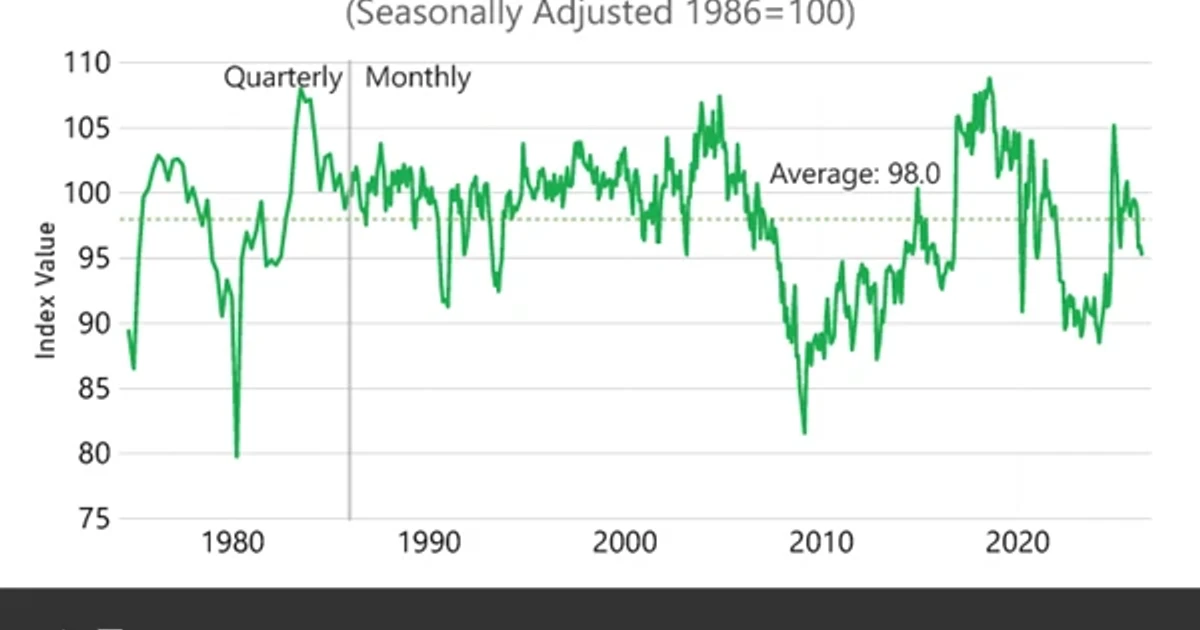
Small-business owners turned more pessimistic in May as higher prices, worsening supply shocks and geopolitical strain pushed planning off course. The National Federation of Independent Business said its optimism index slipped 0.6 point to 95.3, while its uncertainty index jumped 3 points to 91, far above the survey’s long-run average of 68.
That matters because small firms often feel inflation before it fully shows up in national growth or labor data. In the NFIB reading, 34% of owners said they planned to raise prices over the next three months, the highest share since July 2022, and 36% said they had already raised prices, the highest since March 2023. Inflation remained the single most important problem for 18% of owners, underscoring how quickly cost pressure is working through Main Street.
Hiring also softened. The employment index fell to 100.3, net hiring plans dropped to 9%, the lowest since May 2020, and 29% of owners said they had job openings they could not fill, also the weakest reading since May 2020. Labor quality was cited as the top problem by 13% of owners, the lowest since December 2016, but labor costs climbed to 14%, the highest in the survey’s history. That combination points to a market where finding workers is less difficult than paying them.

Investment plans cooled as well. Just 16% of owners said they planned capital outlays in the next six months, the lowest since March 2009, even as 70% reported supply-chain disruptions affecting their business to some extent. TD Economics said six of the 10 index subcomponents deteriorated in the month, a sign that the weakening was broad rather than isolated to one corner of the survey.
Much of the unease was tied to the U.S.-Israeli war with Iran and the risk that disruption in the Strait of Hormuz could keep fuel and commodity costs elevated. NFIB Chief Economist Bill Dunkelberg said unpredictable fuel-price hikes are especially hard for smaller firms to pass on to customers, unlike larger competitors with more pricing power. In Nevada, NFIB state-level comments called for “state policies that do not add to the regulatory burdens Main Street entrepreneurs already deal with,” tying the strain on business confidence to the broader political and policy backdrop.
The NFIB reading lined up with other signs of a stubborn inflation climate. The Labor Department reported consumer prices rose 4.2% in May from a year earlier and 0.5% from April, the fastest annual pace in three years. At the same time, the University of Michigan said consumer sentiment fell to 44.8 in May, near a historical trough, as year-ahead inflation expectations rose to 4.8% and long-run expectations climbed to 3.9%.
Sources
- [1]money.usnews.com
- [2]nfib.com
- [3]economics.td.com
- [4]sca.isr.umich.edu