Business
U.S. small-business optimism falls as price hike plans surge
Small-business owners are getting more willing to pass costs on to customers, a warning sign that inflation pressure has not gone away. In May, the share of owners planning to raise prices over the next three months climbed to 34%, the highest level since July 2022, while 36% said they had already raised prices, the strongest reading since March 2023.
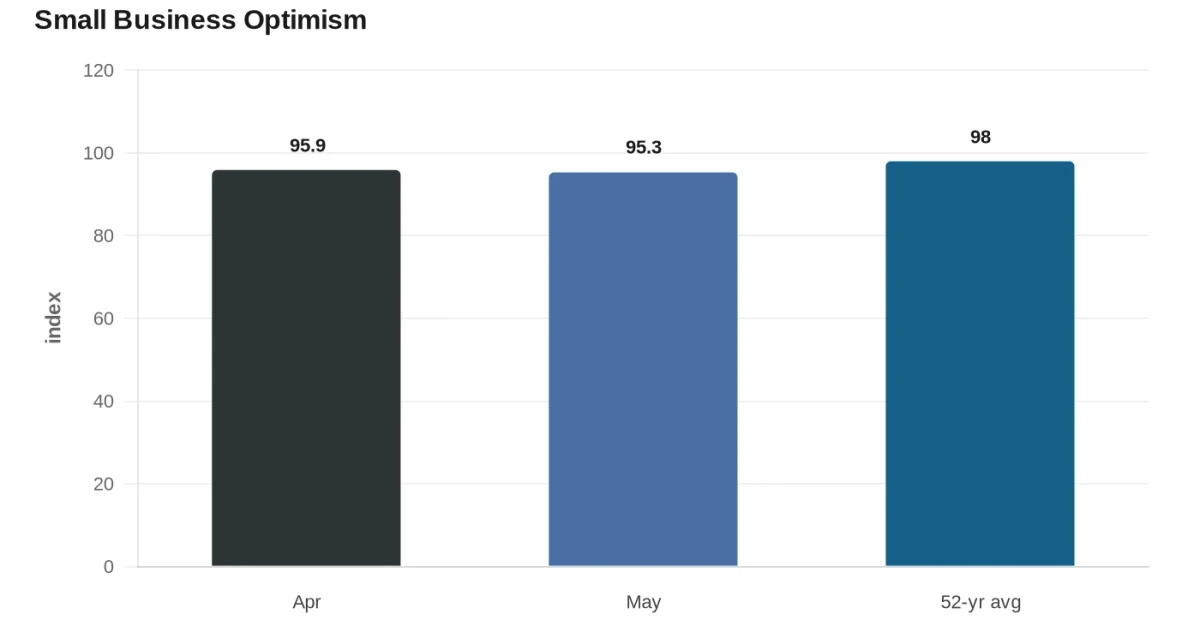
That shift came as the National Federation of Independent Business said its Small Business Optimism Index fell 0.6 point to 95.3, below its 52-year average of 98.0. The group’s Uncertainty Index rose 3 points to 91, up from 88 in April, reinforcing the sense that owners were facing a murkier outlook even as their pricing power held up. The May survey was based on 504 respondents from a random sample of member firms surveyed through May 29, 2026.

The pricing pressure matters because small firms are often the first to feel changes in demand, wages and borrowing costs, and they are also among the most likely to move prices higher when margins get squeezed. Reuters said inflation ranked as the second most important problem for small businesses after taxes, and the data pointed to a sector still struggling to absorb higher input costs rather than one that is quickly returning to normal.
Labor readings also weakened. A net 9% of owners said they planned to add jobs over the next three months, the lowest level since May 2020, while 29% reported job openings they could not fill, also the weakest figure since May 2020. At the same time, 14% of owners said labor costs were their single most important problem, the highest reading in the survey’s history, even as 13% named labor quality, the lowest since December 2016. Planned capital outlays over the next six months fell to 16%, the lowest since March 2009.
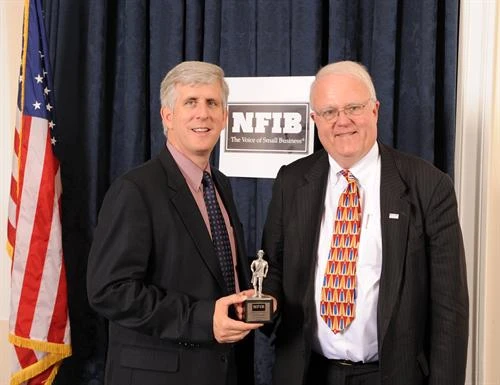
Bill Dunkelberg, NFIB’s chief economist, said some owners were encouraged by AI investment, but he also pointed to “significant and unpredictable hikes in fuel prices,” which many small firms cannot absorb as easily as larger corporations. Reuters also quoted NFIB as saying, “Uncertainty is the enemy of growth and investment,” a message that echoed broader concerns about oil markets, commodities and geopolitical disruption.
The May figures marked a clear deterioration from April, when the Optimism Index stood at 95.9, the Uncertainty Index was 88 and a net 27% of owners planned to raise prices. The NFIB Research Foundation has tracked quarterly Small Business Economic Trends data since 1973 and monthly surveys since 1986, and its latest reading suggests that sticky inflation remains a live risk for the rest of 2026.
Sources
- [1]finance.yahoo.com
- [2]nfib.com
- [3]economics.td.com
- [4]money.usnews.com
- [5]morningstar.com