Business
U.S. solar developers rush to lock in subsidies before July deadline
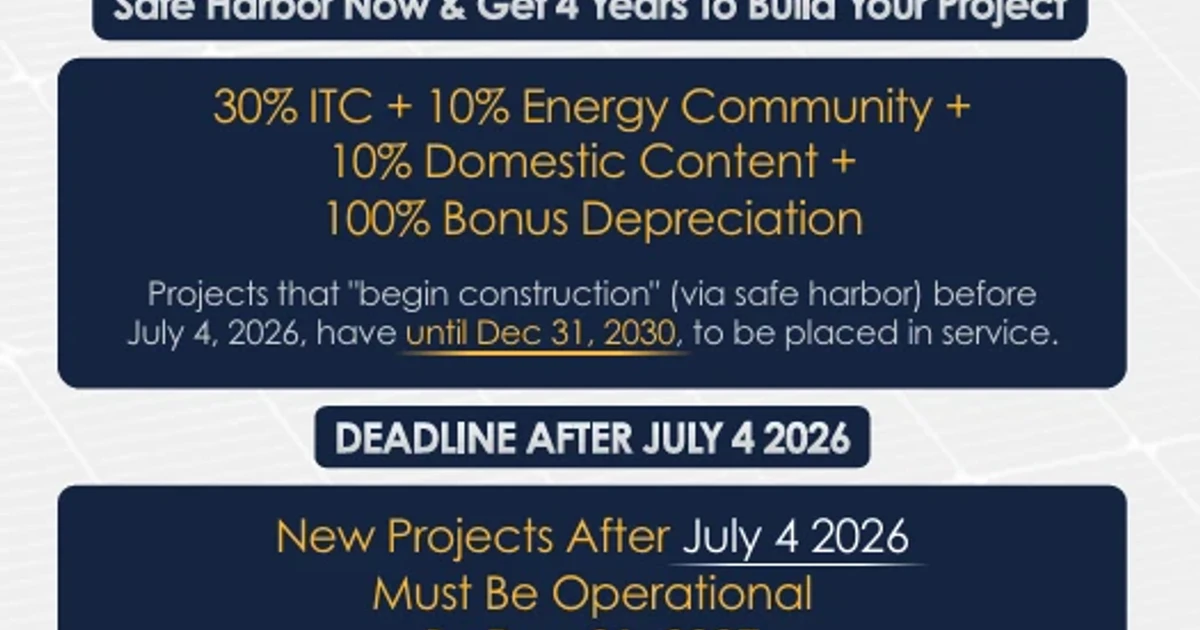
Solar developers are racing to secure federal subsidies for a project wave large enough to nearly double current U.S. solar capacity before a July 4 deadline. If projects miss it, the loss of tax credits worth at least 30% of project costs could reshape which farms get built, how they are financed and what utilities ultimately pay for power.
The pressure traces back to the One Big Beautiful Bill Act, which President Donald Trump signed on July 4, 2025. IRS Notice 2025-42 says wind and solar facilities must begin construction by July 4, 2026 to avoid the revised credit cutoff, turning the next few months into a hard stop for developers trying to lock in subsidy economics. For projects already in the pipeline, that deadline is driving a scramble to finalize financing, equipment orders and construction schedules.
The urgency is sharpened by demand. Electricity use is climbing as AI and datacenter buildouts soak up more power, leaving utilities with a need for new supply at the same time that federal support is being pulled back. That combination raises the odds that the cheapest new projects will be decided not only by engineering, but by how quickly developers can clear the tax hurdle.
The market is already reacting. LevelTen Energy’s latest data showed average North American solar power purchase agreement prices rose 4.7% in the first quarter of 2026, while wind PPAs rose nearly 8%. LevelTen-linked analysis cited in the market also suggests wind and solar contract prices could climb 40% to 50%, with some Texas deals already showing increases of as much as 120%. In a state where ERCOT power demand and project economics matter intensely, those jumps could filter into utility procurement plans and, eventually, consumer bills.
LevelTen’s recent commentary says buyers, sellers, advisors and financiers are already adjusting to the post-OBBBA market, a sign that the law is changing procurement behavior as much as tax planning. Developers are moving faster to beat the cutoff, but the rush itself can create bottlenecks, strain supply chains and reward projects that are quickest to close rather than best positioned for long-term reliability. The near-term wave may bring more solar online before the deadline, but the next phase could be costlier and less predictable for utilities trying to secure clean power.
Sources
- [1]money.usnews.com
- [2]irs.gov
- [3]thomsonreuters.com
- [4]leveltenenergy.com
- [5]utilitydive.com