US News
U.S. Special Forces Soldier Charged in Venezuela Insider Trading Case
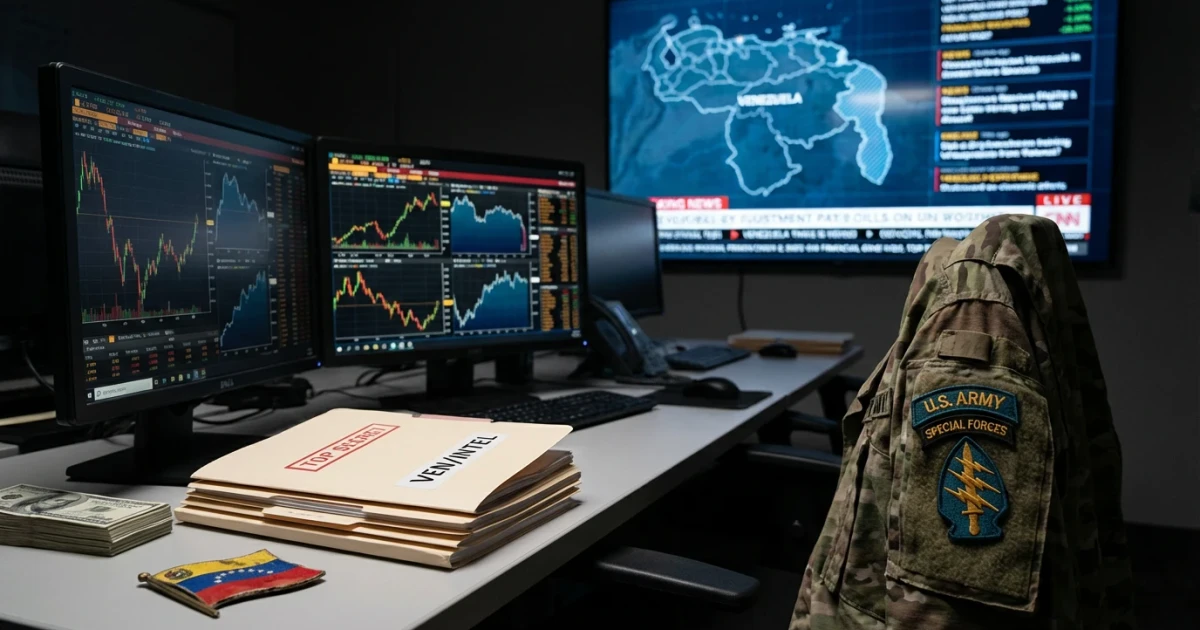
A U.S. Army Special Forces soldier has been arrested and charged with insider trading after allegedly using classified information to place bets on the likelihood of Venezuelan President Nicolás Maduro being ousted in a U.S.-backed raid, federal officials announced this week.
Allegations of Using Classified Intelligence for Profit
The official complaint details how the soldier, whose name has not been disclosed in early reports, is accused of accessing sensitive information about a planned U.S. operation targeting the Maduro regime. Prosecutors allege that the soldier used this intelligence to place high-stakes wagers on prediction markets that track political risk events, ultimately netting over $400,000 in profits when news of the raid broke and destabilized Venezuela’s leadership.
How the Scheme Worked
According to Justice Department filings, the soldier had access to classified briefings regarding U.S. involvement in the political situation in Venezuela. By leveraging this nonpublic information, the soldier placed bets on online prediction platforms that allow users to speculate on outcomes like regime changes or military interventions.
- The bets specifically targeted the probability of regime change in Venezuela within a specified timeframe.
- When the raid was reported and political turmoil ensued, the prediction market odds shifted dramatically, resulting in the soldier’s substantial gains.
- The Defense and Justice Departments collaborated to identify unusual trading activity coinciding with classified operations.
Insider Threats and Market Integrity
The case underscores growing concerns about insider threats within the U.S. military and intelligence communities. The FBI’s Counterintelligence Division has highlighted the risks posed by personnel with access to sensitive information, particularly when financial incentives are involved.
Prediction markets—online platforms where users bet on the outcomes of geopolitical events—are increasingly monitored for potential abuse. Statistical data from the CFTC’s Commitments of Traders Reports shows a rise in trading volume around high-risk political events, raising red flags for regulators.
Venezuela’s Turbulent Political Landscape
Venezuela has long been a focal point for U.S. foreign policy and intelligence activities, especially as the Maduro government faces internal dissent and international pressure. According to the CIA World Factbook, the country has experienced chronic instability, hyperinflation, and contested elections, making it a volatile subject for both policymakers and market speculators.
Risk indexes, such as Statista’s Venezuela Political Risk Index, consistently rate Venezuela among the highest for regime instability in the Western Hemisphere.
Legal and Policy Implications
The soldier faces charges under U.S. laws prohibiting the use of classified information for personal gain, including statutes related to insider trading and the unauthorized disclosure of national security secrets. If convicted, the penalties could include significant prison time and forfeiture of illicit gains.
The case also raises questions about the need for stricter controls on access to intelligence and enhanced monitoring of prediction markets for suspicious activity. Policy analysts, including those at RAND and Brookings, have noted that the intersection of financial speculation and national security presents ongoing challenges for regulators and law enforcement.
What’s Next?
The soldier’s case is expected to proceed to federal court, where prosecutors will present evidence of how classified information was allegedly exploited for personal financial gain. The outcome could have far-reaching implications for both military oversight and the regulation of online prediction markets.
As the investigation unfolds, defense officials are reviewing protocols for handling sensitive operations to ensure future incidents can be detected and prevented. The case serves as a reminder of the intersection between national security and financial integrity in an era where information can be both weapon and commodity.