Business
U.S. trade deficit narrows as petroleum and capital goods exports surge
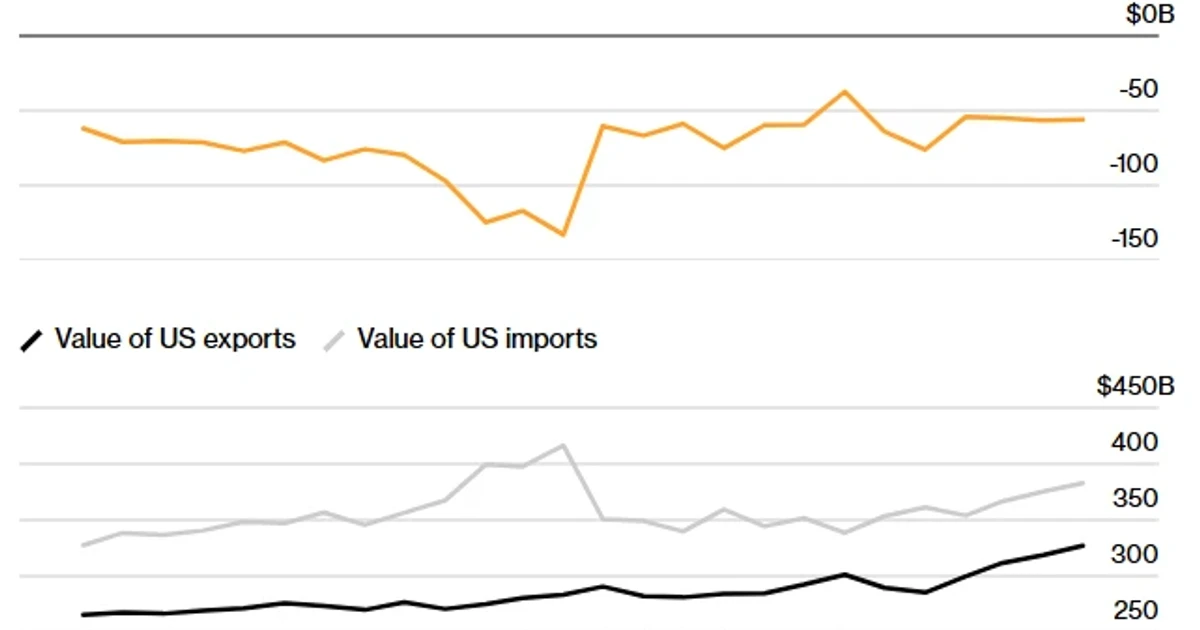
The U.S. trade deficit narrowed to $55.9 billion in April as exports climbed to a record $327.1 billion, but the headline improvement masked a still-heavy import bill that also reached a record $383.0 billion. The Commerce Department and the U.S. Bureau of Economic Analysis said the gap fell from a revised $56.6 billion in March, with the goods deficit easing to $83.7 billion even as the services surplus slipped to $27.8 billion.
The latest numbers point to an economy that is still moving a lot of product across borders rather than one that has suddenly regained trade balance. April imports of capital goods hit a record $126.9 billion, showing that demand for machinery, equipment and technology remained strong. That matters because the trade balance feeds directly into gross domestic product calculations: a narrower deficit can support second-quarter growth, but only if export gains last longer than a single month.

What made April stand out was the composition of the export surge. Record petroleum exports lifted the energy side of the ledger, while industrial supplies and materials exports also hit a record $89.0 billion. Capital-goods exports rose $4.0 billion, led by computers, up $2.5 billion, and civilian aircraft, up $1.0 billion. Those gains suggest healthy overseas demand for American technology and industrial products, but they do not by themselves prove a broad revival in manufacturing competitiveness.
The import side of the ledger tells a different story. Tariffs had not yet meaningfully slowed shipments into the United States, and the resilience of imports suggests consumer and business demand was still absorbing higher costs. That is important for policymakers trying to judge whether trade restrictions are reshaping flows or merely changing prices. It also leaves the economy exposed to swings in oil prices, shipping routes and geopolitical risk, including strain around the Strait of Hormuz and the wider conflict involving Iran.

April’s deficit also came in a bit better than the $56.1 billion economists had expected, and it fit a pattern flagged in earlier trade data: companies were still pushing into artificial intelligence-related investment. A May 29 report linked the earlier goods deficit contraction in part to that buildout, reinforcing the view that capital spending, energy markets and aircraft demand are doing a lot of the work in this trade picture. The next official trade report, covering May 2026, is due July 7.
Sources
- [1]money.usnews.com
- [2]bea.gov
- [3]census.gov
- [4]finance.yahoo.com
- [5]fixedincome.fidelity.com