Business
U.S. trade deficit widens as AI spending drives record imports

The U.S. trade deficit widened to $77.6 billion in May as imports climbed to $395.3 billion and capital goods purchases hit a record $128.0 billion, a sign that corporate spending remains forceful even as the trade gap grows.
The Commerce Department’s revised figures showed the deficit was up from $54.6 billion in April, a 42.2% monthly jump. Exports fell to $317.7 billion, while the goods deficit widened to $106.5 billion and the services surplus edged up to $28.9 billion. The same report showed May petroleum exports at $38.4 billion, also a record, underscoring how the month combined strong import demand with unusual strength in a few export categories.
The advance goods report released on June 26 had already pointed to the deterioration, showing a goods deficit of $105.8 billion, with goods imports at $313.4 billion and goods exports at $207.7 billion. That early reading signaled that net trade was likely to weigh on second-quarter gross domestic product, even as the size of the deficit also reflected resilient domestic demand.
A central feature of the May numbers was capital spending tied to artificial intelligence. Imports of computer accessories and semiconductors rose sharply, and the record in capital goods suggests companies are still pulling in machines, chips, and other inputs to build out AI systems, data centers, and related infrastructure. The Federal Reserve Bank of Minneapolis has said AI-related products accounted for 23% of U.S. imports in 2025 and that imports of those products have climbed 73% since 2023, far faster than the 3% increase in non-AI imports.
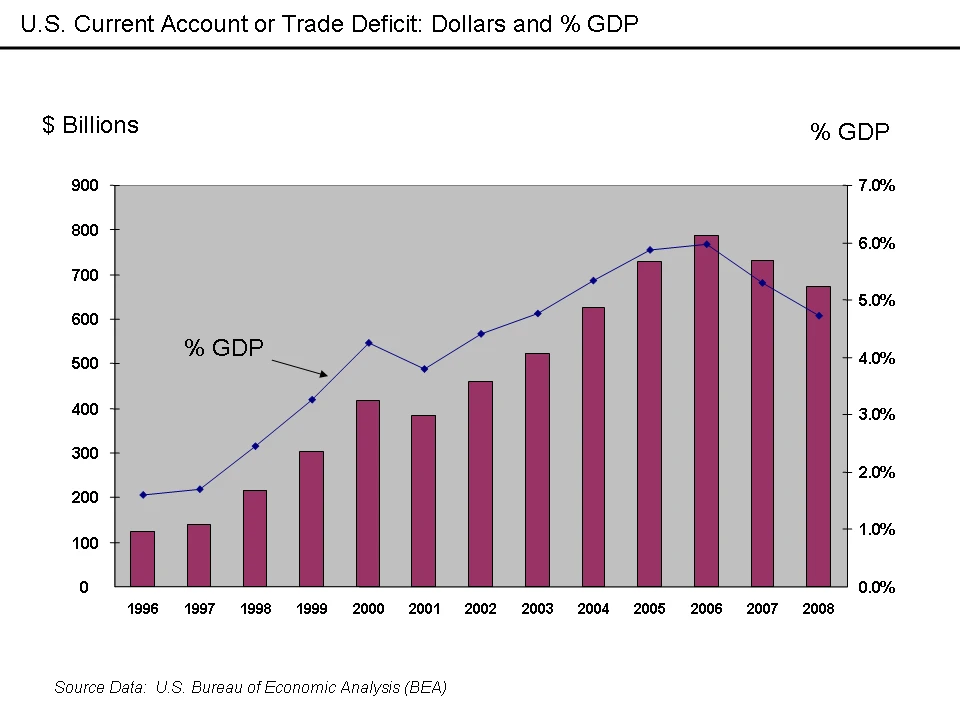
That trend has deepened the trade numbers’ policy implications. The Minneapolis Fed has estimated that Mexico and Taiwan together account for about half of U.S. trade in AI-related products, while a Federal Reserve Board note said U.S. data-center spending alone was expected to exceed half a trillion dollars in 2025. Taken together, those data show how the trade gap is being shaped not only by tariff timing and geopolitical risk, but by a powerful capital cycle centered on AI infrastructure.
The month also carried a clear front-loading effect. Businesses appeared to be moving goods ahead of possible price increases and supply disruptions linked to the Middle East conflict and the prospect of new tariffs. That same conflict helped lift oil exports, which reached a record in May, making the trade ledger a snapshot of an economy still spending heavily even as it braces for policy and geopolitical shocks.
Sources
- [1]money.usnews.com
- [2]bea.gov
- [3]census.gov
- [4]minneapolisfed.org
- [5]federalreserve.gov