Science
U.S. unveils $5 billion AI push for science and engineering research
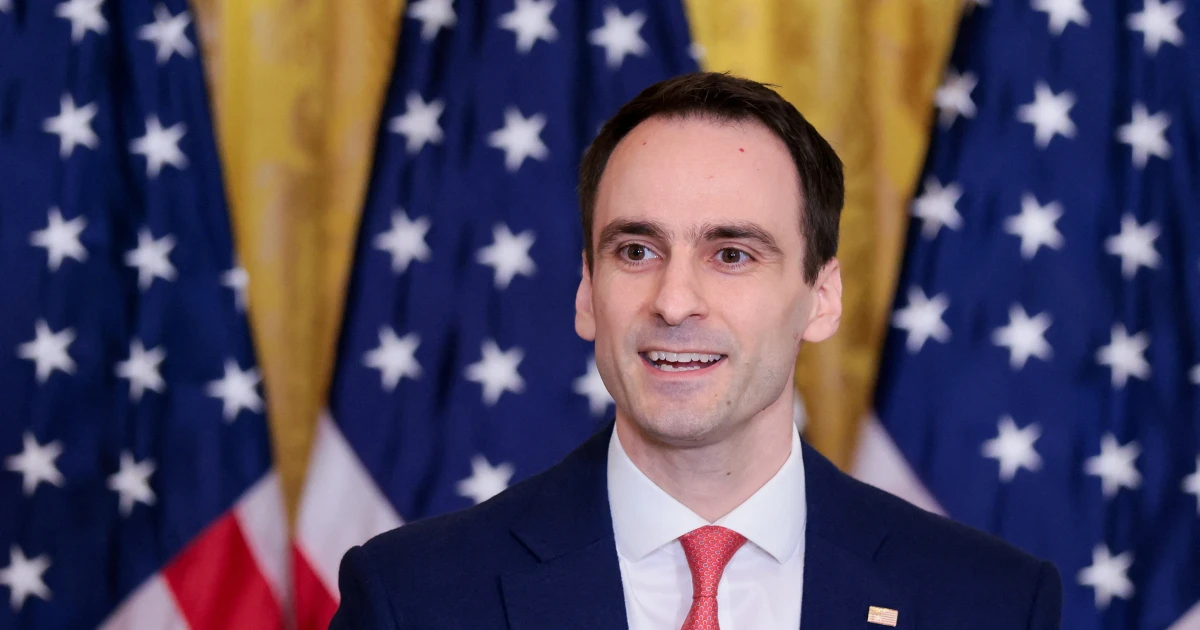
The Trump administration unveiled a $5 billion push to bring artificial intelligence into major science and engineering research, with health and construction among the first targets. The announcement in Washington on July 22 puts federal money behind work aimed at some of the country’s hardest scientific bottlenecks.
The funding will be used to identify the root causes of chronic diseases, accelerate drug discovery and develop longer-lasting building materials. Scientists will get access to Department of Energy supercomputers, AI systems and specialized datasets, giving the effort the computing power and data backbone needed to move AI deeper into the research workflow.
That makes the public-return question unavoidable: what does $5 billion buy that current methods do not? In this case, the answer is meant to be speed, scale and pattern detection. AI systems can sift large biomedical and engineering datasets, test hypotheses faster than manual methods and surface links that are difficult to detect in long-running research programs.
The administration’s move also reflects how closely AI now sits beside federal policy, rather than outside it. The White House’s America’s AI Action Plan, published in July 2025, treated AI as a national-security and scientific-discovery priority. The National Science Foundation’s National Artificial Intelligence Research Resource is designed to expand access to federal AI resources for researchers, giving the new push a built-in policy framework and a ready-made federal computing ecosystem.

Health policy already has a sizable federal footprint around the technology. Congress.gov has a recent federal activity summary on AI in health care, and AIM-AHEAD describes a community of more than 10,000 artificial intelligence and healthcare experts. Those signposts point to a field where data access, reliability and oversight are already central concerns, especially if federal money is meant to influence disease research and drug discovery.
Construction is the other major proving ground. The administration’s plan is meant to help develop longer-lasting building materials, a goal that could matter for infrastructure durability, project costs and safety. The Department of Energy’s computing assets give the initiative a national laboratory-scale foundation, not just a software pilot.
The size of the commitment also stands out in historical context. In April 2023, $5 billion was the scale used for a federal push to speed development of new COVID vaccines. This latest allocation uses the same benchmark for a broader scientific agenda, signaling that Washington sees AI as research infrastructure as much as a commercial technology.
Sources
- [1]reuters.com
- [2]detroitnews.com
- [3]whitehouse.gov
- [4]nsf.gov
- [5]congress.gov
- [6]aim-ahead.net