US News
U.S. water systems face rising cyberattacks, federal warnings intensify
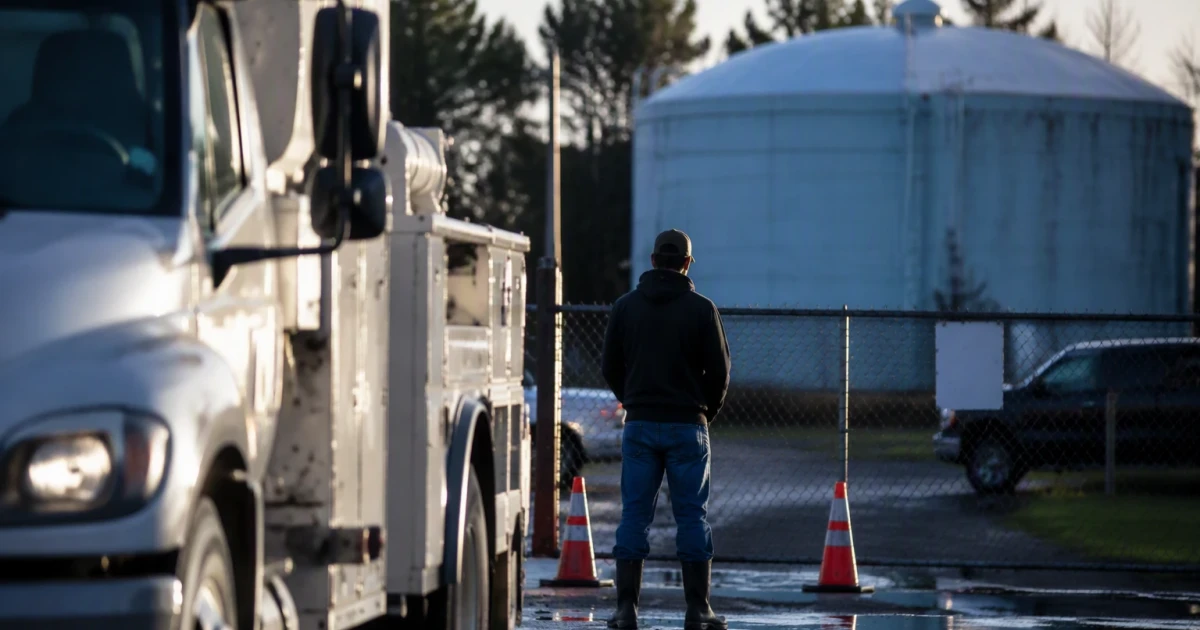
A successful cyberattack on a local water utility would not just be an IT problem. It could force boil-water alerts, interrupt service, and leave households wondering whether the tap is safe while operators scramble to verify treatment and restore control.
The scale of the exposure is what makes the risk so troubling. The United States has about 152,000 public water systems, and many are small utilities with thin budgets, limited staff, and aging control equipment that was never built for today’s threat environment. That mix has turned drinking water infrastructure into a soft target hiding in plain sight.
Why the sector remains exposed
The weakness is structural, not accidental. The Government Accountability Office said in its August 1, 2024 report that the Environmental Protection Agency urgently needed a strategy to address cybersecurity risks to water and wastewater systems, pointing to legacy operational technology, under-resourcing, and poor visibility into incidents. Those three problems reinforce one another: old equipment is harder to secure, small utilities cannot always afford replacements, and scattered reporting makes it difficult to see the full pattern of attacks.
The EPA had already signaled the danger months earlier. In May 2024, the agency issued an enforcement alert warning that cybersecurity threats to community drinking water systems were increasing and outlining immediate steps utilities should take. EPA said more than 70% of the drinking water systems it inspected since September 2023 had violated basic cybersecurity standards, a finding that suggests the issue is not limited to a handful of outliers.
By November 2024, the EPA Office of Inspector General was still pressing the issue in a memorandum on drinking water cybersecurity concerns. In January 2025, EPA reporting identified more than 300 drinking water systems across the country as facing serious cybersecurity risks. The chronology matters because it shows a steady escalation in federal concern, but not a matching level of uniform local protection.
What the federal warnings were trying to prevent
The federal message has been consistent: utilities need to secure the systems that control water operations before attackers reach them. The most obvious danger is not just stolen data but disruption of the automated equipment that runs treatment and distribution processes. That is why officials have focused on internet-facing programmable logic controllers, the industrial computers that control water systems and can be exposed when utilities connect them to remote networks without adequate safeguards.
The May 2024 enforcement alert and the later oversight findings were aimed at preventing exactly the kind of operational disruption that can cascade into public inconvenience and anxiety. A water utility that cannot trust its monitoring screens or remote controls may have to switch to manual procedures, slow down operations, or temporarily isolate equipment. Those precautions are costly for small systems that already struggle to keep up with routine maintenance.
The policy gap is especially clear in a sector made up of thousands of independent operators. Federal warnings can push standards higher, but they do not automatically produce the staffing, technology, or capital spending required at the local level. That leaves a large share of the country’s drinking water network reliant on uneven cyber defenses and ad hoc upgrades.
What the July 2026 attacks showed
The latest warnings became concrete in late July 2026, when Minnesota reported that more than 30 of its water systems had faced a coordinated cyberattack. Days later, the FBI said cyberattacks had been reported in at least seven states, and some of the activity had degraded water operations. The attacks were tied to internet-facing programmable logic controllers, which makes the episode more than a scare headline: it was a direct probe of the machinery that keeps water moving.
The immediate public-health picture stayed contained. Reporting at the time said drinking water quality remained safe, even as some monitoring and control systems were temporarily disrupted and some wells were taken offline as a precaution. That distinction matters, because it shows how a cyber incident can create real operational strain without immediately contaminating water. The danger lies in what happens when operators lose visibility or control long enough for a local problem to become a service crisis.
No official public attribution to a specific nation-state was verified in the information available from federal sources. That absence of attribution does not reduce the importance of the incidents for utilities on the ground. For a small water system, the practical question is not who launched the attack, but whether pumps, wells, sensors, and remote controls can be trusted when they are needed most.
What households should expect if a breach succeeds
The most visible consequences would be local and immediate. Households could face boil-water alerts if operators cannot fully confirm treatment conditions, temporary shutoffs if systems need to be isolated, or pressure disruptions if automated controls fail. Even when water quality remains safe, the public can still lose confidence quickly if monitoring systems go dark or a utility has to take wells offline.
That trust gap is one of the quiet costs of cyber insecurity in critical infrastructure. Water utilities do not have to suffer a catastrophic contamination event for the damage to be real. A few hours of degraded operations, repeated advisories, or an unexplained outage can make residents question whether a basic public service is dependable, and those doubts can linger long after the systems come back online.
The federal warnings now form a clear record: the sector is large, fragmented, and unevenly protected, while attackers are probing the most exposed parts of the control layer. Until small water systems get the resources and staffing to close those gaps, the nation’s drinking water network will remain vulnerable in places most people never think to look.
Sources
- [1]cbsnews.com
- [2]gao.gov
- [3]epa.gov
- [4]asdwa.org
- [5]nbcnews.com
- [6]statescoop.com
- [7]epw.senate.gov
- [8]fbi.gov
- [9]captechu.edu