World
US withdraws most troops after Nigeria counterterrorism success
U.S. Africa Command said it had withdrawn most of the forces sent to Nigeria for the counterterrorism campaign, a move that sharpens the question now hanging over the mission: what does success look like once the troops leave? The answer will test whether Washington has built a durable light-footprint model in Africa or delivered only a temporary tactical blow to an entrenched Islamic State network.
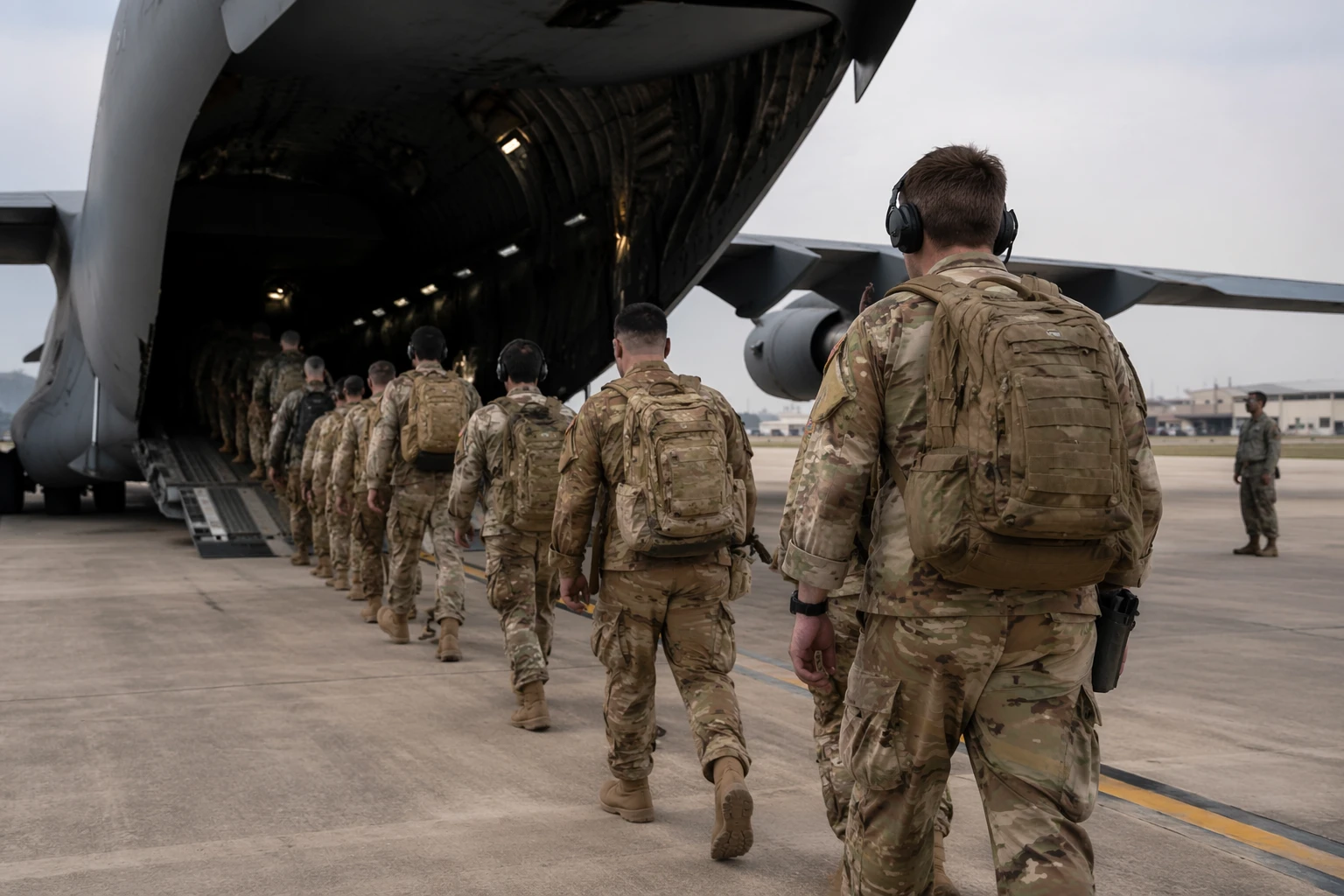
The operation began on December 25, 2025, when U.S. strikes hit ISIS targets in Sokoto State in coordination with Nigerian authorities. AFRICOM later said its initial assessment was that multiple ISIS militants were killed. In February 2026, about 200 U.S. military personnel were deployed to support intelligence, surveillance, reconnaissance and counterterrorism work alongside Nigerian forces.
That partnership culminated in May 2026, when U.S. and Nigerian forces killed Abu-Bilal al-Minuki in a joint operation. U.S. and Nigerian officials described him as ISIS’s second-in-command globally and a senior figure in the region. AFRICOM commander Gen. Dagvin R.M. Anderson called the May operation a model for future security cooperation in Africa and said the collaboration with Nigeria had significantly degraded Islamic State leadership and disrupted communications and operations.
The pullback announced on July 3 leaves intelligence support in place at Abuja’s request. Nigerian military officials said the withdrawal would not affect their momentum, underscoring the government’s effort to frame the operation as a handoff rather than an exit. Nigeria’s foreign minister, Yusuf Maitama Tuggar, had earlier described the December strike as a joint operation planned for quite some time and based on intelligence shared by Nigeria.
The campaign also drew political and security controversy far beyond Sokoto State. President Donald Trump framed the intervention as a response to attacks on Christians in Nigeria, a characterization contested by critics and by analysts who said the country’s security landscape is more complex than a single communal narrative. Some warned that strikes aimed at ISIS could miss other armed threats or rest on intelligence too thin to cleanly separate militant networks from civilian communities.
For families in the wider Lake Chad Basin, the stakes remain immediate. The U.S. has signaled it will keep working with Nigeria through intelligence sharing rather than direct troop deployment, but the durability of that approach will depend on whether Nigerian forces can hold pressure on ISIS after the foreign footprint shrinks.
Sources
- [1]bbc.co.uk
- [2]usnews.com
- [3]africom.mil
- [4]cnbc.com
- [5]rfi.fr
- [6]issafrica.org
- [7]state.gov