US News
USS Gerald R. Ford Returns to Middle East Operations
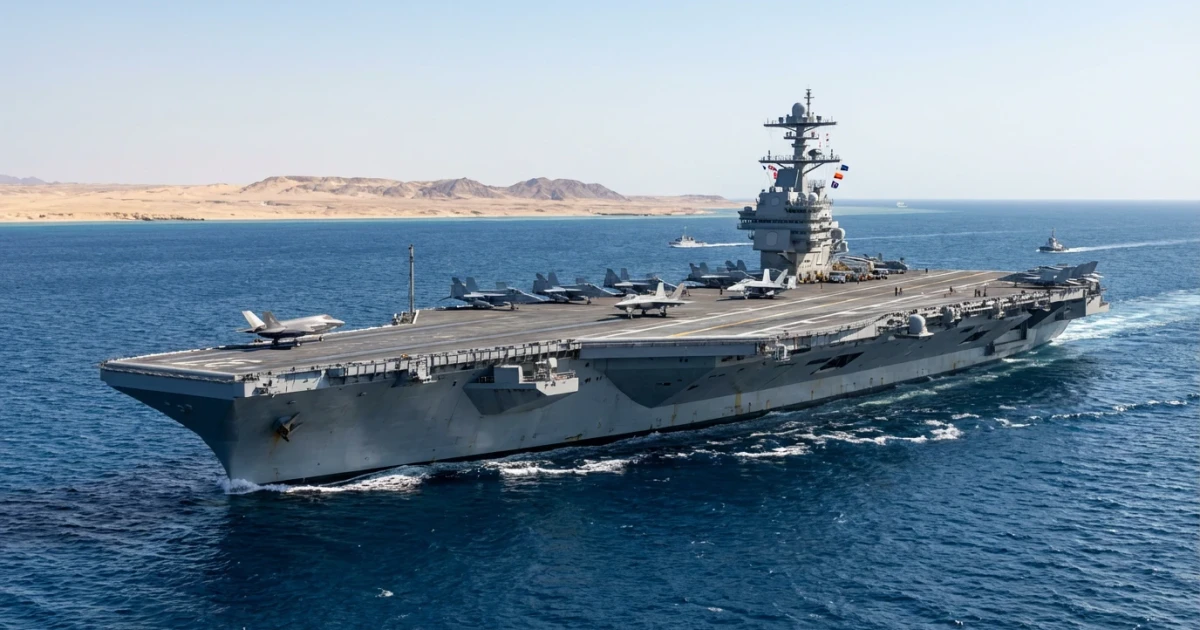
The USS Gerald R. Ford, the largest aircraft carrier in the U.S. Navy fleet, is preparing to rejoin operational duties in the Middle East following a brief pause caused by a fire on board. The announcement, highlighted by the Wall Street Journal, comes as regional tensions remain high and the U.S. Navy continues its mission in the area.
Carrier Ford’s Deployment Resumes After Onboard Incident
The Ford-class nuclear-powered aircraft carrier, officially known as USS Gerald R. Ford (CVN 78), had its operations temporarily interrupted following a fire that broke out on the ship. According to reporting by the Wall Street Journal and CNN, the incident forced the carrier to halt its flight operations for two days, with Navy officials confirming that the issue has since been resolved.
- The USS Gerald R. Ford is the Navy’s newest and most advanced aircraft carrier, featuring next-generation propulsion, advanced arresting gear, and improved weapons handling.
- The vessel has a full-load displacement of approximately 100,000 tons and can support over 75 aircraft, according to the U.S. Navy Fact File.
- The ship had completed a deployment to the U.S. European Command area earlier, demonstrating its strategic flexibility and reach.
Context: Tensions and Strategic Importance
The Ford’s return to operations comes at a time when the U.S. is maintaining a significant naval presence in the Middle East, particularly in response to ongoing hostilities involving Iran. Aircraft carriers such as the Ford play a critical role in power projection and regional stability, offering rapid response capabilities and serving as a deterrent to adversarial actions.
The decision to send the Gerald R. Ford back to the region underscores the Pentagon’s commitment to maintaining operational tempo and readiness, even in the face of technical setbacks. The carrier’s recent deployment, as tracked in official Navy releases, included hundreds of sorties and complex joint exercises, underlining its value to U.S. and allied missions in the area.
Aftermath of the Fire Incident
Details about the cause of the fire have not been fully disclosed, but Navy leadership has emphasized that the ship has undergone all necessary repairs and safety checks. The brief suspension of flight operations was described as a precautionary measure, and no injuries or significant damage were reported. The incident has prompted renewed attention on the operational resilience and advanced safety systems of the Ford-class carriers.
Analysis: Forward Outlook for Ford-Class Carriers
As the Ford returns to the Middle East, the carrier is expected to resume a full slate of activities, ranging from air patrols to maritime security operations. The ship’s return also highlights ongoing investments in the Ford-class program, which has faced scrutiny over costs and technical challenges according to recent Congressional Budget Office analysis.
- The Gerald R. Ford’s operational success is seen as vital for the future of the U.S. Navy’s carrier fleet modernization efforts.
- Its presence is likely to reassure regional allies and signal U.S. resolve amidst ongoing security challenges.
With the fire incident resolved, the Navy’s largest warship is once again positioned to play a central role in U.S. security strategy in the Middle East.