Business
Utilities seek record $9.2 billion in rate hikes, report says
Utilities asked state regulators for $9.2 billion in new rate hikes in the second quarter of 2026, a request that would average about $14 a month for each of the more than 56 million customers it could affect if approved in full. The quarter set a new record for second-quarter requests, topping last year’s $7.3 billion mark.
The requests brought the total sought in the first half of 2026 to $18.6 billion. One in six American households is behind on utility bills, the National Energy Assistance Directors Association says, and more than three in four consumers worry bills will keep rising.
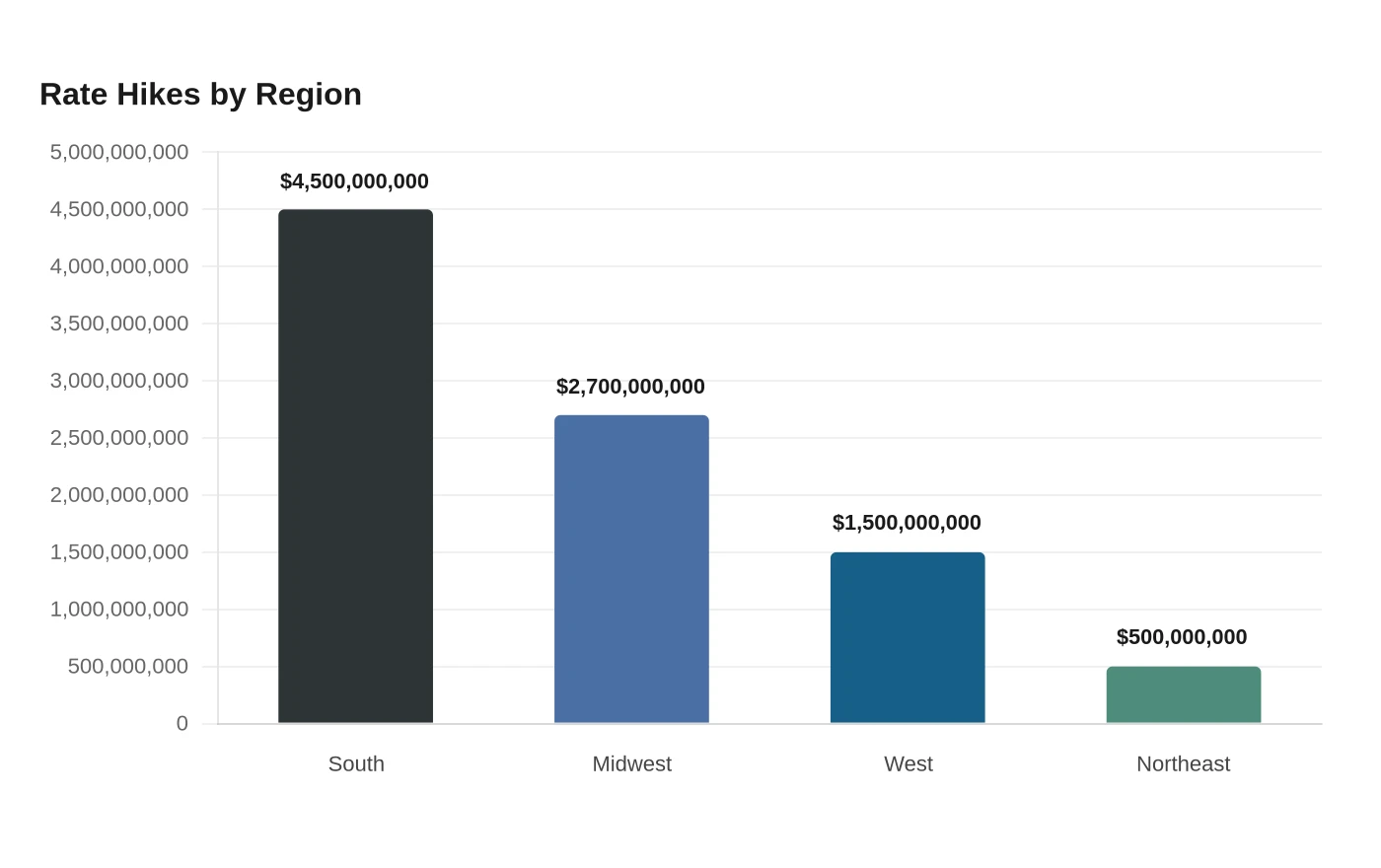
The heaviest pressure came from the South, where utilities sought $4.5 billion in increases across 26.1 million customers, more than twice the next-highest region and nearly half of all requests filed in the quarter. If that amount were spread evenly across those customers, it would amount to roughly $14 a month each. The Midwest followed with $2.7 billion in requested hikes across 14 million customers, or about $16 a month on an even basis, while the West faced about $1.5 billion and the Northeast about $500 million.
Some of the largest filings came from major regulated utilities. Oncor in Texas filed the quarter’s biggest single request, asking for $1.2 billion tied to a five-year, $45 billion transmission-and-distribution investment plan aimed at serving rising demand from oil and gas companies and data centers in the Permian Basin. Dominion Energy in Virginia requested $1.5 billion across three rate cases, including a $1.1 billion proposal to recover previously under-collected fuel costs. In Michigan, DTE Energy and Consumers Energy each sought about $500 million. North Carolina accounted for nearly $900 million of the quarter’s requests, including filings from Duke Energy, while fuel-cost recovery tied to Winter Storm Gianna and prolonged cold earlier in the year has already been approved and is showing up in customers’ bills.
State public utility commissions, not utilities, decide how much customers ultimately pay, and regulators often approve less than requested. Only two of 83 utility rate requests in 2025 were rejected outright, though about half were still pending when 2026 began. Tremaine Phillips, a former Michigan utility commissioner and senior adviser with PowerLines, said utilities nationwide are facing “several cost pressures at once.”
PowerLines estimates investor-owned utilities are planning at least $1.4 trillion in capital expenditures by 2030.
Sources
- [1]cbsnews.com
- [2]powerlines.org
- [3]stateline.org
- [4]wral.com
- [5]utilitydive.com
- [6]neada.org