Science
Venus Lava Tube Discovery Sheds Light on Planet’s Geology
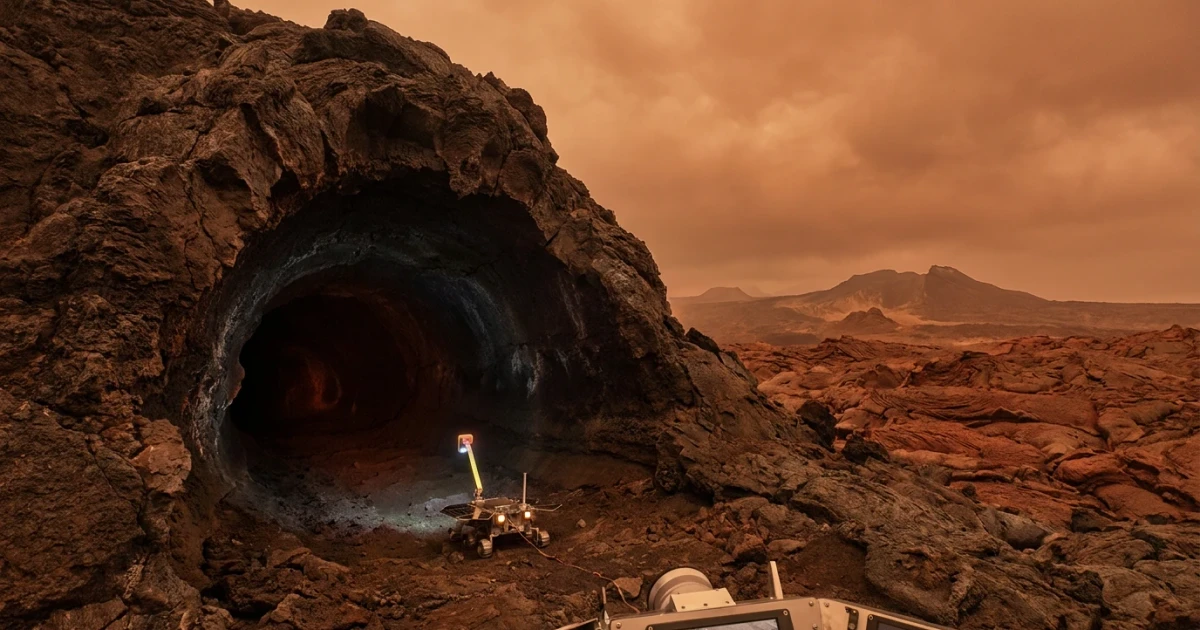
Venus, often called Earth’s twin due to its similar size and mass, has long intrigued planetary scientists. This week, a team of researchers announced the discovery of a massive underground lava tube on the planet, marking a significant step forward in our understanding of Venusian geology and the potential for future exploration.
Unveiling the Lava Tube: A Landmark Discovery
The report, first highlighted by The Daily Galaxy, describes the finding of a large subterranean lava tube beneath the surface of Venus. Lava tubes are natural tunnels formed by flowing lava during volcanic activity, commonly observed on Earth and the Moon. Their presence on Venus has been theorized, but direct evidence has remained elusive until now.
- Venus is renowned for its extreme volcanic activity, with hundreds of volcanoes and vast lava plains covering the surface.
- The newly discovered tube is believed to extend for several kilometers, based on radar imaging and geological mapping.
- Its size and location suggest it could have served as a conduit for ancient lava flows, potentially shaping the landscape of Venus.
How Scientists Made the Discovery
Researchers utilized data from previous missions, including radar observations collected by NASA’s Magellan spacecraft and the European Space Agency’s Venus Express. By analyzing surface features and subsurface anomalies, the team identified a series of linear structures consistent with the formation of a lava tube. Open-source detection algorithms, such as those available via the Venus Lava Tube Detection Project, were instrumental in confirming the tube’s dimensions and orientation.
Further mapping from the USGS Venus Geology program provided detailed insights into the surrounding terrain, revealing evidence of collapsed sections and possible skylights where the tube breaches the surface.
Implications for Venusian Science and Future Missions
The discovery holds profound implications for planetary science and exploration. Lava tubes have been considered as potential habitats for future human missions to other planets due to their natural shielding from radiation and extreme temperatures. On Venus, where surface conditions are notoriously harsh—temperatures soar above 460°C (860°F) and atmospheric pressure is more than 90 times that of Earth—underground structures could present new possibilities for robotic exploration.
According to a recent Nature Astronomy analysis, Venusian lava tubes may be much larger than their terrestrial counterparts, due to the planet’s gravity and volcanic history. The newly found tube’s size supports this hypothesis and may guide the design of future probes or landers.
- Lava tubes could preserve geological records, providing clues about Venus’s volcanic past and the evolution of its surface.
- They may also help scientists study the planet’s interior structure with greater accuracy.
- Understanding these features is vital for planning missions such as NASA’s upcoming VERITAS and DAVINCI projects, which aim to map and analyze Venus’s geology in unprecedented detail.
Next Steps for Research
Scientists are eager to build on this discovery. Efforts will focus on mapping additional lava tubes, assessing their stability, and evaluating their potential as sites for future exploration. The NASA Planetary Data System continues to release new datasets, which researchers hope will yield further insights into Venus’s subsurface mysteries.
As planetary science advances, the identification of a massive underground lava tube on Venus stands as a testament to the value of collaborative research and innovative data analysis. The finding not only deepens our understanding of the planet’s geology, but also opens new questions about its history and the possibility of exploring its hidden depths.