Science
Vera C. Rubin Observatory Set to Transform Solar System Discovery
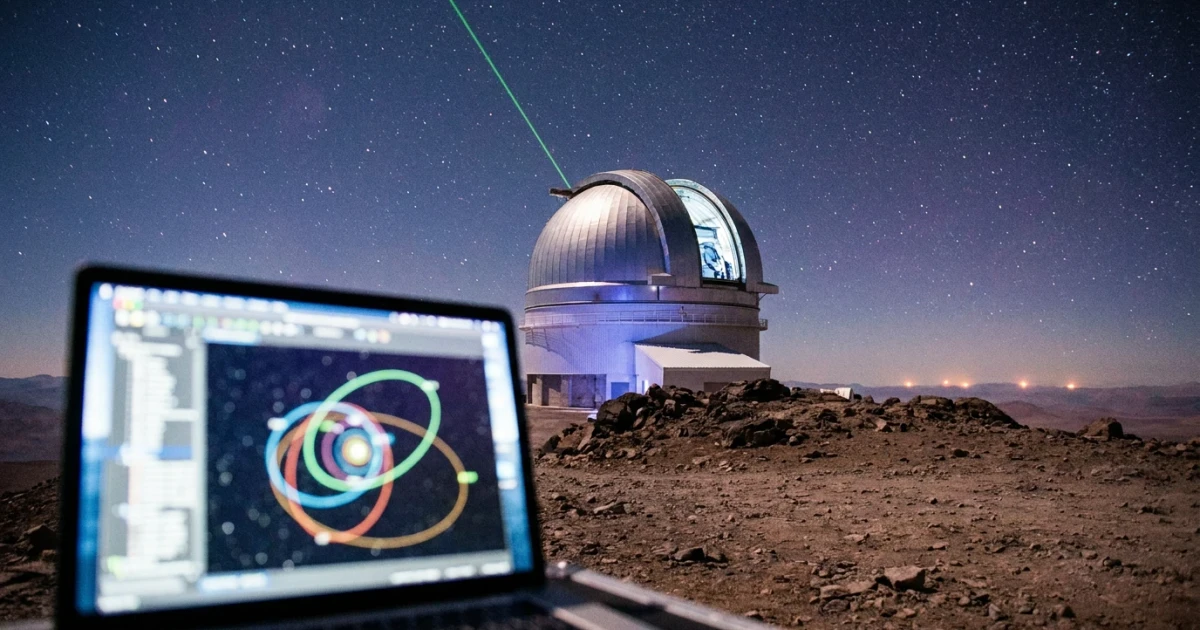
Millions of unseen objects in our solar system may soon come into focus, as the Vera C. Rubin Observatory prepares to begin its highly anticipated decade-long survey, expected to revolutionize our understanding of the solar system’s small bodies.
Unveiling the Solar System’s Hidden Population
The Vera C. Rubin Observatory, located in Chile, is on the brink of launching the Legacy Survey of Space and Time (LSST). This ambitious project is designed to chart the dynamic sky with a sensitivity and coverage never before possible. According to Space Daily, the observatory is just months away from commencing its decade-spanning mission, with astronomers anticipating the discovery of millions of previously unseen objects throughout our solar system.
Current knowledge, as compiled by the Minor Planet Center, notes that while hundreds of thousands of asteroids and comets have been cataloged, theoretical models suggest that the vast majority—especially smaller, distant, or faint bodies—remain undetected. The Rubin Observatory's survey is poised to fill these gaps, significantly expanding the known inventory of minor planets, trans-Neptunian objects, and near-Earth objects (NEOs).
How the Rubin Observatory Will Change Solar System Science
The Rubin Observatory’s solar system science collaboration expects the facility to detect and track objects as small as tens of meters across in the main asteroid belt and Kuiper Belt, as well as potentially hazardous asteroids that pass near Earth. As detailed in the LSST science overview, the observatory’s 8.4-meter mirror and 3.2-gigapixel camera will generate a vast, time-lapse map of the sky, enabling scientists to track moving objects with unprecedented precision.
- The survey will cover the visible sky every few nights, allowing for rapid detection of new objects and ongoing tracking of their orbits.
- Projections estimate the discovery of up to 5 million new asteroids, tens of thousands of trans-Neptunian objects, and a significant number of previously unknown comets.
- This data will be integrated with existing records from the NASA JPL Small-Body Database and the NASA Asteroid Discovery Statistics, providing a comprehensive resource for planetary defense and solar system research.
Implications for Planetary Defense and Science
The discovery of millions of small solar system bodies is not just a triumph for basic science. According to the International Astronomical Union’s Near-Earth Objects program, tracking these objects is critical for assessing impact risk to Earth, understanding the solar system’s formation history, and identifying targets for future space missions.
By drastically increasing the sample size of known asteroids, comets, and distant icy bodies, the LSST will allow scientists to better model the solar system’s evolution and identify rare or unusual objects—such as interstellar visitors or dormant comets—before they pass beyond reach.
Looking Ahead
With the Vera C. Rubin Observatory’s survey poised to begin, astronomers and planetary scientists are preparing for a flood of new data that will keep researchers busy for years to come. As the decade-long project unfolds, the observatory is expected to redefine our understanding of the solar system’s complexity and diversity. For those eager to explore the data themselves, resources such as the Minor Planet Center Data Services and NASA’s Small-Body Database will offer public access to discovery records and orbital information as new objects are cataloged in real time.
The launch of the Rubin Observatory’s survey marks a new chapter in exploration, as millions of hidden solar system objects await discovery just months from now.