Health
Very high chili pepper intake linked to higher esophageal cancer risk
The analysis examined 14 case-control studies and 11,310 participants, including 5,009 gastrointestinal cancer cases. People with very high chili pepper intake had a higher risk of esophageal cancer, while the evidence was less clear for stomach and colorectal cancers. Changchang Chen, Man Zhang, Xutong Zheng and Hongjuan Lang published the analysis in Frontiers in Nutrition.
The pooled estimate showed that high chili-pepper intake was associated with a 64% higher risk of gastrointestinal cancers overall, with an odds ratio of 1.64 and a 95% confidence interval of 1.00 to 2.70. The signal was stronger in the esophageal-cancer subgroup, where the odds ratio was 2.71 with a 95% confidence interval of 1.54 to 4.75. The review also found regional differences, with positive associations in Asian, African and North American studies, but inverse associations in South American and European studies.
The authors registered the review in PROSPERO under CRD42022320670. The evidence came from observational studies, which can show patterns tied to diet but cannot prove direct cause and effect. More rigorous studies are still needed to learn whether moderate consumption carries similar risks.
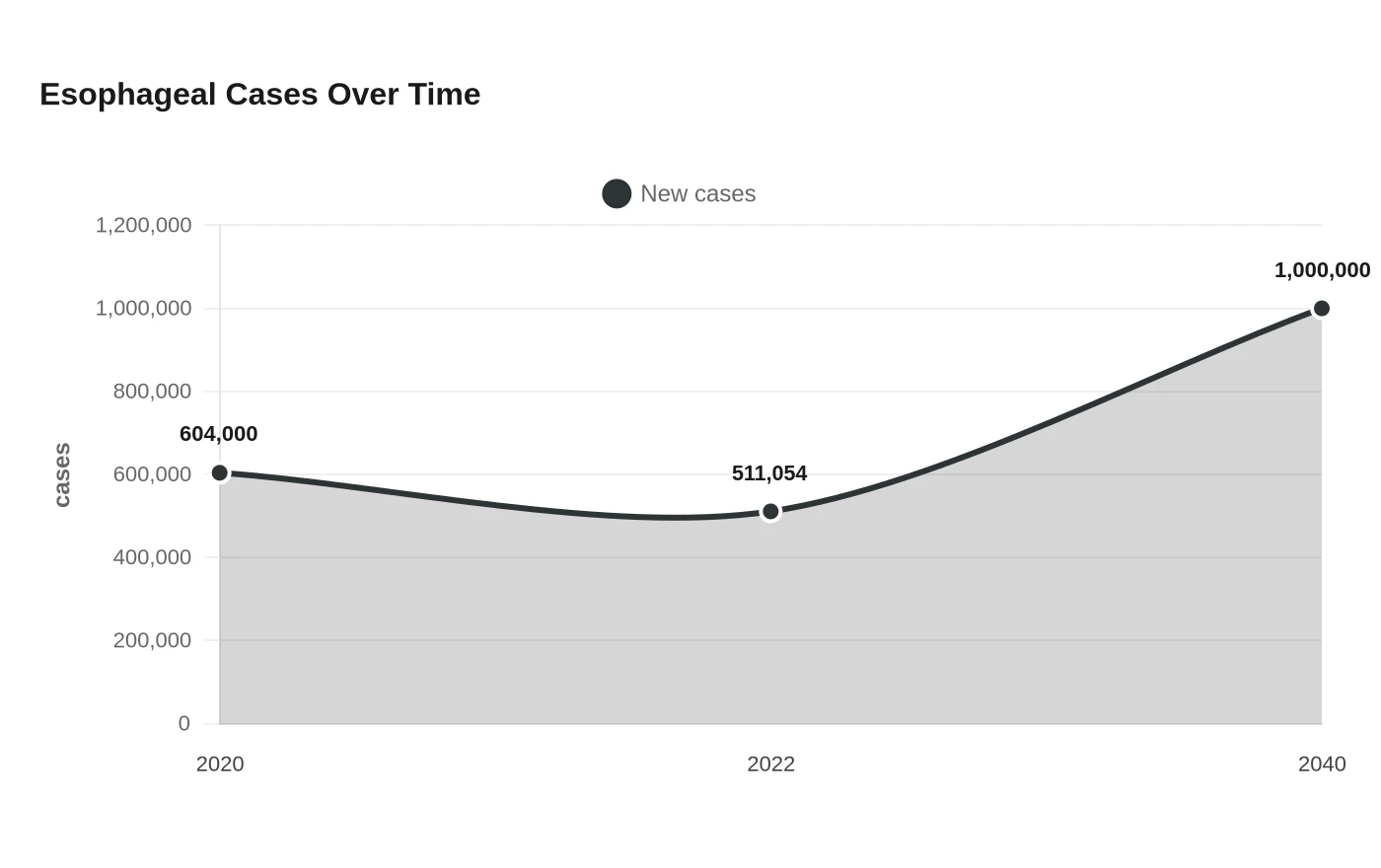
The International Agency for Research on Cancer estimated about 604,000 new esophageal cancer cases and 544,000 deaths worldwide in 2020, and projected the burden could rise by more than 50% by 2040 to almost 1 million new cases a year if nothing changes. The World Cancer Research Fund counted 511,054 new oesophageal cancer cases in 2022, making it the 11th most common cancer worldwide, with China, India and Bangladesh carrying the largest caseloads.
Smoking, alcohol use, reflux disease, Barrett’s esophagus, excess body weight and older age remain the main risks. About 9 in 10 esophageal cancers are found in people 55 or older, the American Cancer Society says, and the National Cancer Institute distinguishes between squamous-cell and adenocarcinoma risks, linking smoking and heavy drinking more strongly with the former and chronic reflux with the latter.
Sources
- [1]sciencedaily.com
- [2]frontiersin.org
- [3]iarc.who.int
- [4]wcrf.org
- [5]cancer.org
- [6]cancer.gov