Business
Viral 1991 Mars bar find highlights chocolate shrinkflation fears

A professional cleaner in England, Victoria Gordon, found an unopened Mars bar dated 1991 inside a hoarder’s house in Lincolnshire, and the chocolate bar quickly became a viral example of shrinkflation. The comparison resonated because the old bar was not just old, it was visibly larger than the version sold today.
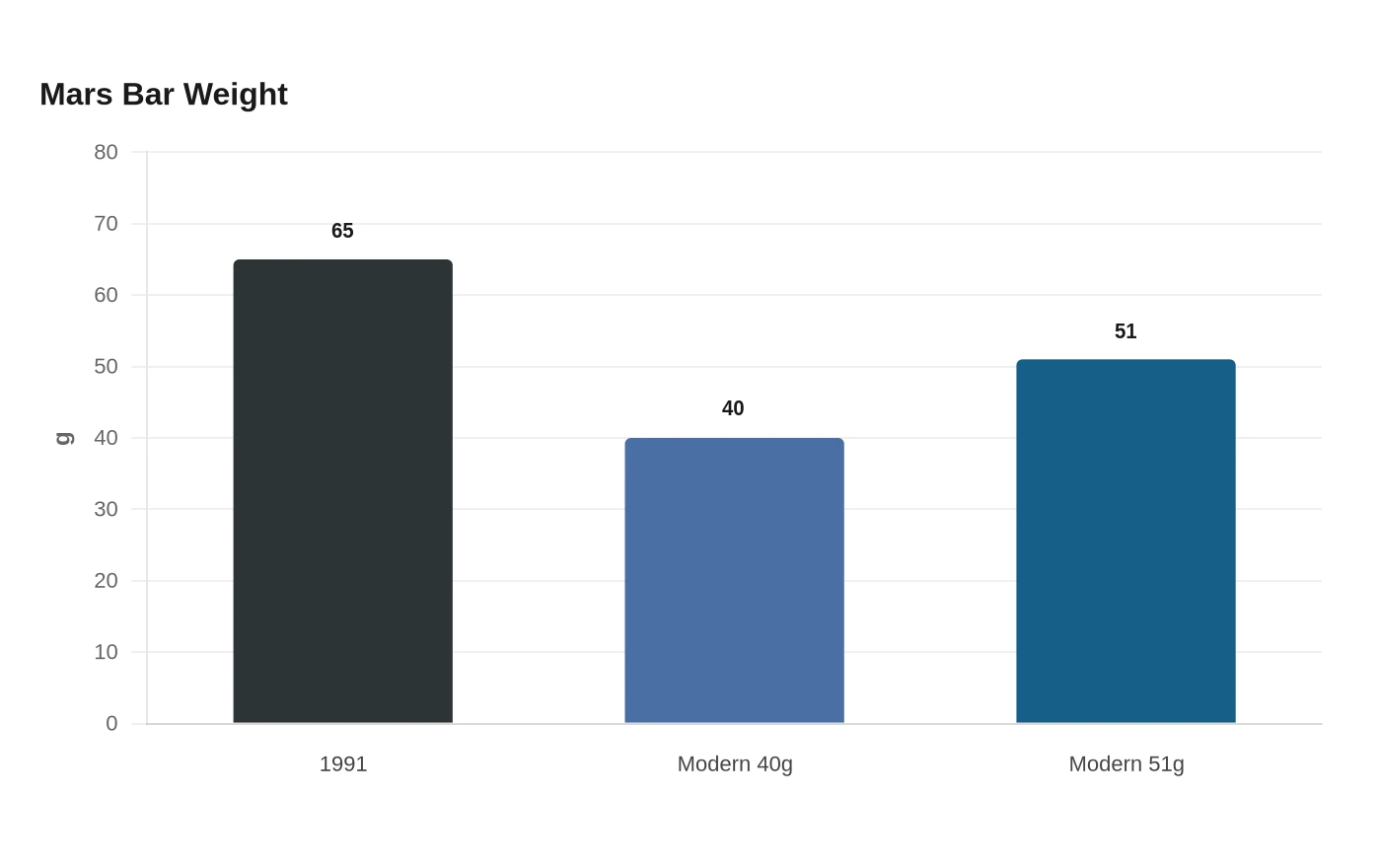
One online side-by-side put the 1991 bar at about 65g, while a modern Mars bar was shown at 40g. Another comparison gave the current bar as 51g, but both figures still left the vintage bar with noticeably more chocolate inside. The price gap was just as sharp: the 1991 bar was marked at 25p, while the 2026 Mars bar was listed at £1.30.
The dimensions told the same story. The 1991 bar was described as about 14 cm long, 3.1 cm wide and 2 cm high, compared with roughly 9.5 cm by 2.5 cm by 1.5 cm for the modern version. That is the basic mechanics of shrinkflation, where manufacturers reduce the size of a product while the shelf price keeps rising, so shoppers pay more for less.
Mars still presents the bar as a long-running part of its brand story on its official history pages, which makes the size change stand out even more starkly. The gap is not limited to one viral wrapper. Retailers have also called out Mars for reducing the size of its chocolate bars by more than 20%, a reminder that the complaint extends well beyond one dusty find in a cleared house.
The Mars bar discovered by Gordon became a simple but potent visual record of how packaging can mask inflation. A 1991 bar, a current bar, a jump from 25p to £1.30 and a drop from about 65g to as low as 40g turned an ordinary chocolate snack into a case study in how much less product can sit behind a familiar label.
Sources
- [1]bbc.co.uk
- [2]nypost.com
- [3]whatsthejam.com
- [4]threads.com
- [5]instagram.com
- [6]x.com
- [7]manchestereveningnews.co.uk
- [8]mars.com
- [9]marsbar.co.uk