US News
Virginia Supreme Court Overturns House Maps in Redistricting Battle
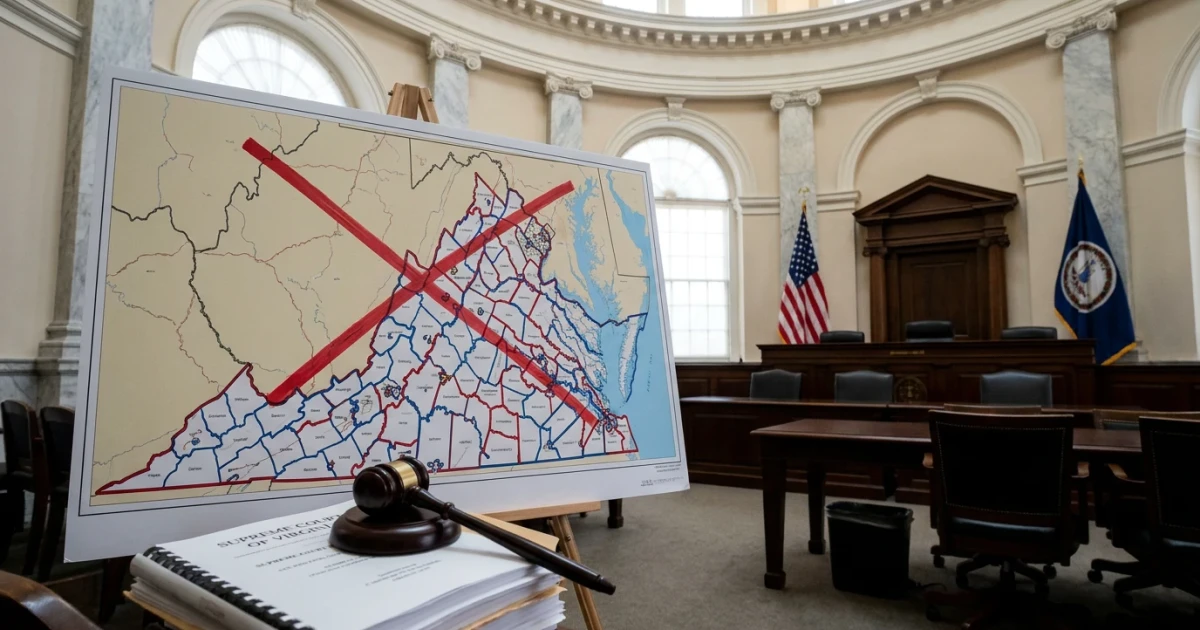
Virginia’s Supreme Court delivered a major decision this week, striking down the state’s newly redrawn US House district maps crafted by Democrats, in a ruling that gives Republicans a notable advantage heading into the next election cycle. The court’s decision, handed down on Wednesday, underscores the ongoing tug-of-war over redistricting in Virginia after the 2020 Census and sets the stage for intensified political maneuvering as both parties prepare for 2028.
Supreme Court Sides with Republican Challenge
The court’s ruling, as reported by AP News, found that the US House maps adopted by Virginia’s Democratic-led legislature were unconstitutional. This decision follows months of legal wrangling and accusations of partisan map drawing, with Republicans arguing the maps unfairly favored Democratic incumbents and diluted conservative voting power.
While the full opinion details are available through the official Virginia Supreme Court order, the core of the court’s finding was that the redistricting process failed to meet requirements for fairness and equal representation. The justices determined that several district boundaries unduly concentrated or fractured communities in ways that violated state and federal standards.
Political Ramifications and Next Steps
The Supreme Court’s decision immediately shifts the political landscape for Virginia’s congressional delegation. With the Democratic maps invalidated, the court will likely appoint a special master or direct the legislature to draw new district lines for upcoming elections. This move could alter the partisan balance in several closely contested districts.
- Republicans are expected to gain a strategic edge in the next round of map drawing, as the previous Democratic maps had aimed to shore up vulnerable seats.
- Democrats, meanwhile, are regrouping and vowing to intensify their efforts in future redistricting fights.
Top House Democrats have already pledged to go "all in" on the next round of redistricting in 2028, according to AP News, suggesting that the legal and political battles over Virginia’s congressional lines are far from over.
Background: A History of Redistricting Controversy
Virginia’s political mapmaking has been under scrutiny for years, with both parties trading accusations of gerrymandering and seeking court intervention. The new maps struck down this week were drawn in response to population shifts identified in the 2020 Census redistricting data, and were subject to extensive public and legislative debate.
Virginia’s redistricting process—explained in detail on the Virginia Public Access Project’s redistricting portal—has often involved judicial oversight due to disputes over partisan advantage and compliance with the Voting Rights Act. The 2026 court ruling continues this pattern, reinforcing the pivotal role courts play in shaping the state’s political boundaries.
Looking Ahead: Implications for 2028
The ruling has immediate implications for campaign strategies, fundraising, and voter outreach in the run-up to the next congressional elections. Analysts expect both parties to pour resources into the redistricting process, with Democrats publicly committing to a robust legal and political response in 2028. Meanwhile, Republicans are poised to capitalize on the court’s decision to regain or defend contested districts.
As Virginia prepares for a new round of map drawing, residents and political observers can track developments using interactive tools such as the Virginia Division of Legislative Services Data Explorer, which offers detailed maps and demographic data.
Conclusion
The Virginia Supreme Court’s decision to strike down the Democrats’ House maps is a pivotal moment in the state’s ongoing redistricting saga. With control of Congress often hinging on a handful of closely drawn districts, the battle for fair and representative maps is expected to intensify—both in Richmond and across the nation.