Science
Voyager 2’s Encounter with a Supercharged Uranus: New Clues to Planetary Mysteries
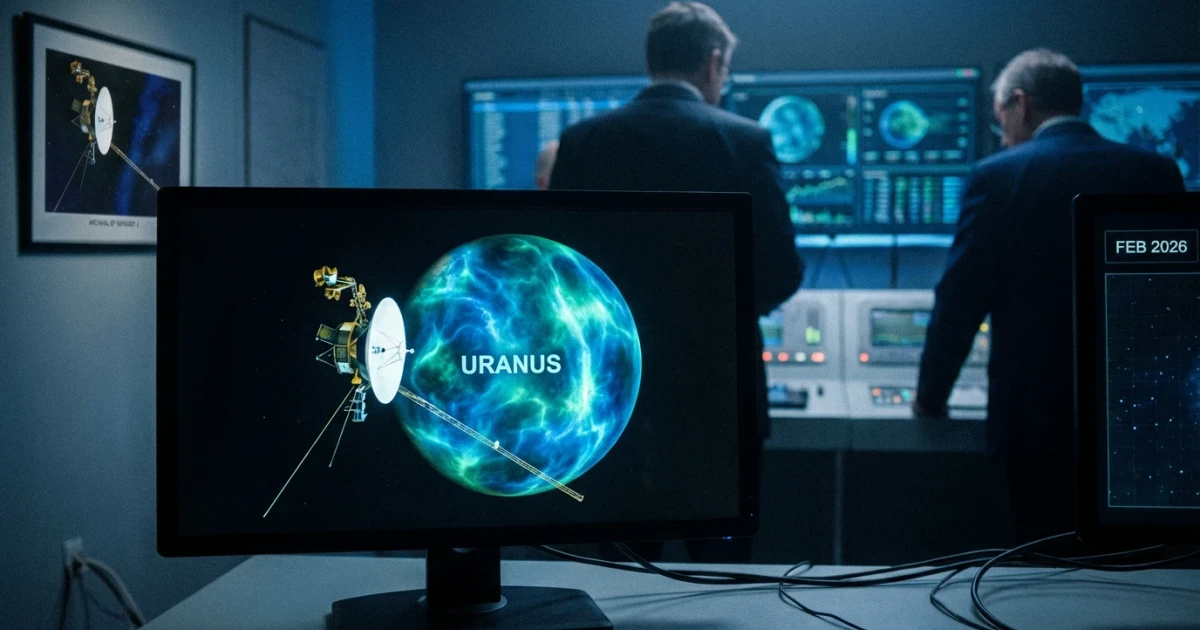
When Voyager 2 zipped past Uranus in 1986, the probe recorded unexpected phenomena that have fascinated planetary scientists for decades. According to recent reports, new analysis suggests that Uranus was somehow 'supercharged' during the historic flyby, offering fresh insights into the enigmatic gas giant’s atmospheric and magnetic behavior.
Unusual Energetic Events Detected
Voyager 2’s close pass by Uranus was a milestone in space exploration, providing the only direct measurements ever taken from the planet. During the flyby, instruments detected anomalies indicating heightened energy levels within Uranus's magnetosphere and atmosphere. These energetic events were not predicted, and subsequent data analysis continues to puzzle researchers.
- Voyager 2 observed unexpectedly intense magnetic fields and charged particles surrounding Uranus.
- Atmospheric readings suggested rapid changes in temperature and composition.
- Scientists are investigating whether these supercharged conditions were triggered by solar activity or unique planetary processes.
Implications for Uranus’s Magnetic Field and Atmosphere
The supercharged state of Uranus during Voyager 2’s flyby has led to renewed interest in the planet’s magnetic field, which is notably tilted and offset from its axis. Unlike other planets, Uranus’s magnetosphere appears to be highly dynamic, possibly influenced by internal and external factors.
Researchers theorize that solar wind interactions or intrinsic planetary mechanisms could have contributed to the observed phenomena. The event has prompted calls for future missions to Uranus, as its unique magnetic environment may hold clues to understanding planetary evolution and atmospheric dynamics across the solar system.
Key Statistics from Voyager 2’s Uranus Flyby
- Voyager 2 passed within 81,000 kilometers of Uranus’s cloud tops.
- The probe measured a tilt of 59 degrees in Uranus’s magnetic field axis compared to its rotational axis.
- Atmospheric temperatures fluctuated by as much as 50 Kelvin during the encounter.
Continuing Mysteries and Next Steps
The supercharging event documented by Voyager 2 raises important questions about Uranus’s place among the gas giants. Its unusual magnetic field, dramatic atmospheric shifts, and the possibility of external influences make it a priority target for future exploration. As scientists analyze the data and speculate about the causes, they hope that new missions equipped with advanced instruments will finally unravel the planet’s secrets.
For those interested in planetary science, Voyager 2’s legacy continues to inspire. As researchers dig deeper into the flyby archives, the story of Uranus’s supercharged moment stands out as a reminder of the surprises our solar system still holds.
Conclusion: Uranus Awaits Further Exploration
Voyager 2’s detection of a supercharged Uranus has reinvigorated scientific curiosity about the planet’s inner workings and atmospheric phenomena. While theories abound, definitive answers remain elusive, underscoring the need for future missions and collaborative research. As the only probe to have visited Uranus up close, Voyager 2’s findings are a testament to the value of exploration and the mysteries still waiting to be solved in our solar system.
Sources
- [1]ScienceDaily