Technology
VR dance apps help beginners learn partner steps without judgment
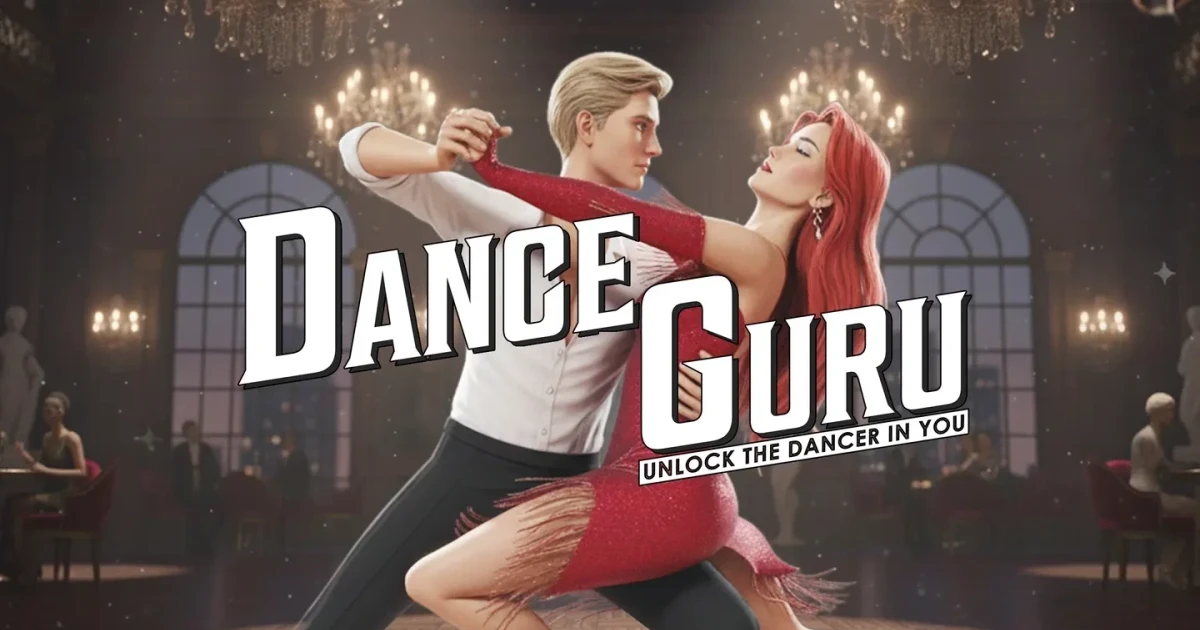
Dance Guru and Trip the Light let beginners rehearse partner work at home, repeat it as often as needed, and learn without the immediate pressure of a studio floor full of people.
How the apps change the first lesson
Dance Guru is listed on Meta Quest as a mixed reality dance platform with a virtual partner ready to dance anytime, anywhere. It focuses on social dance styles including Waltz, Cha-cha, Salsa and Bachata, and its lessons are organized around step-by-step instruction and room-scale practice. Beginners do not just need choreography; they need a way to build timing, balance, and confidence before they ever try the same steps with a real person.
Trip the Light takes a similar approach from a different angle. It is available in Meta Quest early access as a VR partner-dance game, and its current lessons cover salsa, swing, and tango. The app also uses mixed-reality passthrough, so players can see their surroundings while they learn, which lowers the chance of bumping into furniture and makes the exercise feel less sealed off from the real world.
Why judgment-free practice matters
The biggest advantage of VR dance instruction is not novelty. It is repetition without social penalty. A beginner can restart a sequence, slow down a turn, or work on a lead-and-follow transition until the movement feels natural, all without holding up a class or worrying about a partner’s reaction.
This helps people who freeze in front of others, especially when the dance is built around partnership and physical timing. The digital setup also lowers the barrier for people who do not live near a studio, do not have a dance partner, or want to practice privately before taking an in-person class. In economic terms, the appeal is clear: the headset becomes the fixed cost, while the practice time is open-ended and available at home.
What Trip the Light is trying to solve
Patrick Ascolese, founder of Seattle-based Dark Arts Software, said Trip the Light began with a wedding-floor epiphany and has since been shaped with input from professional dancers, choreographers, and musicians. It is built around patient, AI-driven virtual partners, including Vironica, a character modeled on a real collaborator.
The goal is to create a setting where users can take the hand of a responsive partner and keep moving without the anxiety that often comes with learning in public. Its digital instruction uses motion-capture work from real dance teachers, which gives the movement a more grounded, human feel than a purely abstract rhythm game.
Where VR helps, and where it stops
Trip the Light’s freestyle options show one of the clearest strengths of this format. Users can dance with a partner without memorizing every step in advance, which can make the learning process feel more forgiving for absolute beginners. The mixed-reality passthrough also keeps the experience tethered to the room around the player, a practical feature that makes learning feel safer and less isolating.
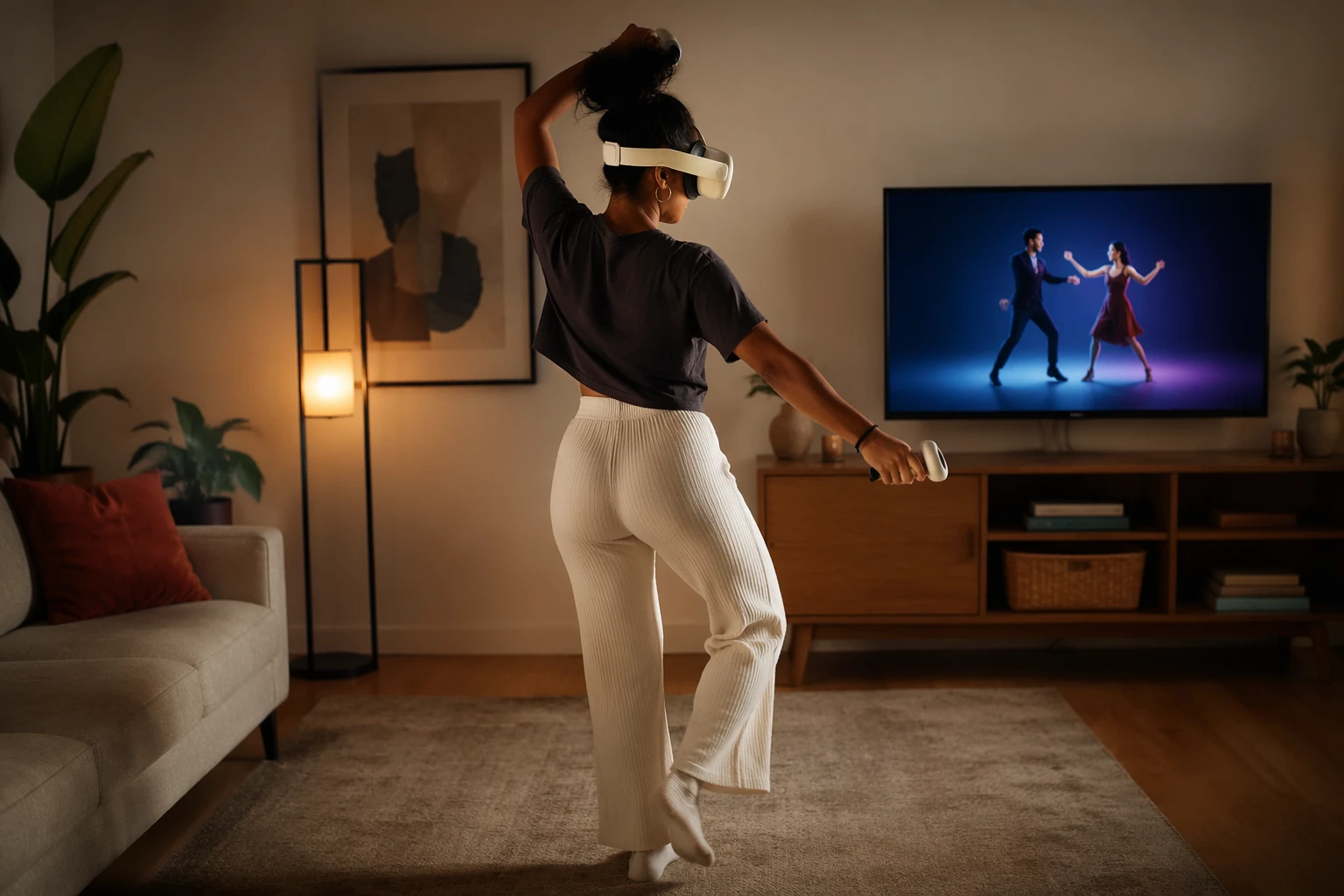
Still, the technology has limits. The partner is ultimately “just air,” which captures the central tradeoff. VR can coach timing, posture, and confidence, but it cannot fully replace the weight, feedback, and subtle communication of a live human partner.
A small but growing audience already exists
These apps sit inside a broader, still modest wave of VR and mixed-reality projects trying to demystify social dance. VR Dance Academy, a live VR dance and wellness community inside VRChat, shows that people are already using virtual spaces not only to learn but also to socialize around movement.
What to look for before trying one
The strongest VR dance tools are the ones that make the learning curve feel smaller, not flashier. When comparing them, the practical questions are straightforward:
• Does the app teach the styles you actually want, such as Waltz, Cha-cha, Salsa, Bachata, swing, or tango?
• Does it use step-by-step lessons or motion-capture movement that resembles a real teacher?
• Can you see your own room through passthrough, or does the app fully block out the environment?
• Is there a freestyle mode, so you can keep moving even when you do not remember every sequence?
• Does it offer enough repetition to build retention between sessions, not just one impressive first run?
Sources
- [1]npr.org
- [2]meta.com
- [3]sidequestvr.com
- [4]tripthelightgame.com
- [5]pressplaynews.net
- [6]uploadvr.com
- [7]vrdance.org
- [8]heise.de