US News
Wall Street Cools After AI and Tariff Concerns Weigh on Markets
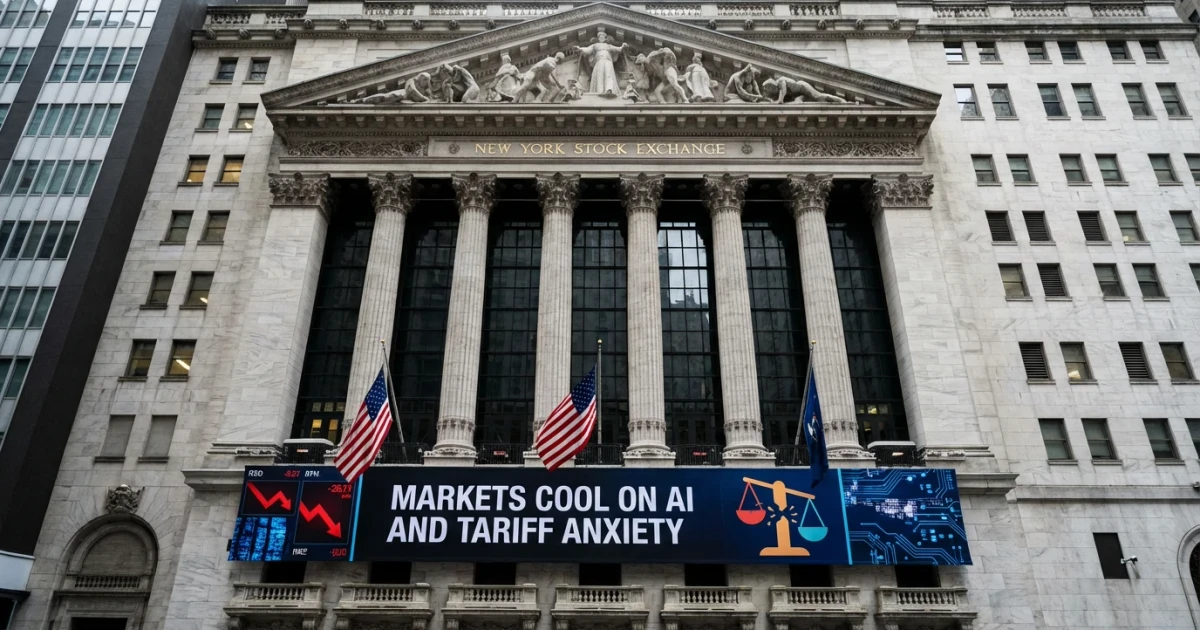
US stock futures held steady early Monday following a volatile session that saw major indexes tumble, as investors grappled with growing anxiety over artificial intelligence disruption and renewed uncertainty surrounding US tariff policies.
Market Reaction to AI and Tariff Uncertainty
As reported by CNBC, the previous trading session saw significant losses across major indexes, reflecting concerns about how rapid advances in artificial intelligence might reshape business models, displace workers, and impact corporate earnings. At the same time, the Trump administration’s ongoing efforts to address what many analysts consider a “broken” tariff system have injected further uncertainty into the market.
- Stock futures for key benchmarks like the S&P 500, Nasdaq, and Dow remained little changed in pre-market trading, signaling a cautious stance among investors after last week’s selloff.
- Major indexes had fallen sharply, underscoring the market’s sensitivity to both technological and geopolitical shifts.
For readers tracking market movements, CME Group’s equity index futures data and up-to-date S&P 500 index charts provide a deeper look at current and historical price trends.
AI Disruption: Opportunity and Uncertainty
The market’s reaction to AI reflects both optimism and unease. Many companies are racing to integrate AI into their operations, seeking efficiency gains and new revenue streams. However, the pace of change has also raised questions about job displacement and the long-term impact on traditional business sectors.
- According to Statista’s AI market data, global investment in AI has surged, but so have concerns about regulatory oversight and implementation risks.
- Investors are closely watching corporate earnings reports for signs of how AI is affecting costs and profitability.
Tariff Policy Remains in Focus
Tensions over US tariff policy have added another layer of complexity. CNBC noted that the Trump administration is “scrambling to pick up the pieces” of a fragmented tariff system, after earlier actions led to disruptions in global supply chains and increased costs for some US industries.
- Recent efforts to recalibrate tariffs have yet to provide clarity, leaving markets on edge about possible impacts on import and export volumes.
- For a detailed breakdown of how tariffs are affecting trade, the U.S. International Trade Data portal offers official statistics and trend analysis.
Looking Ahead: Key Factors for Investors
As Wall Street digests the latest developments in AI and tariff policy, analysts are advising investors to monitor several key factors:
- Corporate announcements on AI strategy and workforce changes
- Ongoing negotiations and policy signals from Washington regarding trade
- Sector-specific impacts, particularly in technology, manufacturing, and consumer goods
Economic indicators from the Bureau of Labor Statistics will also be closely watched for signs of broader economic shifts resulting from these trends.
Conclusion
With stock futures steady but market sentiment cautious, the coming weeks will be critical for investors seeking to navigate the twin challenges of technological disruption and trade policy uncertainty. As more data and policy updates emerge, market participants will be looking for clearer signals to guide their next moves.