Business
Wall Street rebounds as stocks recover after Fed-driven selloff
Wall Street bounced sharply as traders stepped back into stocks after Wednesday’s Fed-fueled slide, with the Nasdaq Composite leading the recovery and semiconductors helping drive the turnaround. The comeback looked less like a full change in conviction than a fast reset in mood: investors had been rattled by the Federal Reserve’s more hawkish rate outlook, then returned to equities once the selling looked overdone.
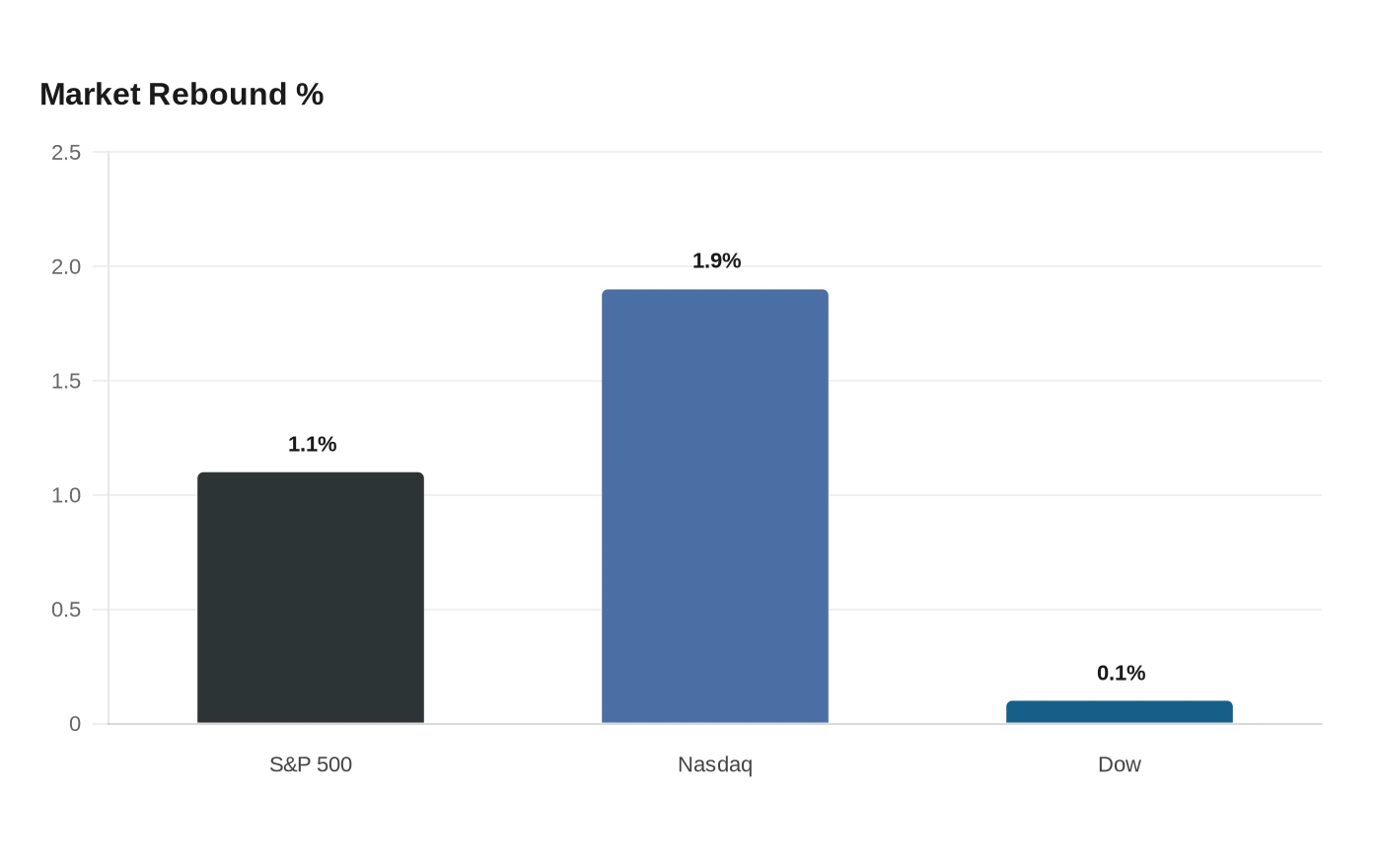
The S&P 500 rose 1.1%, the Nasdaq climbed 1.9%, and the Dow Jones Industrial Average added 0.1% as the market recovered much of the prior session’s losses. CNBC said the S&P 500 ended at 7,500.58, the Nasdaq Composite at 26,517.93 and the Dow at 51,564.70. The move came on the last trading day before the Juneteenth holiday, giving the session an extra layer of importance for investors trying to gauge whether the Federal Reserve had truly damaged the rally or simply interrupted it.
The Fed’s June 16-17 meeting left the benchmark federal funds rate unchanged at 3.50% to 3.75%, but the central bank’s projections pointed to a more hawkish path later in 2026. That shift in rate expectations was what unnerved markets on Wednesday, when stocks sold off on fears that borrowing costs could stay elevated longer than traders had hoped. By Thursday, those same fears were still present, but not enough to keep buyers away from growth and technology names that had already been hit hard.

Reuters said semiconductor shares helped lead the Nasdaq’s gain, underscoring how quickly money rotated back into the market’s most rate-sensitive corners. The rebound also reflected a broader easing in inflation anxiety after the United States and Iran signed a peace agreement, which helped push oil prices lower and calm one of the market’s biggest near-term pressure points. In a session shaped by both policy and geopolitics, lower energy costs gave equities an added tailwind.
The day’s action left the market facing two competing signals. On one side, the Fed was not endorsing easier financial conditions, and its June projections suggested it may still be willing to keep pressure on rates later this year. On the other, investors were quick to buy the dip, especially in the Nasdaq, which AP said was up 3,275.94 points, or 14.1%, for the year. The Russell 2000 was up 497.86 points, or 20.1%, a sign that the 2026 rally had already been broad and powerful enough to absorb a sharp policy scare, at least for one session.
Sources
- [1]apnews.com
- [2]cnbc.com
- [3]federalreserve.gov
- [4]reuters.com