Politics
War Powers Act Faces Test in Trump’s Iran Strategy
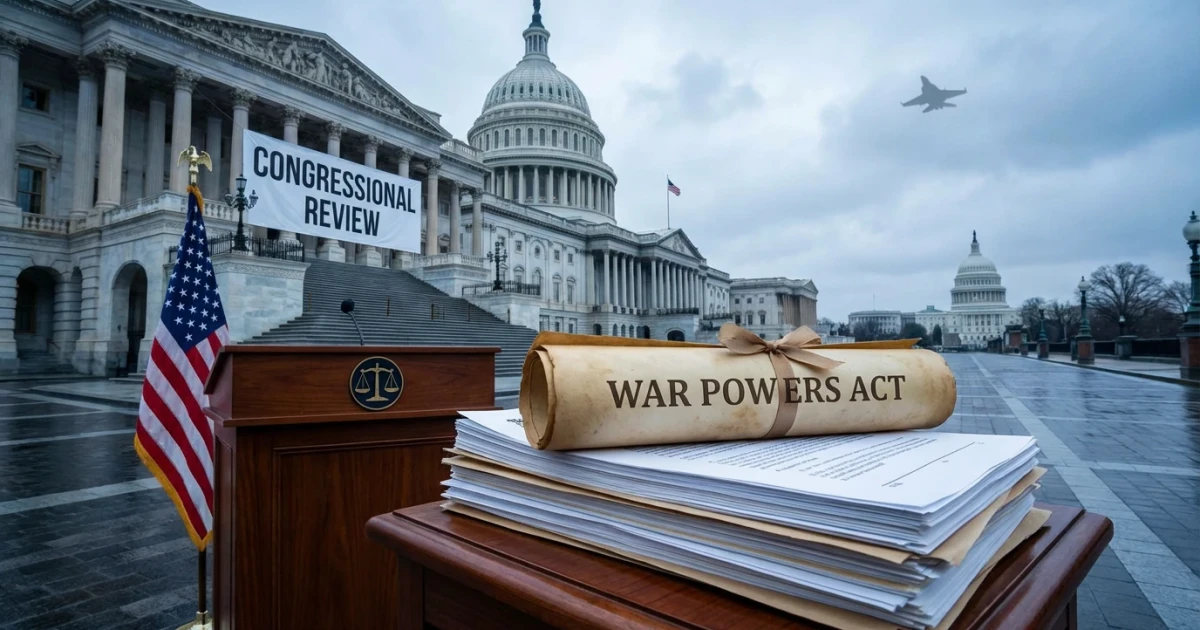
Congressional efforts to curb President Trump's military actions in Iran have put the War Powers Act back in the national spotlight, raising questions about the balance of power between the legislative and executive branches.
Congress Asserts Its Constitutional Role
In recent months, lawmakers from both parties have expressed concern about the scope of President Trump’s military operations against Iran. The War Powers Act of 1973, designed to check presidential authority to deploy U.S. forces without congressional approval, is now the central tool Congress is using to pressure the administration. According to the Council on Foreign Relations explainer, the Act requires the president to notify Congress within 48 hours of deploying troops and limits military engagement to 60 days without explicit authorization.
As reported by The New York Times, the ongoing military operations in Iran have prompted a series of congressional votes aimed at reasserting legislative authority. Lawmakers are seeking to compel the president to withdraw U.S. forces unless Congress provides statutory approval for continued engagement.
Legal and Political Tensions
The War Powers Act has long been a subject of debate over its effectiveness and constitutionality. While presidents often comply with notification requirements, many have interpreted the Act’s limitations as non-binding. According to a Congressional Research Service analysis, every president since the law’s passage has argued that it cannot restrict the president’s commander-in-chief powers under Article II of the Constitution.
The current situation with Iran has intensified this debate. Congressional leaders argue that without clear authorization, prolonged military operations violate the War Powers Act. However, the White House maintains that ongoing actions are consistent with the president’s constitutional authority and existing legal mandates. The standoff could prompt a court challenge, though historically the judiciary has been reluctant to intervene in war powers disputes between Congress and the president.
Historical Context and Precedents
The War Powers Act was enacted in response to concerns over unchecked executive actions during the Vietnam War era. Since then, it has been invoked during numerous conflicts, including deployments in Lebanon, Grenada, the Gulf War, Kosovo, and more recently, Libya and Syria. A Congressional Research Service report details over 160 instances where presidents have submitted reports to Congress under the Act.
- Presidents have rarely sought explicit authorization for military actions, preferring to rely on existing statutes or constitutional powers.
- Congress has sometimes responded with resolutions demanding withdrawal or clarifying the scope of authorized force, but enforcement has been inconsistent.
- Few cases have resulted in the actual withdrawal of forces due to congressional pressure under the War Powers Act.
Future Implications for U.S. Foreign Policy
As Congress debates next steps, the outcome of the current dispute may set important precedents for future presidential actions. Some lawmakers are pushing for reforms to strengthen the War Powers Act and ensure greater congressional oversight. Others caution that too many restrictions could hamper the president’s ability to respond swiftly to threats.
For now, the issue remains unresolved, with both branches testing the limits of their authority. The ongoing situation in Iran will likely become a case study in the evolving relationship between Congress and the executive over war powers. Readers can review the official War Powers reports to track how the law is being applied in real time.
As the debate unfolds, the enduring questions at the heart of the War Powers Act—how decisions to go to war are made, and who ultimately holds the authority—remain as relevant as ever.