Business
Warsh skips rate projection, signals possible Fed communication overhaul
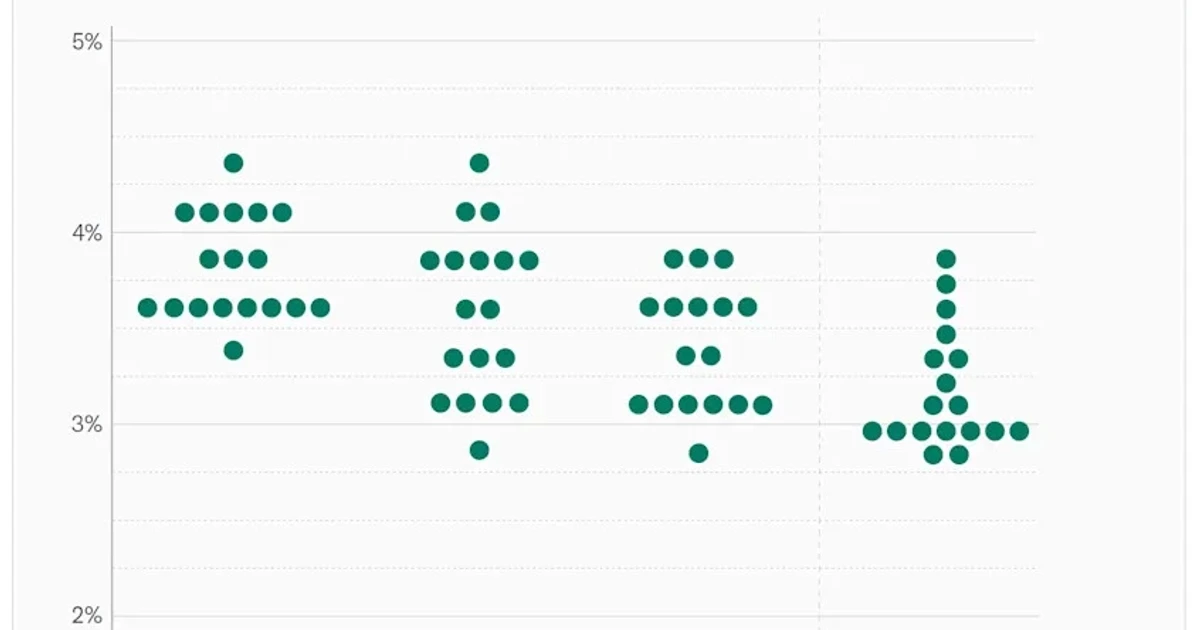
The Federal Reserve chair left his own rate projection out of the June Summary of Economic Projections, a small omission that carried a larger message. Kevin Warsh’s decision reduced the latest dot plot to 18 submissions instead of the full 19 and raised new questions about how the central bank wants markets to read its guidance.
The dot plot has mattered to traders for more than a decade because it gives a rough sense of where policymakers think rates may go, even though the projections are anonymous and nonbinding. The Fed has published individual economic projections since 1979, introduced the Summary of Economic Projections in 2007, and began publishing the dot plot in January 2012. In that period, the chart has become one of the most closely watched signals in central banking.
Warsh said after the Federal Open Market Committee meeting that he encouraged colleagues to keep submitting their forecasts, but he declined to add his own because of his long-standing criticism of the framework. That stance matters because the chair’s square is not just one more data point. It is a test of whether the Fed wants to keep using a tool that markets have learned to treat as a window into the committee’s thinking.
The June projections pointed to a more hawkish 2026 path, with no rate cuts left in the outlook. Markets moved after the meeting, underscoring how quickly traders react when the Fed’s internal expectations shift. Even without a binding commitment, the dot plot can alter borrowing-cost expectations, Treasury pricing and broader risk sentiment.
Warsh’s move also landed alongside a new internal review of the Fed’s communications machinery. He said the central bank would examine press conferences, the dot plot, meeting schedules, transcripts and minutes, and he said he was open-minded about possible changes by year-end. That review suggests the issue is not merely whether Warsh submits a forecast. It is whether the Fed wants to reshape how much information it gives the public, and how much discretion it keeps for itself.

For years, the central bank has tried to become more transparent, using forward guidance to help markets interpret its reaction function. Warsh appears to see a cost in that openness, arguing that rate forecasts can trap policymakers in a path that no longer fits the data. If that view takes hold, the June omission may be remembered less as a missing dot than as the opening move in a broader rewrite of how the Fed explains itself.
Sources
- [1]money.usnews.com
- [2]cnbc.com
- [3]federalreserve.gov
- [4]reuters.com