Science
Webb reveals millions of stars in Cigar galaxy starburst
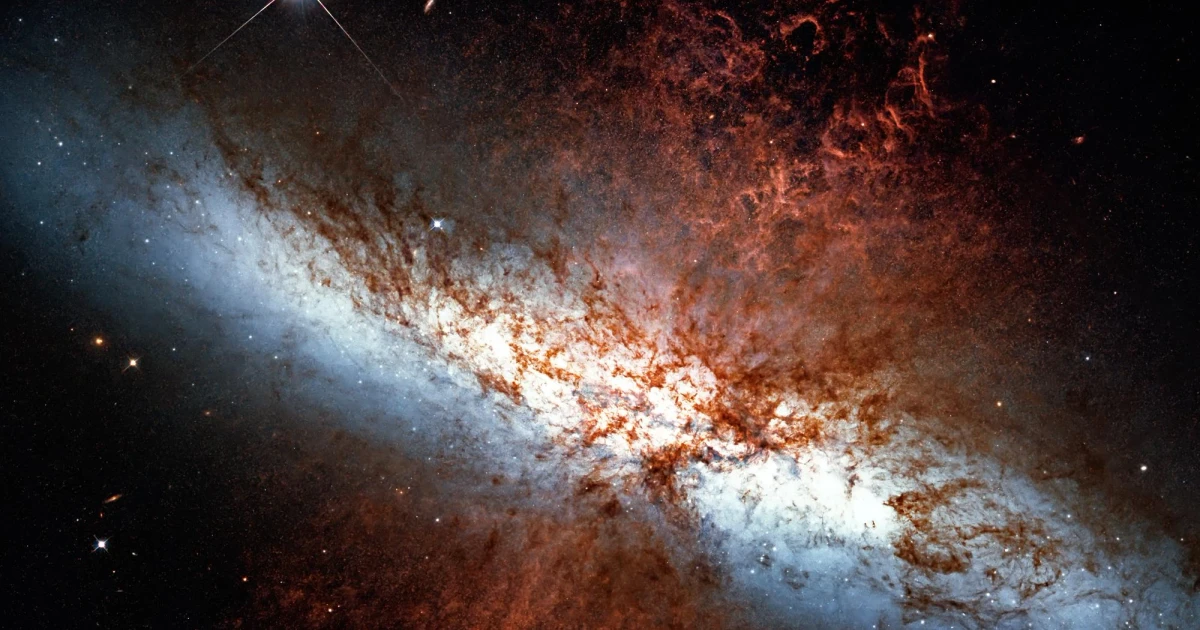
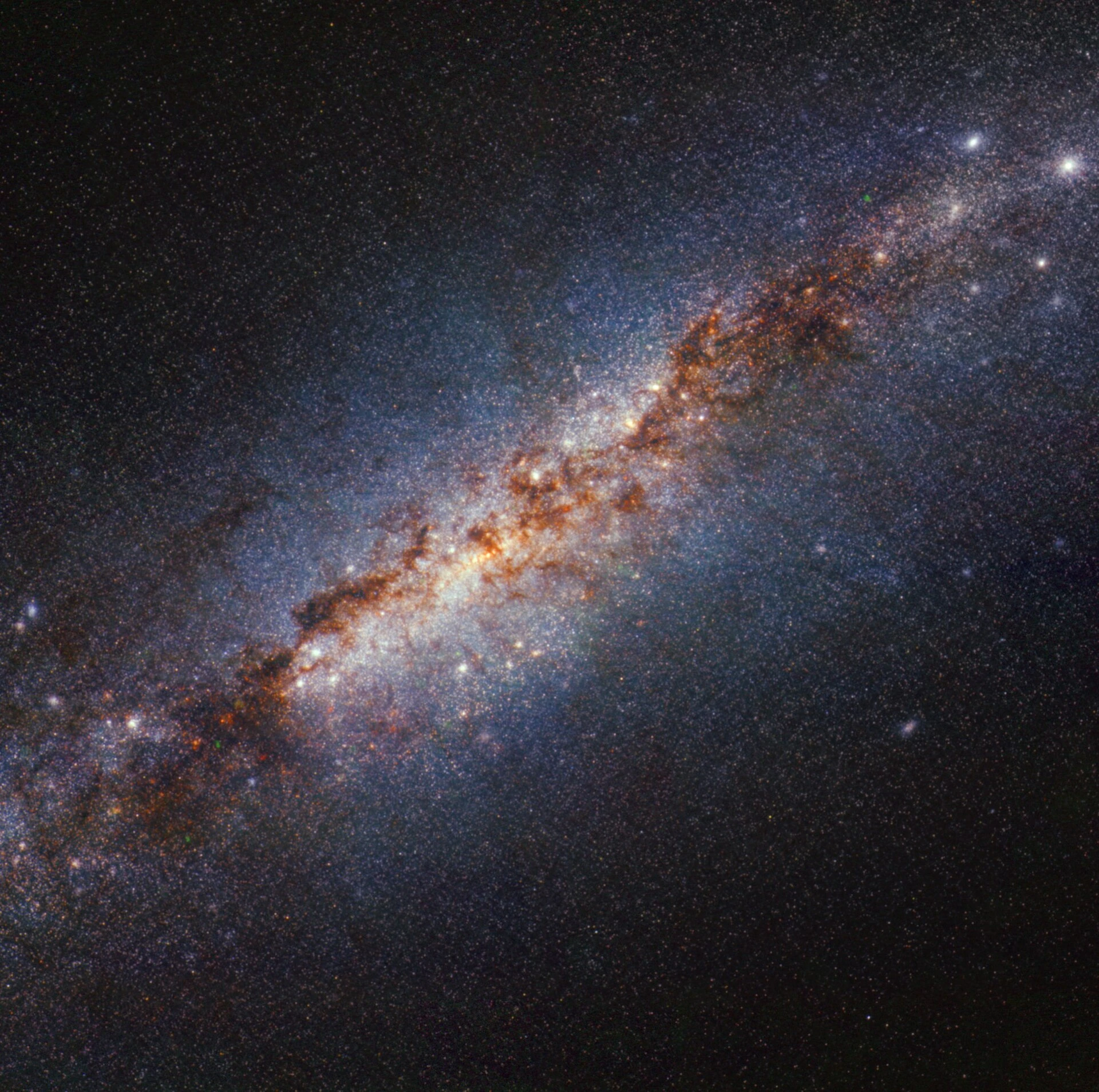
NASA’s James Webb Space Telescope has delivered a detailed new view of Messier 82, the Cigar galaxy, and in doing so turned a familiar target into a much sharper test case for how galaxies build stars, blow gas into space, and change shape. NASA said June 23 that Webb’s near-infrared camera cut through dust to reveal about 16.5 million individual stars in M82, a system about 12 million light-years away in Ursa Major.
That matters because M82 is not just bright. It is edge-on from Earth’s perspective, which makes its disk, dust lanes, and star-forming regions easier to study as a layered system rather than a face-on blur. NASA and the Space Telescope Science Institute describe it as a prototypical starburst galaxy, and NASA says its center is forming stars about 10 times faster than the Milky Way galaxy. The current burst is likely tied to gravitational interaction with its neighboring galaxy M81, and NASA says the episode will last only a few hundred million years, a brief phase on cosmic timescales.
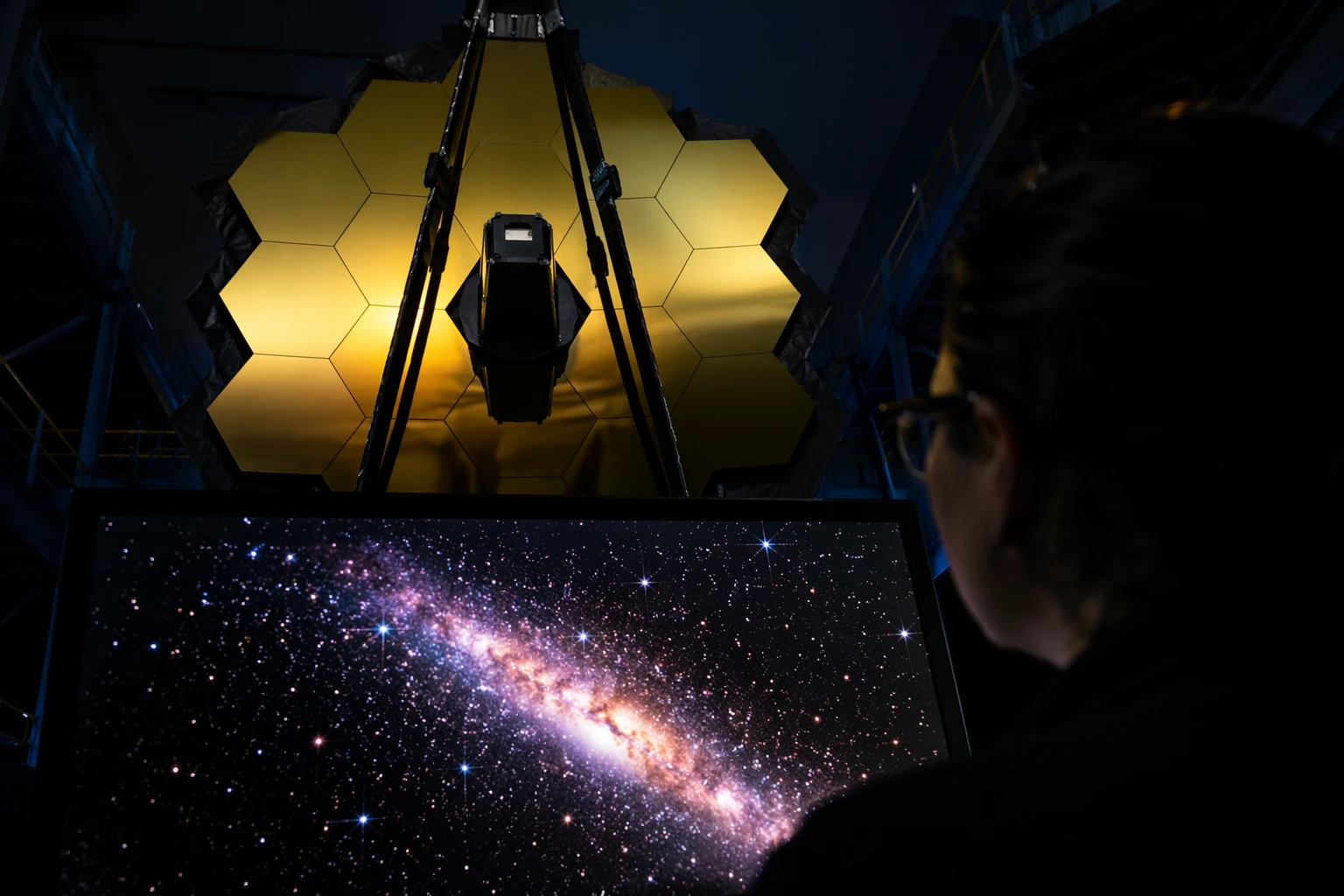
Webb’s advantage is visibility through dust. In optical light, the interior of a starburst can disappear behind dense material, but Webb’s near-infrared imaging can separate individual stars and star clusters in the core and trace the galaxy’s distended disk. That gives astronomers a way to study the mix of stars, dust, and gas that feeds rapid star formation, and to test how energy from young stars pushes back on the surrounding medium through stellar feedback and galactic winds. The image is striking, but its main value is analytical: it maps the structure of a galaxy while the burst is still underway.
Earlier telescopes set the stage for that work. The Hubble Space Telescope imaged M82 in 2006, showing its edge-on spiral disk, shredded clouds, and hot hydrogen gas. Webb also targeted the galaxy’s core in 2024 to examine the physical conditions that foster star formation and the structure of the galactic wind. M82 has long drawn attention because its nearby supernova SN 2014J added another layer to its record as a crowded, active laboratory. For astronomers, the Cigar galaxy now offers a close-up view of processes that were likely much more common when galaxy interactions were more frequent in the early universe.
Sources
- [1]science.nasa.gov
- [2]stsci.edu