Science
Webb Telescope Reveals Black Holes Precede Galaxies
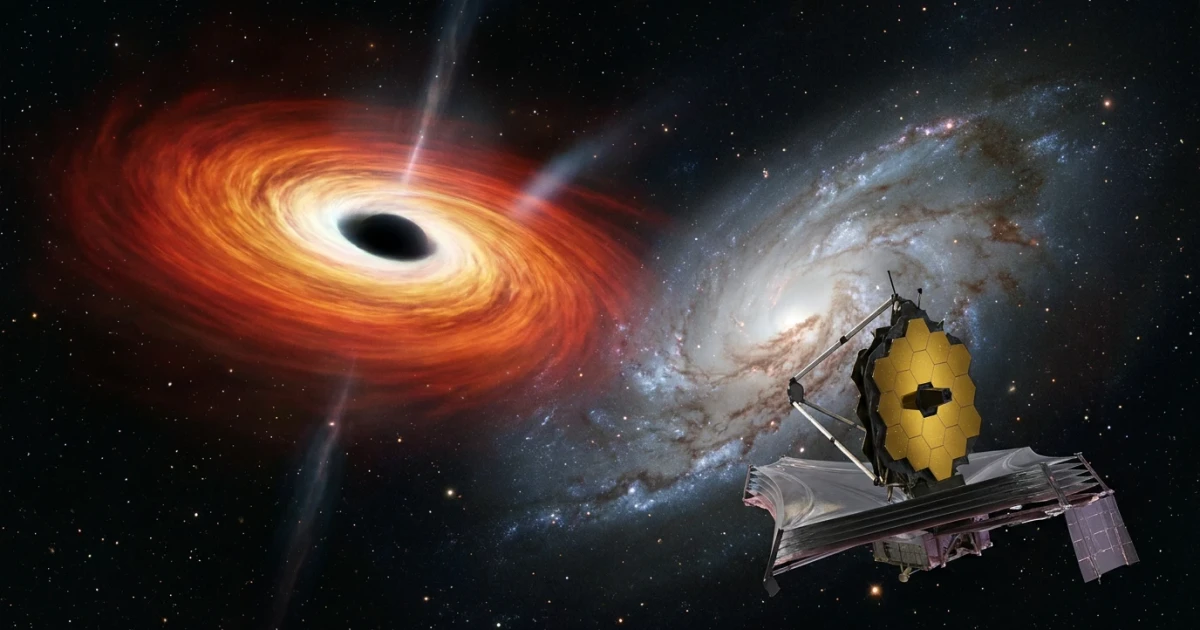
The James Webb Space Telescope (JWST) has delivered a landmark finding for astronomers: direct evidence that supermassive black holes can form before their host galaxies. This result, recently highlighted by Big Think, is poised to reshape our understanding of how the universe’s earliest structures emerged.
Webb’s Breakthrough Observation
For decades, scientists have debated whether galaxies or their central black holes formed first. The JWST has now tilted the balance by pinpointing a supermassive black hole in an exceptionally faint, compact galaxy—described as a “little red dot”—at a very high redshift. This means the light from this system has traveled billions of years, showing us the universe as it was just a few hundred million years after the Big Bang.
What sets this discovery apart is the direct measurement of the black hole’s mass, which exceeds that of its host galaxy’s stars. This finding confirms that, at least in some cases, black holes can grow rapidly—outpacing the buildup of the galaxies around them.
Challenging Conventional Theories
Traditional models of galaxy and black hole formation suggest that galaxies gradually assemble stars and gas, eventually forming a dense central region where a black hole takes shape. However, the JWST’s data indicate that in the early universe, black holes could form and grow to immense sizes before their host galaxies fully develop.
- The black hole’s mass was measured to be several million times the mass of the Sun, while the surrounding galaxy contains fewer stars than the Milky Way’s largest star clusters.
- This discovery supports models in which black holes seed galaxy formation rather than the other way around.
- It also helps explain how such massive black holes could exist so soon after the Big Bang, as seen in other distant quasars and galaxies.
How JWST Made It Possible
The precision of JWST’s infrared instruments allows astronomers to peer deeper into the universe’s history than ever before. By capturing faint emissions from distant objects, JWST can directly measure properties like mass and composition. The telescope’s early release data have already produced breakthroughs in the study of early star and black hole formation.
Crucially, JWST’s sensitivity enables the detection of small, faint galaxies that previous telescopes could not resolve. This means astronomers can now study the environments where the first black holes formed and compare them to models of galaxy evolution.
Implications for Cosmic Evolution
This discovery has far-reaching implications for cosmology and extragalactic astronomy. If black holes can indeed precede and even catalyze the formation of galaxies, theories about the growth of structure in the universe may need substantial revision. It also raises new questions about the processes that drive black hole accretion and how early black holes interact with their surroundings.
Further analysis of JWST’s early release science data and future observations will help clarify whether this scenario is common or an exceptional cosmic event. Scientists are eager to examine more ancient galaxies to determine if the trend holds across the early universe.
Looking Forward
As JWST continues its mission, astronomers anticipate a wave of discoveries that will refine our understanding of black hole and galaxy co-evolution. Each new data release brings us closer to answering the fundamental question of how the universe’s first massive objects took shape—and what role black holes truly play in cosmic history.