Science
Webb Telescope Uncovers Frozen Building Blocks of Life in Neighboring Galaxy
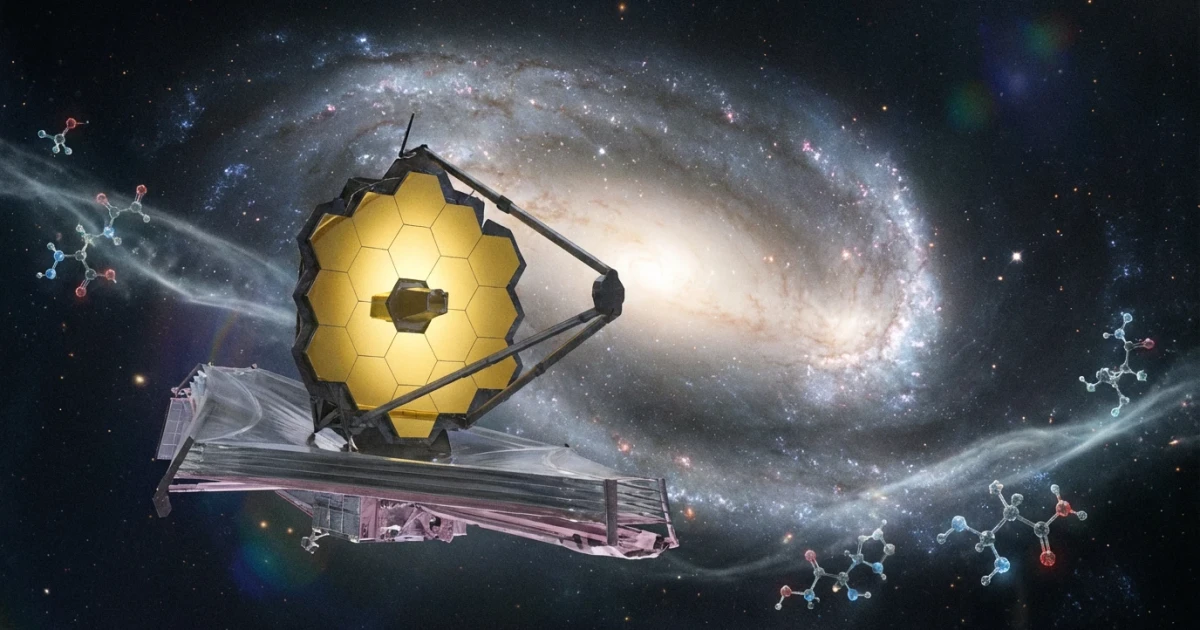
NASA’s James Webb Space Telescope (JWST) has made a groundbreaking discovery, identifying frozen chemical precursors to the building blocks of life within a galaxy neighboring our own. This revelation marks a significant leap forward in astronomers’ quest to understand the origins of life in the universe.
The Discovery: Organic Chemistry Beyond the Milky Way
Utilizing its advanced infrared capabilities, the James Webb Space Telescope detected complex organic molecules in a nearby ultra-luminous infrared galaxy. These molecules, considered the precursors to life’s building blocks, were found locked in icy form—suggesting that the essential ingredients for life are more common in the universe than previously thought.
- JWST observed rich organic chemistry within a galaxy close to the Milky Way, revealing frozen life-forming compounds.
- The findings highlight the presence of complex, carbon-based molecules—key to forming amino acids and nucleic acids, the backbone of life as we know it.
What Webb Detected: Key Molecules in the Cosmic Ice
According to the reports, the JWST’s sensitive instruments identified a variety of organic compounds, including those with structures similar to the earliest precursors of life on Earth. These discoveries were made in the cold, dense regions of a galaxy next door—demonstrating that the conditions necessary for life’s chemistry are not unique to our solar system.
- Frozen organic molecules were found embedded in interstellar ice, protected from harsh radiation and preserved for billions of years.
- The molecular signatures match those theorized to be essential for prebiotic chemistry.
Implications for the Search for Life
This discovery is significant for astrobiology, as it supports the theory that the seeds of life could be widespread across the cosmos. The confirmation of these building blocks in another galaxy strengthens the argument that life’s chemistry can form and persist far beyond our own planetary neighborhood.
- Life’s building blocks are not exclusive to the Milky Way, suggesting a universal propensity for life-friendly chemistry.
- These results provide new targets for future investigations into the formation of planets and the emergence of life elsewhere in the universe.
How the James Webb Space Telescope Made This Possible
The James Webb Space Telescope’s state-of-the-art infrared sensors allow it to peer through thick clouds of cosmic dust, revealing chemical fingerprints that would otherwise remain hidden. This unique capability is essential for detecting organic molecules in distant galaxies, especially those shrouded in ice and dust.
- JWST’s observations showcase its power to unlock secrets of the early universe and track the distribution of life-essential compounds.
- The telescope’s findings will guide future missions and studies aimed at identifying habitable environments outside the Milky Way.
Looking Ahead: The Future of Cosmic Chemistry Research
The detection of frozen building blocks of life in a galaxy next door is a watershed moment for both astronomy and the search for extraterrestrial life. As the James Webb Space Telescope continues its mission, scientists anticipate discovering more evidence of life’s chemical precursors throughout the universe. These findings not only shed light on our cosmic origins but also inspire hope that Earth may not be alone in nurturing life.
Sources
- [1]Space
- [2]ScienceDaily