Science
Webb Telescope Uncovers New Details in Deep Space
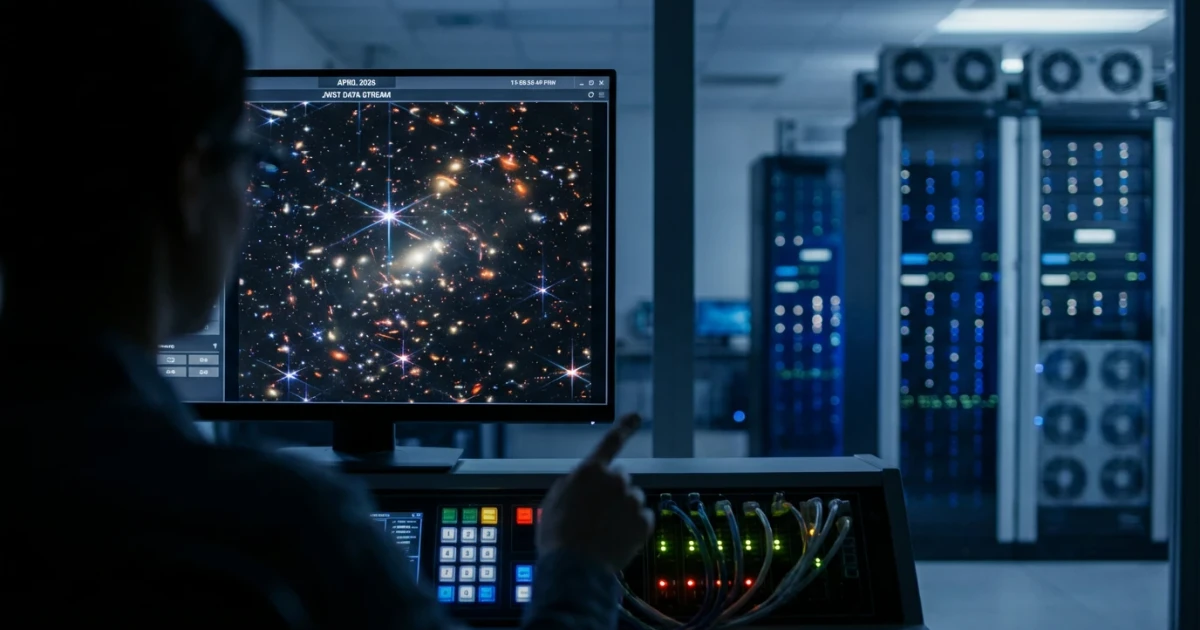
NASA’s James Webb Space Telescope (JWST) continues to deliver on its promise to transform our understanding of the cosmos, as new findings in April 2026 highlight the observatory’s capacity to peer deeper into space and time than ever before. The latest results, shared by NASA, underscore the telescope’s pivotal role in uncovering previously unseen details about the universe’s earliest galaxies, star formation, and cosmic structure.
Webb’s Advanced Capabilities Illuminate the Early Universe
Since its launch, the James Webb Space Telescope has been designed to detect infrared light, enabling it to observe celestial objects obscured by dust or located at extreme distances. These capabilities have made it possible to study light emitted more than 13 billion years ago, granting astronomers a glimpse into the universe’s formative years.
- Webb’s data archive now contains high-resolution images and spectra from galaxies formed shortly after the Big Bang.
- Scientists are using JWST findings to refine models of star and galaxy formation, analyzing how the first cosmic structures assembled from primordial gas.
Breakthrough Observations and Ongoing Analysis
April’s data releases reflect a steady stream of discoveries:
- Newly identified galaxies dating to less than 400 million years after the Big Bang, with spectral signatures confirming their ages.
- Evidence of unexpectedly rapid star formation in the early universe, challenging previous theories about how quickly galaxies could evolve.
- Detailed observations of molecular clouds, nebulae, and protoplanetary disks, offering clues to the processes that shape planets and stars.
These advances are possible thanks to JWST’s advanced instrumentation and open data policies, which make raw and processed data available to the global scientific community for further study.
Collaboration and Future Directions
The success of the Webb mission is the result of collaboration among NASA, the European Space Agency, the Canadian Space Agency, and hundreds of scientists worldwide. As more observations become available, both established researchers and early-career scientists leverage the mission’s master catalog to pursue new research questions and test emerging theories.
NASA continues to release progress updates and technical documentation through its Space Communications and Navigation programs, ensuring transparency and facilitating international scientific cooperation.
Looking Ahead
As the James Webb Space Telescope enters its next phase of operation, expectations remain high for further revelations about the universe’s earliest epochs and the complex processes that govern star and planet formation. With each new dataset, Webb is not only answering long-standing questions but also raising new ones—ensuring its place at the forefront of astronomical discovery for years to come.