Business
Weight-loss drugs cut UK grocery spending by £780 million, study says
Households with at least one GLP-1 user spent an average of £418 less on groceries in the year after starting treatment, and Worldpanel by Numerator estimates the drop has already taken about £780 million out of supermarket receipts across Britain. It also counted 299 million fewer packs bought.
The fastest losses have landed in appetite-led categories. Unhealthy snacks such as crisps and chocolate have been hit hardest, while mouthwash and chewing gum have risen as users report dry mouth and bad breath, a side effect often called Ozempic mouth. Spending is also shifting toward health-related products, including vitamins and supplements, as users buy less on impulse and more around nutrition.
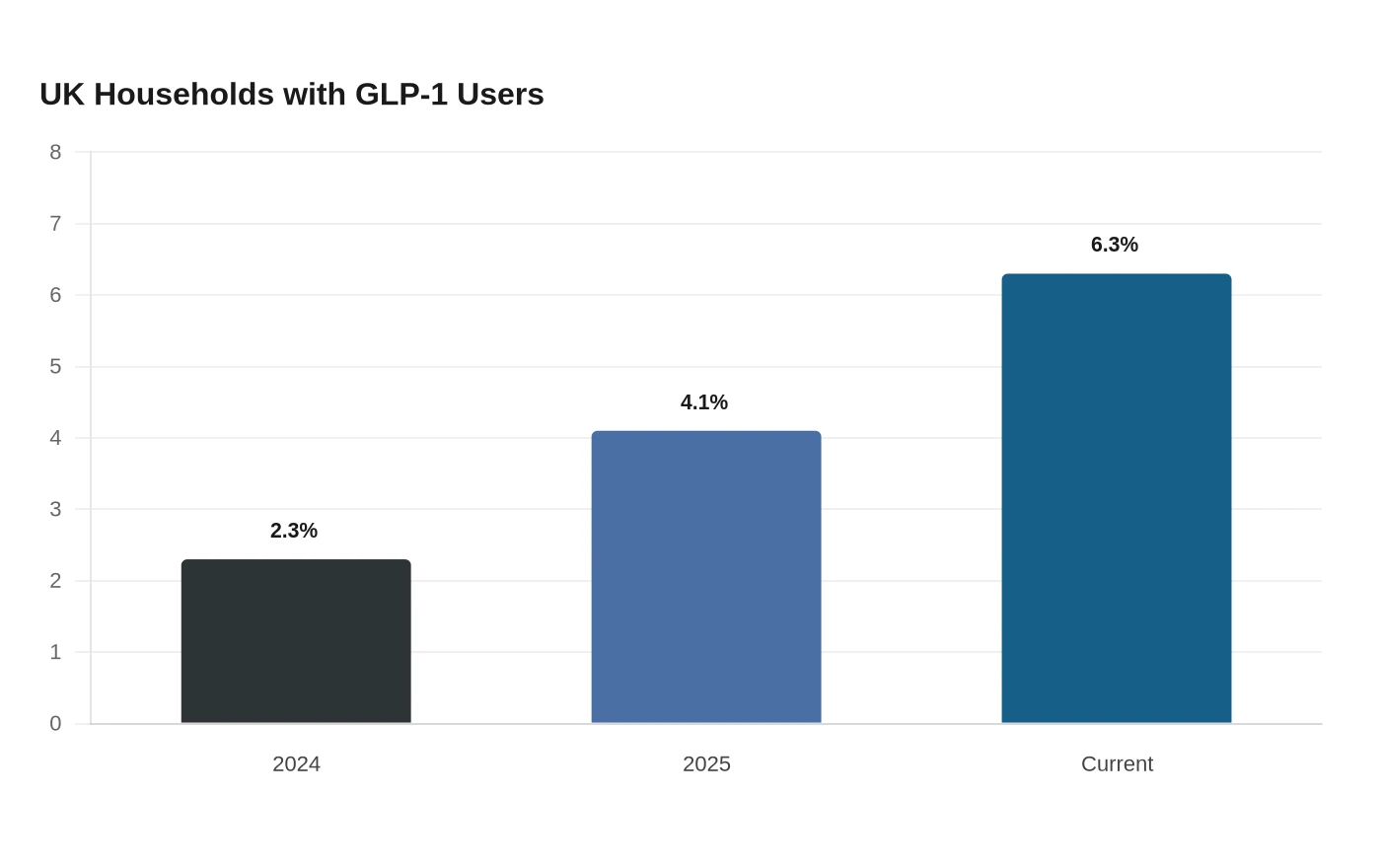
Worldpanel estimated 6.3% of households in Great Britain now include at least one current user of weight-loss medication, up from 4.1% in 2025 and 2.3% in 2024. That translates to about 1.9 million adults in Britain using the drugs now, with women making up 77% of current users.
A separate University College London study, published in January 2026, estimated that 1.6 million adults in England, Wales and Scotland used drugs such as Wegovy and Mounjaro to lose weight between early 2024 and early 2025. Another 3.3 million said they would be interested in using weight-loss drugs in the following year.
In Worldpanel's survey, 26% of respondents would consider taking GLP-1 medication to lose weight even without a major health issue. PwC UK found about 70% of GLP-1 users are spending less on snacks, confectionery and crisps, while 40% are spending more on vitamins and supplements. More than 80% of former users keep at least some dietary and grocery changes after stopping treatment.
Chantel Kennaugh, head of public sector and nutrition, GB at Worldpanel by Numerator, said the drugs are “fundamentally disrupting how people engage with food and drink.” With NHS prescribing still limited to patients who meet strict clinical criteria, private users remain a major part of the market, leaving supermarkets, drinks makers, restaurants and health and beauty retailers exposed.
Sources
- [1]bbc.co.uk
- [2]ucl.ac.uk
- [3]pwc.co.uk
- [4]retailtimes.co.uk
- [5]independent.co.uk