Politics
Wes Moore Disinvited From White House Governors’ Dinner
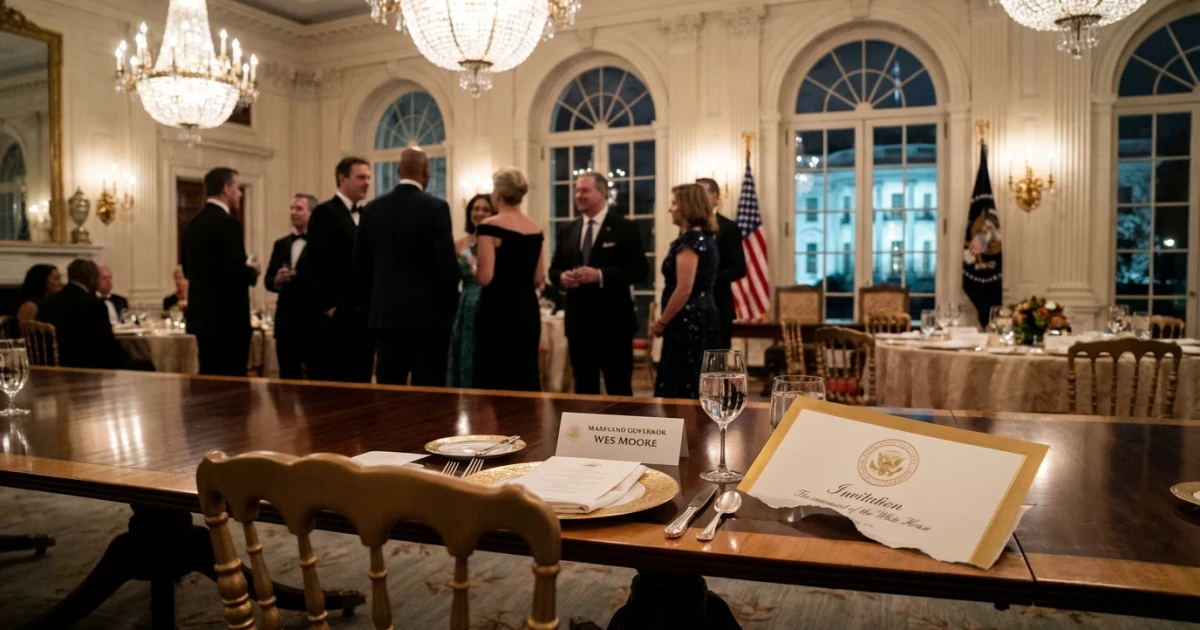
Maryland Governor Wes Moore has been disinvited from the White House’s annual Governors’ dinner, a move that has drawn attention to the relationship between state and federal executive offices. The announcement, first reported by TheGrio, has triggered debate among political observers about the implications for intergovernmental collaboration and the evolving role of U.S. governors.
Background on the Disinvitation
TheGrio reported that Maryland’s Governor Wes Moore was disinvited from the annual gathering of state governors at the White House. The event traditionally brings together governors from across the country to meet with the President and key federal officials, providing an opportunity for networking, policy discussion, and celebration of bipartisan cooperation.
Governor Moore’s exclusion from this year’s event stands out, as the annual dinner typically includes all sitting governors, regardless of party affiliation or state. TheGrio noted that Moore responded to his disinvitation by stating, “Will bow down to nobody,” signaling his unwillingness to compromise his principles or leadership style in the face of federal pressure.
The Role and Significance of Governors’ Dinners
The White House Governors’ dinner is a longstanding tradition that serves as a forum for dialogue on national issues, state-federal relations, and policy priorities. According to the National Governors Association, these events offer governors opportunities to advocate for their states and to build relationships that can be crucial for securing federal support and navigating complex policy environments.
Governors, as outlined in the official Maryland government records, are responsible for implementing state laws, issuing executive orders, and serving as their state’s chief representative in dealings with the federal government. Participation in White House events is often seen as an important part of this role.
Potential Implications for State-Federal Relations
Moore’s exclusion has prompted questions about the current dynamics between Maryland’s governor and the federal administration. While the specific reasons for the disinvitation have not been publicly disclosed, analysts point out that such actions can strain working relationships and potentially impact collaboration on key initiatives.
A Pew Research Center report on strengthening governors’ roles in state government notes that direct engagement between state and federal leaders is crucial for effective governance. The report suggests that breakdowns in communication or protocol can lead to missed opportunities for states to advocate for their interests or influence federal decision-making.
- Governors’ dinners historically serve as venues for bipartisan policy discussion and relationship building.
- Disinvitations are rare and may signal political or procedural disagreements.
- Effective state-federal relations are vital for addressing shared challenges, from economic development to public health.
Governor Moore’s Response and Public Reaction
Governor Moore’s public response, as reported by TheGrio, was resolute. His statement, “Will bow down to nobody,” underscores his commitment to independence and his willingness to stand firm on issues of principle. While some observers have praised Moore’s stance as an assertion of state leadership, others question whether the dispute could hinder Maryland’s ability to work with federal partners on critical initiatives.
Context: Maryland’s Leadership and Executive Priorities
Governor Moore, who holds executive authority in Maryland, has focused his administration on issues such as economic opportunity, education, and public safety. As outlined in state records, the governor’s duties include issuing executive orders, managing state agencies, and representing Maryland in national forums.
According to the U.S. Census Bureau’s statistics on state government, Maryland is among the top states in terms of government expenditure per capita, highlighting the importance of effective leadership and federal collaboration.
Looking Ahead
The circumstances surrounding Governor Moore’s disinvitation remain a topic of discussion among political analysts and the public. The event has brought renewed attention to the delicate balance of power and cooperation between state and federal governments. As the situation develops, the focus will remain on how Maryland’s executive branch continues to advance its priorities and build partnerships—regardless of formal invitations from Washington.