Business
What Could Calm Wall Street’s AI Market Fears
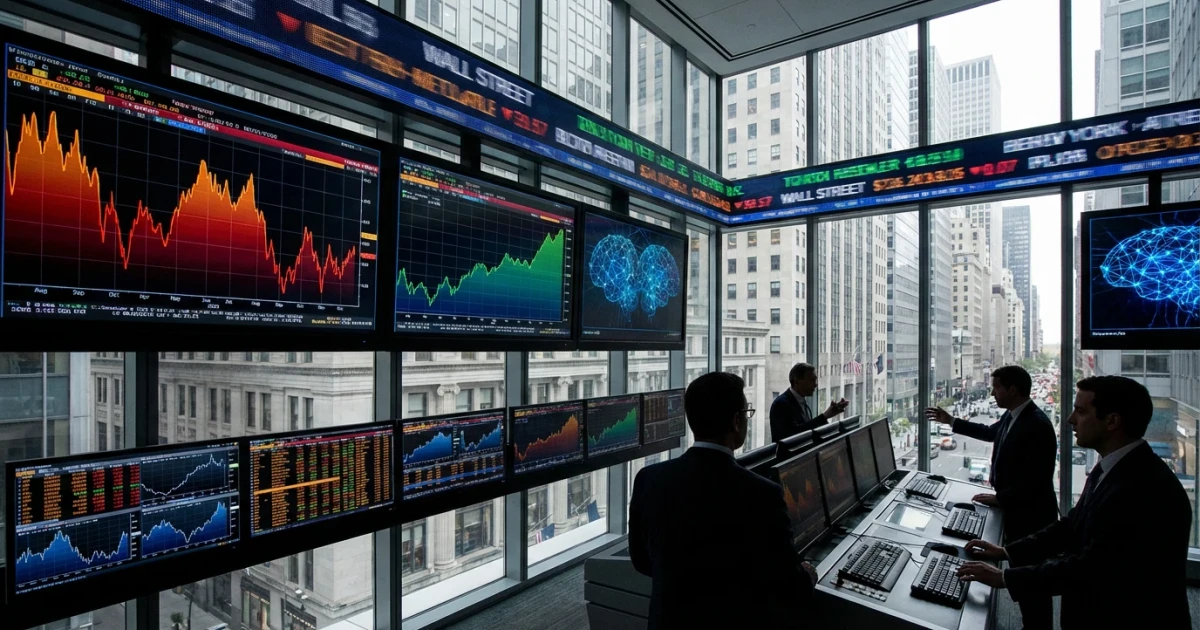
Wall Street is in the midst of a pronounced bout of volatility fueled by rapid advances in artificial intelligence, leading to sharp swings in tech stocks and a sense of unease among investors. According to recent coverage by AOL.com, analysts suggest that concrete steps — from clearer earnings guidance to better risk disclosures — could help calm the AI-driven market panic.
Wall Street’s AI Anxiety
The surge of interest in artificial intelligence has driven a remarkable rally in AI-related stocks, but it has also created turbulence. As companies rush to integrate AI into their products and services, investors have been quick to reward perceived winners — and punish laggards — leading to dramatic swings in share prices. This has been especially true for major players like NVIDIA, whose historical stock data shows both rapid gains and sharp corrections over recent quarters.
Some analysts, as reported by AOL.com, believe that the recent market jitters have less to do with AI’s long-term promise and more to do with uncertainty around how companies are monetizing the technology. The lack of clear financial guidance on AI investments has left investors guessing, amplifying volatility.
Analyst Perspective: What Could End the Panic?
According to the AOL.com report, the path out of the current AI panic may hinge on several key developments:
- Clearer Earnings Guidance: Tech giants and SaaS companies could help stabilize the market by providing more detailed breakdowns of AI-related spending, revenue contributions, and future growth projections in their SEC filings.
- Risk Transparency: Investors are seeking better disclosure around the risks and limitations of deploying AI, especially as concerns mount over data privacy, regulatory scrutiny, and competitive threats.
- Operational Metrics: More frequent updates on AI adoption rates, customer engagement, and SaaS metrics such as churn and ARR could reassure investors about the health of underlying business models.
The SaaS-pocalypse Debate
The broader debate over a so-called ‘SaaS-pocalypse’ — a feared meltdown of software-as-a-service stocks — reflects these anxieties. As highlighted in related coverage by Barron’s, AI agents are poised to disrupt traditional software workflows, creating both opportunities and risks for established SaaS providers. This dynamic has made the sector particularly sensitive to shifts in sentiment, with some investors wary of overhyped growth projections.
While some analysts see the rise of AI agents as a catalyst for innovation and efficiency, others warn of near-term margin pressures as companies ramp up investments ahead of proven returns. This divergence in outlook has contributed to the choppiness in software stocks, according to multiple market commentators.
Market Context and Forward Outlook
Despite the turbulence, the overall global artificial intelligence market continues to expand, with projections pointing to significant growth in enterprise adoption and investment. Recent industry research suggests that companies deploying AI at scale are already seeing meaningful gains in productivity and profitability, though the benefits remain unevenly distributed.
Ultimately, as the analyst cited by AOL.com concludes, “restoring confidence in the tech market may depend not just on AI’s potential, but on companies’ willingness to communicate transparently about the risks, rewards, and realities of this fast-evolving landscape.” Until then, investors should brace for continued volatility as the AI story unfolds.