Sports
What Elliot Anderson can learn from Kalvin Phillips's Manchester City struggles

Kalvin Phillips is the clearest warning of what happens when a huge fee meets an unclear role at Manchester City. Elliot Anderson arrives with a far bigger price tag and far higher expectations, but Phillips’s decline shows that talent alone does not guarantee minutes, trust or a defined place in Pep Guardiola’s system.
The Phillips warning
Phillips joined City from Leeds United in July 2022 on a six-year contract after a fee reported at £42 million, rising to £45 million with bonuses. It was the kind of move that should have given a player in his prime a platform at one of Europe’s most dominant clubs, especially after he had returned from a lengthy injury lay-off to help Leeds stay in the Premier League. Instead, the fit never settled, and the playing time dried up fast.
By January 2024, Sky Sports had counted just 31 appearances for City, while BBC Sport noted that Phillips had played only seven minutes for the club in one stretch of the 2023-24 season. In December 2023, Guardiola said he could not envisage Phillips in his team, a line that captured how completely the midfielder had slipped out of the manager’s plans. Once that happens at City, the problem is not simply form; it becomes a structural issue about whether the squad still has space for the player at all.
When the loan market becomes the outcome
Phillips’s move turned into a chain of temporary exits rather than a settled career step. West Ham United agreed a loan for him in January 2024 with no option to buy, and The Guardian reported that clubs were waiting for City to lower a proposed £7 million loan fee before making offers. Ipswich Town then agreed a season-long loan in August 2024, and BBC Sport also reported a loan spell at Sheffield United, making clear that his future had become a holding pattern rather than a plan.
That matters because it shows how quickly an expensive signing can become difficult to place. High wages, a large initial fee and a lack of Premier League minutes make even a temporary move complicated, especially when the buying club has not built a route into the first team from the start. In Phillips’s case, the market did not disappear because of his price alone, but because the combination of cost, role uncertainty and shrinking visibility made every next step harder.
Why Anderson is the sharper test case
Anderson’s route to City is different, but the same warning sits underneath it. Newcastle United sold him to Nottingham Forest in June 2024 for around £35 million, a move described at the time as a joint club-record sale and one that came amid pressure on Newcastle to comply with the Premier League’s profit and sustainability rules. He has flourished since leaving Newcastle, earned his senior England debut in August 2025 and then moved into the kind of spotlight that changes everything around a midfielder’s development.
Manchester City said on 2 July 2026 that it had reached agreement with Nottingham Forest for Anderson’s transfer, with the player competing at the FIFA World Cup with England at the time. Reports around the deal placed the fee at £116 million, which would make Anderson City’s record signing and the most expensive British player in history. BBC Sport quoted Anderson as saying he was “determined to make this move happen” after City confirmed his arrival on a five-year deal, a sign of ambition that will now be measured against the same unforgiving standards that swallowed Phillips.
What the City model demands from midfielders
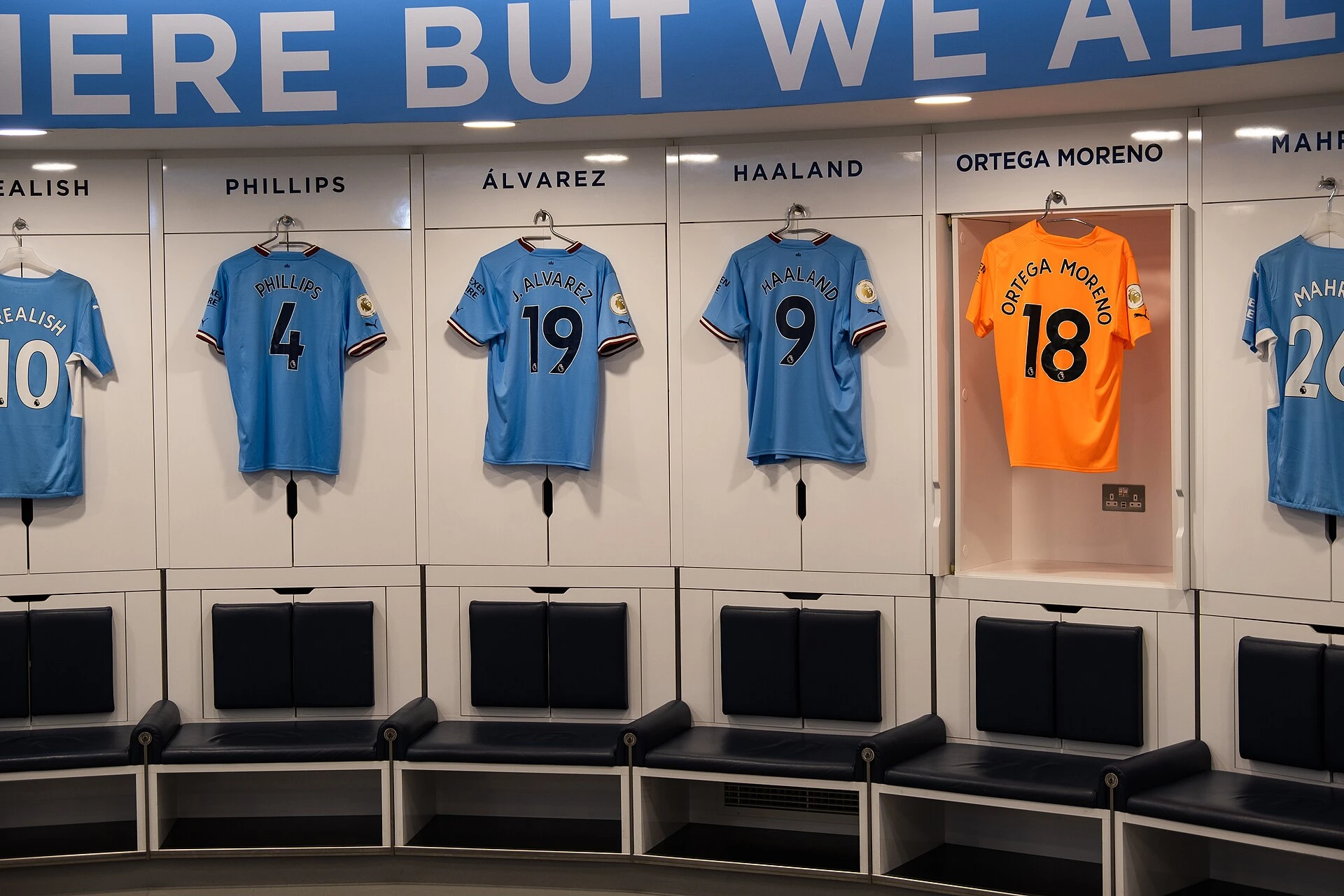
City does not buy midfielders for sentiment. Guardiola’s team asks for fast adaptation, repeated tactical discipline and the ability to occupy a very specific function inside a system that already has established habits and preferred solutions. Phillips learned that truth brutally: the transfer fee and the England shirt did not protect him once Guardiola decided he could not envisage him in the team.
For Anderson, the challenge is to convert promise into utility before the squad hierarchy hardens around him. A £116 million move creates expectation from day one, but City’s recent history shows that status buys time only if the player can become indispensable in training and on the pitch. The warning from Phillips is not that City rejects midfielders, but that it has little patience for those who do not quickly solve a tactical problem.
What players and recruitment departments should take from it
The lesson for younger players is that a move to a giant club must come with a realistic path to minutes, not just a glamorous badge. A six-year contract, a record fee or a headline announcement means little if the first season becomes a search for appearances, a loan queue and public doubts from the manager. Phillips’s story shows how fast a career can lose momentum when the role is vague and the competition is already entrenched.
Recruitment departments need to be just as hard-headed. Before approving a blockbuster move, they have to answer three questions with precision:
• Where does the player fit in the manager’s current structure?
• What happens if the player does not start immediately?
• Is the pathway to minutes clear enough to justify the fee, the wages and the expectations?
That is why Anderson’s transfer matters beyond the size of the number. Newcastle’s £35 million sale to Forest showed how quickly a young midfielder can be valued, developed and moved on under financial pressure. City’s £116 million pursuit shows how much more expensive the same profile becomes when a player has already proven he can thrive elsewhere. Phillips’s decline is the reminder that the second move can still fail if the club cannot turn admiration into a role.
Sources
- [1]bbc.co.uk
- [2]skysports.com
- [3]bbc.com
- [4]theguardian.com
- [5]espn.com
- [6]nytimes.com
- [7]mancity.com