Science
What Happened to the Dinosaurs: Science Behind Their Extinction
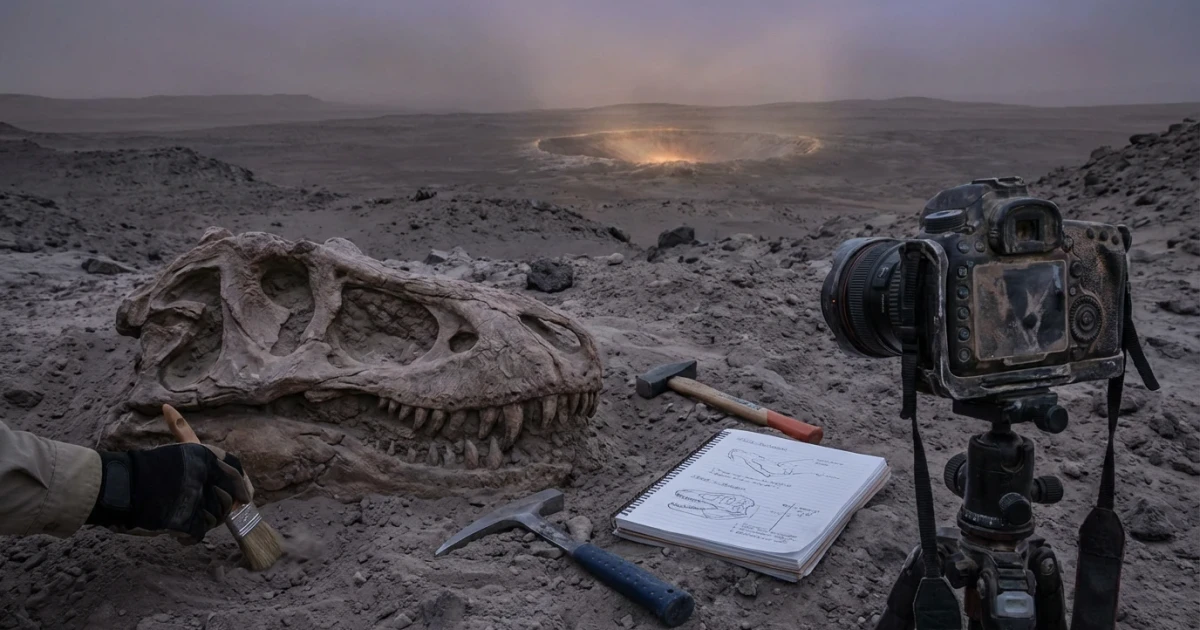
Dinosaurs once dominated the Earth, but their sudden disappearance around 66 million years ago remains one of science’s greatest mysteries. Recent advances in paleontology, geology, and planetary science are bringing clarity to how these prehistoric giants met their end, offering the public a chance to understand the latest evidence and what it means for life on Earth.
The Final Days of the Dinosaurs
The most widely accepted explanation for the extinction of non-avian dinosaurs is a catastrophic event at the Cretaceous-Paleogene (K-Pg) boundary. According to the U.S. Geological Survey, a massive asteroid struck the Yucatán Peninsula in what is now Mexico, forming the Chicxulub crater. This impact released energy equivalent to billions of atomic bombs, sending dust and aerosols into the atmosphere and dramatically changing the global climate.
- The impact is linked to a global layer of iridium, an element rare on Earth but common in asteroids, found at K-Pg boundary sites worldwide.
- Massive wildfires, tsunamis, and a dramatic drop in sunlight followed the impact, collapsing food chains.
- Some research, like a recent study in Earth and Planetary Science Letters, connects the timing of the extinction directly to the asteroid event, confirming the suddenness and severity of the environmental changes.
Fossil Evidence and Global Impact
The Paleobiology Database documents thousands of dinosaur fossil collections from the Maastrichtian Age, the final chapter of the Cretaceous Period. These records show a diverse range of dinosaur species — including Tyrannosaurus rex, Triceratops, and Hadrosaurus — living on every continent. However, the fossil record reveals a sharp decline in dinosaur diversity immediately following the K-Pg boundary, reinforcing the idea of a sudden mass extinction rather than a slow decline.
The Natural History Museum’s Dino Directory allows visitors to explore the known diversity of dinosaurs, their physical characteristics, and their time ranges, highlighting how abruptly these animals vanished from the fossil record after the impact event.
Alternative Theories and Ongoing Debate
While the asteroid impact theory is the scientific consensus, researchers continue to examine alternative or contributing factors. Some studies suggest that massive volcanic eruptions in the Deccan Traps of India may have worsened environmental conditions, releasing greenhouse gases and acidifying oceans. However, evidence from a landmark Nature study indicates that the timing and magnitude of the Chicxulub impact align most closely with the mass extinction, dwarfing the effects of volcanism.
Legacy and Lessons
The extinction of the dinosaurs paved the way for the rise of mammals and, eventually, humans. Today, the story of the dinosaurs’ demise is more than ancient history—it’s a warning about the power of sudden, global changes to reshape life on our planet.
For those interested in exploring the latest research and fossil discoveries, institutions like the American Museum of Natural History provide fact sheets, timelines, and educational resources about dinosaur diversity, extinction events, and the ongoing search for answers.
Looking Ahead
Scientists continue to unearth new dinosaur fossils and analyze the K-Pg boundary, hoping to answer lingering questions about the extinction event's speed, selectivity, and long-term effects. As research progresses, our understanding of Earth’s past—and the fragile balance of life—grows ever deeper, offering both insight and a sense of wonder about the world we inhabit today.